
Mobilität


Vom Hörsaal bis ins Rechenzentrum: Nachhaltigkeit als roter Faden – Chancen und Herausforderungen nachhaltiger Mobilität
Die Universität Potsdam ist eine multilokale Hochschule: Lehr- und Forschungseinrichtungen verteilen sich auf die drei Hauptstandorte Golm, Neues Palais und Griebnitzsee sowie weitere Außenstellen in Potsdam, im Land Brandenburg und in Berlin. Diese räumliche Struktur prägt den Hochschulalltag – Studierende, Lehrende, Forschende und Verwaltungsmitarbeitende legen täglich zahlreiche Wege zurück, um Vorlesungen zu besuchen, Forschungsvorhaben durchzuführen, Sitzungen wahrzunehmen oder zwischen Standorten zu pendeln.
Mobilität ist daher nicht nur eine logistische Notwendigkeit, sondern auch ein Schlüsselthema der Nachhaltigkeit: Sie beeinflusst unmittelbar den ökologischen Fußabdruck der Universität, die Erreichbarkeit für alle Mitglieder sowie die Attraktivität des Standorts.
Dabei geht es um weit mehr als die Wahl des Verkehrsmittels: Mobilität steht im Spannungsfeld von Klimaschutz, Ressourcenschonung, Gesundheit, sozialer Teilhabe und wirtschaftlicher Effizienz. Eine nachhaltige Mobilitätsstrategie muss all diese Dimensionen berücksichtigen und zugleich praktikable Lösungen bieten.
Die Universität Potsdam verfolgt das Ziel, klimafreundliche Verkehrsmittel zu fördern, Wegeketten möglichst effizient zu gestalten und den motorisierten Individualverkehr zu reduzieren. Zentral ist dabei, Barrieren zu verringern, Anreize für umweltverträgliche Optionen zu schaffen und Kooperationen – etwa mit dem öffentlichen Nahverkehr oder Sharing-Anbietern – auszubauen. Die Universität Potsdam orientiert sich dabei an mehreren zentralen Zielen der Agenda 2030 für nachhaltige Entwicklung (SDGs). Im Fokus stehen dabei insbesondere:


So wird Mobilität zu einem gemeinsamen Gestaltungsfeld, bei dem jede Entscheidung – ob zu Fuß, mit dem Rad, im Bus oder auf der Schiene – einen Beitrag zur Erreichung der Klimaschutzziele leisten kann.
Der Status quo
Verkehrsbeiträge zur CO₂-Bilanz
Mobilität verursacht rund 65 % der Treibhausgasemissionen der Universität (Stand 2018). Der größte Anteil entfällt auf Bahnfahrten im Nah- und Fernverkehr, gefolgt von Pkw-Fahrten, die jährlich etwa 1 360 t CO₂ verursachen.
Strukturen und Verantwortlichkeiten
Die Zentrale Abteilung und das Klimaschutzmanagement der Universität steuern Mobilitätsprojekte. Die Kommission für Umwelt und Mobilität, ehrenamtlich besetzt, vertritt die Universität Potsdam in allen Verkehrsfragen. Sie freut sich über Impulse, Hinweise oder Engagement von Studierenden und Mitarbeitenden.
Nachhaltige Wege an die Universität Potsdam
Aktuelle Bahnverbindungen und öffentlicher Nahverkehr
Die Universitätsstandorte sind mit Bahn und ÖPNV erreichbar. Aktuell stehen vier Regionalbahnlinien zur Verfügung: RB20, RB21, RB22 und RB23 sowie der RE1. Während der Hauptverkehrszeiten gibt es stündlich Direktverbindungen, beispielsweise von Golm in Richtung Berlin oder Brandenburg. Die Campusstandorte Am Neuen Palais, Golm und Griebnitzsee sind über die genannten Linien sowie zahlreiche Busverbindungen effizient erreichbar. Für die Reiseplanung empfiehlt sich die aktuelle Fahrplanauskunft des Verkehrsverbundes Berlin-Brandenburg (VBB).
Firmenticket und Deutschlandticket Job
Zur Unterstützung nachhaltiger Arbeitswege bietet die Universität Potsdam allen Mitarbeitenden das bewährte VBB-Firmenticket oder das Deutschlandticket Job an. Mit diesen Angeboten können Beschäftigte kostengünstig und flexibel alle öffentlichen Verkehrsmittel in Berlin und Brandenburg oder deutschlandweit nutzen. Die Universität bezuschusst das Firmenticket zusätzlich mit bis zu 15 € monatlich. Durch Arbeitgeber- und Bund/Länder-Zuschüsse reduziert sich der monatliche Eigenanteil auf bis zu 40,60 € beim Deutschlandticket Job – ein attraktiver, klimafreundlicher Benefit für Beschäftigte.
Nextbike-Kooperation – CAMPUSbike für nachhaltige Radmobilität
Dank der Kooperation mit nextbike erhalten Studierende der Universität Potsdam, täglich 45 Freiminuten mit den Mieträdern von nextbike. Die Freiminuten werden minutengenau abgerechnet und können auf mehrere Ausleihen am Tag aufgeteilt werden. Für Mitarbeitende mit Firmenticket stehen bis zu zwei Freistunden täglich zur Verfügung. Die Registrierung erfolgt unkompliziert via App oder Webseite mit der Hochschul-E-Mail-Adresse.
Mit dem Rad
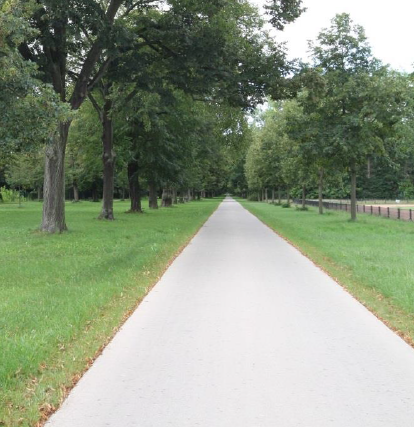
Der Weg zwischen Golm und dem Neuen Palais (ca. 2 km) ist sicher und komfortabel mit dem Rad befahrbar – dank asphaltierter Wege entlang der Bahntrasse und des Ausbaus der Lindenallee. Ergänzend entsteht derzeit (2024) ein neuer Radweg entlang der Straße Kuhfortdamm, der die Verbindung weiter verbessert.
Studierende profitieren von der Kooperation mit Nextbike, die durch den AStA finanziell unterstützt wird: Bis zu 45 Minuten täglich können Leihfahrräder kostenfrei genutzt werden.
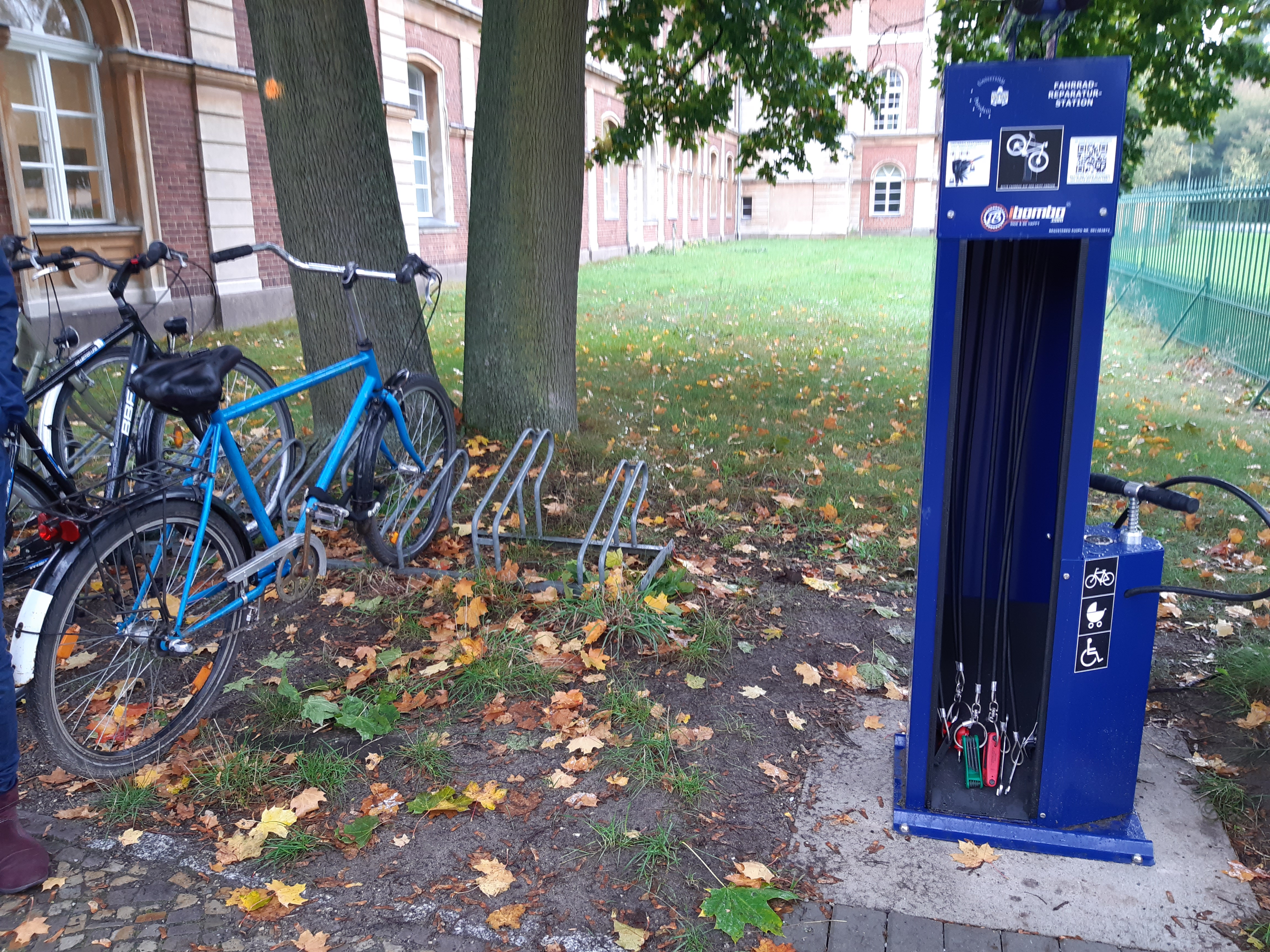
Für mehr Eigenständigkeit unterwegs stehen seit 2019 an allen Universitätsstandorten Fahrradreparatursäulen zur Verfügung, ausgestattet mit Werkzeugen und Luftpumpen für kleinere Reparaturen. Die Standorte der Reparatursäulen finden Sie hier.
Auch Mitarbeitende sind mobil: Seit 2020 können sie Campus-Räder für dienstliche Wege zwischen den Standorten ausleihen.
Ziele und Projekte
Die Universität Potsdam strebt eine klimafreundliche Mobilität an, die umweltverträgliche Verkehrsformen stärkt und den motorisierten Individualverkehr minimiert. Dafür sollen:
- Infrastrukturen für Fahrräder weiter ausgebaut werden,
- die ÖPNV-Anbindung optimiert werden,
- Themen wie unreguliertes Parken öffentlich diskutiert und lösungsorientiert angegangen werden.
Bereits umgesetzte Maßnahmen:
- Ausbau des Radwegs zwischen dem Neuen Palais und Golm – mit einer Verdopplung des Fahrradverkehrs (laut Potsdamer Stadtverkehrszählung).
- Regelmäßige Umfragen zur Verkehrsanbindung (seit 2019).
Ansprechpartnerin
Mitglied der Kommission für Umwelt und Mobilität