Energy & Facilitymanagement
Relevance
Without energy, the lights literally go out at the university. The use of thermal and electrical energy faces major challenges:
- Energy-related greenhouse gas emissions contribute significantly to climate change (UBA 2011)
- If global consumption of fossil resources remains at current levels or increases, future generations will be burdened with even greater social and ecological crises
- Germany’s primary energy supply is highly dependent on imports; in 2010, approximately 70% of it came from imports of coal, natural gas, oil, and uranium (BMWi 2012). These come from countries where environmental and social standards are often very low.
- Rising energy prices exacerbate the already strained financial situation (of the university)
- Strengthening the domestic market through domestic renewable energy sources (IÖW 2010)
For the reasons stated above, sustainable and environmentally sound energy use and supply are urgently needed—out of a sense of responsibility toward the environment, our fellow human beings worldwide, and future generations!
The following sub-goals of the Sustainable Development Goals (SDGs) are addressed in this area of action:


Current Situation
Electricity Procurement
The University of Potsdam requires suppliers to provide green electricity to its consumption points, which must be derived 100% from renewable energy sources. The origin of the supplied electricity must be traceable to clearly described and identifiable sources.
Renewable Energy Generation
At the Neues Palais and in Griebnitzsee, a large portion of the buildings are listed as historic landmarks, which severely limits the implementation of energy-efficiency upgrades due to the associated regulations. The Brandenburg State Agency for Real Estate and Construction (BLB) is primarily responsible for implementing such projects. The University of Potsdam contributes to this effort with suggestions and ideas.
What do we already have?
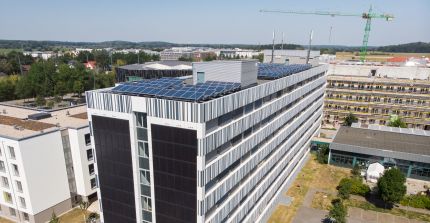
There are a total of 3 photovoltaic systems on the Golm campus. In 2024, the system on Building 19 in Golm was equipped with new modules, significantly increasing energy efficiency. Further potential on the University of Potsdam’s properties is to be tapped in the future.
The use of combined heat and power (CHP plants in the local heating network) is currently being planned by the BLB for the Am Neuen Palais campus.
The faculty and third-party funding building in Griebnitzsee (3,640 m²) is heated using geothermal energy.
Construction
The University of Potsdam aims to achieve annual energy savings (electricity and heat) in its properties through targeted measures involving the properties and local heating networks. The Construction Management Division at the University of Potsdam supports the implementing agency (Brandenburg State Agency for Real Estate and Construction (BLB)) in these efforts to the best of its ability. Intensive discussions are held annually among the interested parties (Ministry, BLB, University), and priorities are determined with regard to the core missions (research and teaching).
In the state of Brandenburg, the Federal Ministry of the Interior, Building, and Community’s Guidelines for Sustainable Construction (updated edition January 2019) were made mandatory for the state’s building construction projects as of January 1, 2020. The Building Sustainability Assessment System (BNB) was implemented in stages. The new buildings at the University of Potsdam also benefit from this.
Heating
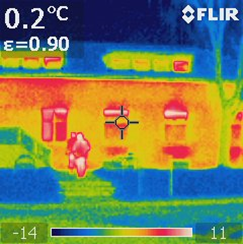
The University of Potsdam has only limited influence over the heating supply structure via local heating networks, as the method of heat generation and its modernization—being a cost-intensive measure—fall under the jurisdiction of the Brandenburg State Agency for Real Estate and Construction (BLB). To date, all large properties have been supplied with heat via gas boilers. New energy concepts are paving the way for a holistic approach to environmentally friendly energy generation, which is being implemented step by step.
Consumption Data
Department 5 has been collecting consumption data by campus and building for many years. The data is used for various reports. Consumption data is available on the University of Potsdam’s intranet via the following link:
- Neues Palais
- Golm
- Babelsberg, Griebnitzsee
Total electricity consumption in 2018 amounted to approximately 15,200 MWh (average consumption of a 4-person household: 4,000 kWh). Approximately 25,500 MWh of thermal energy was consumed in 2018.
The individual energy performance certificates, which are also posted in all buildings, can also be viewed.