Welcome to the University of Potsdam's Environmental Portal!








The Environment Portal is an initiative of the Commission for Environment and Mobility (UMK) and is edited by the Green Office. It provides information on environmental issues and sustainable development at the University of Potsdam, while also aiming to encourage a mindful approach to the environment and its limited resources. In line with the United Nations’ 17 Sustainable Development Goals (SDGs), our work aims to address global challenges in the areas of social justice, environmental awareness, and economic sustainability.
The stated goal is to bring the connection between the everyday actions of all stakeholders at our university and the sustainable development of society into sharp focus. The consumption of fossil fuels for electricity, heating, and building operations, as well as the entire lifecycle of paper, consumables, and technical equipment—from procurement to disposal—play a decisive role in this.
This page is intended to become part of an (interactive) environmental information system from which various data on the University of Potsdam’s energy and resource consumption can be retrieved. This offers all users of this page the opportunity to contribute new ideas and suggestions.
News from the Green Office
- To mark the start of the 2026 summer semester, you can find an updated list of sustainability-related courses here. The list is regularly updated. Is your course missing? Below the list, you will find the form for adding it.
- Environmental Weeks on climate protection and sustainability kick off on Earth Day, April 22. Through July 10, a variety of events and activities will showcase the university’s commitment to environmental and climate protection.
2025/26 Heating Energy Savings Bonus: Strong Results for Climate Protection
89,341.71 kWh of heating energy saved, approximately 18.8 metric tons of CO₂ reduced: 30 departments at the University of Potsdam participated in the Heating Energy Savings Bonus program during the 2025/26 heating season. This represents more than twice as much heating energy saved as in the previous year. The total area covered also grew significantly to 37,043 m².
Particularly encouraging: 29 of the 30 participating departments received a bonus. Half of the heating costs saved will be made available to the successful departments and can be used, for example, for technical equipment or professional development.
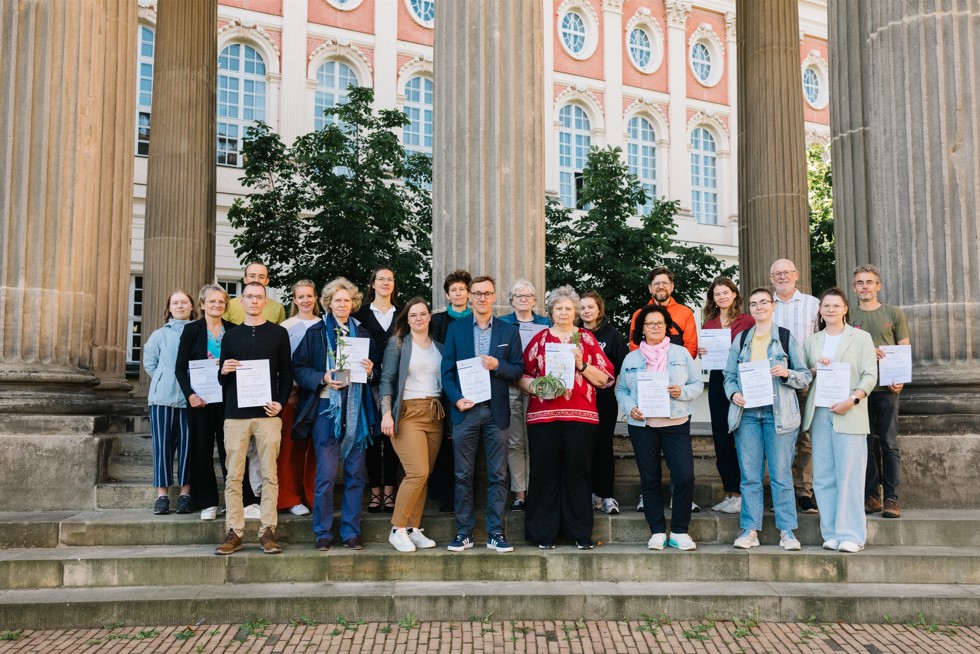
At a ceremonial award presentation, the Chancellor and the leadership of the Green Office recognized the commitment of the honored departments. For the departments with the highest bonuses, the University of Potsdam’s Botanical Garden once again provided plants from its collection as a special token of appreciation. A heartfelt thank you for that!
Congratulations to all the honored departments, and many thanks to all participants for their contribution to energy conservation and climate protection at the University of Potsdam!

Well on its way to becoming a sustainable university – the University of Potsdam receives the City of Potsdam Climate Award
The University of Potsdam’s Green Office has been awarded the City of Potsdam Climate Prize. The university received the award for its initiative to reduce campus-wide heating energy consumption. In addition to numerous other measures for sustainable operations, the University of Potsdam has been offering a so-called heating energy savings bonus since 2020. Departments that have signed up for the heating energy savings bonus and reduce their heating costs receive half of the savings paid out—and can in turn use this to finance projects related to climate protection, sustainability, or improving the work environment. In addition to the University of Potsdam, another institution, a school, and a company were honored. The climate awards were presented on May 28 as part of the Green Vision Film Festival at the Potsdam Film Museum. Click here for the article.
“Knowledge About Water” in the UP supplement in the Tagesspiegel and the PNN
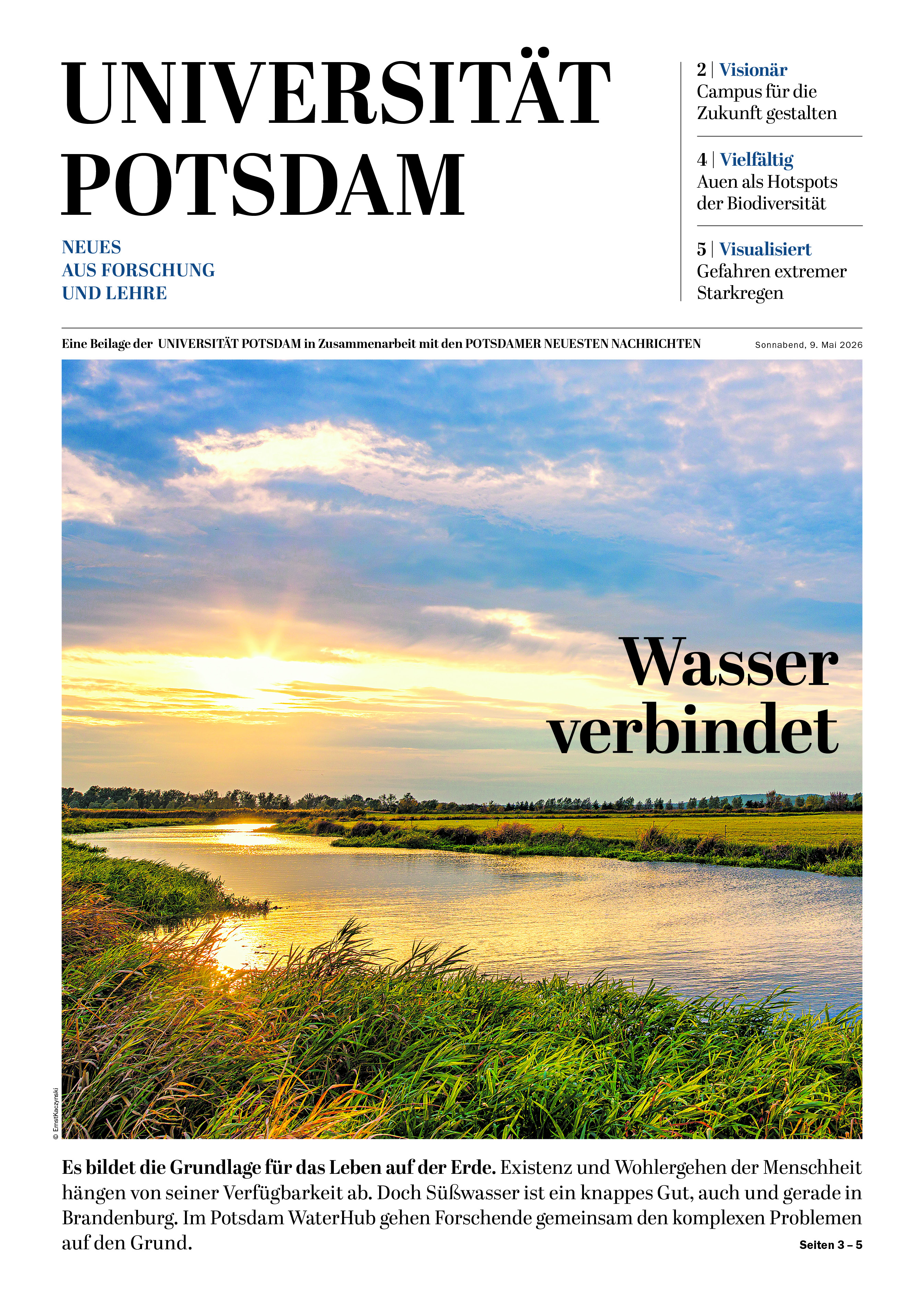
Water connects: cities and landscapes, people and nature, and the habitats of animals and plants. At the Potsdam WaterHub, it brings together researchers who are addressing increasingly complex water issues from a variety of perspectives. Some of them are featured in the University of Potsdam supplement, which has now been published in the Tagesspiegel and the Potsdamer Neueste Nachrichten. The supplement covers the protection of ecologically vital floodplains, a unique monitoring network that tracks soil moisture over large areas, and a method that visualizes the potential impacts of heavy rainfall. It also explains why it is becoming more difficult to make predictions about the water cycle under the rapidly changing conditions of climate change, as well as the importance of the polar regions for the global climate system. Additionally, the supplement covers robots in healthcare, learning democracy through music, and digital painting in art classes. Last but not least, it reveals how scientific methods can be applied to the brewing of beer. Click here to read.

Replacement of Energy-Inefficient Laboratory Refrigerators
The replacement of 35 refrigerators in the laboratories of six different research groups at the Golm and Maulbeerallee campuses was carried out as part of the municipal guideline “Climate Protection Projects in the Municipal Context.” The future electricity savings will offset the negative environmental impact of manufacturing the new refrigerators after only a short period of use. The project was funded by the National Climate Protection Initiative of the Federal Ministry for Economic Affairs and Climate Action.
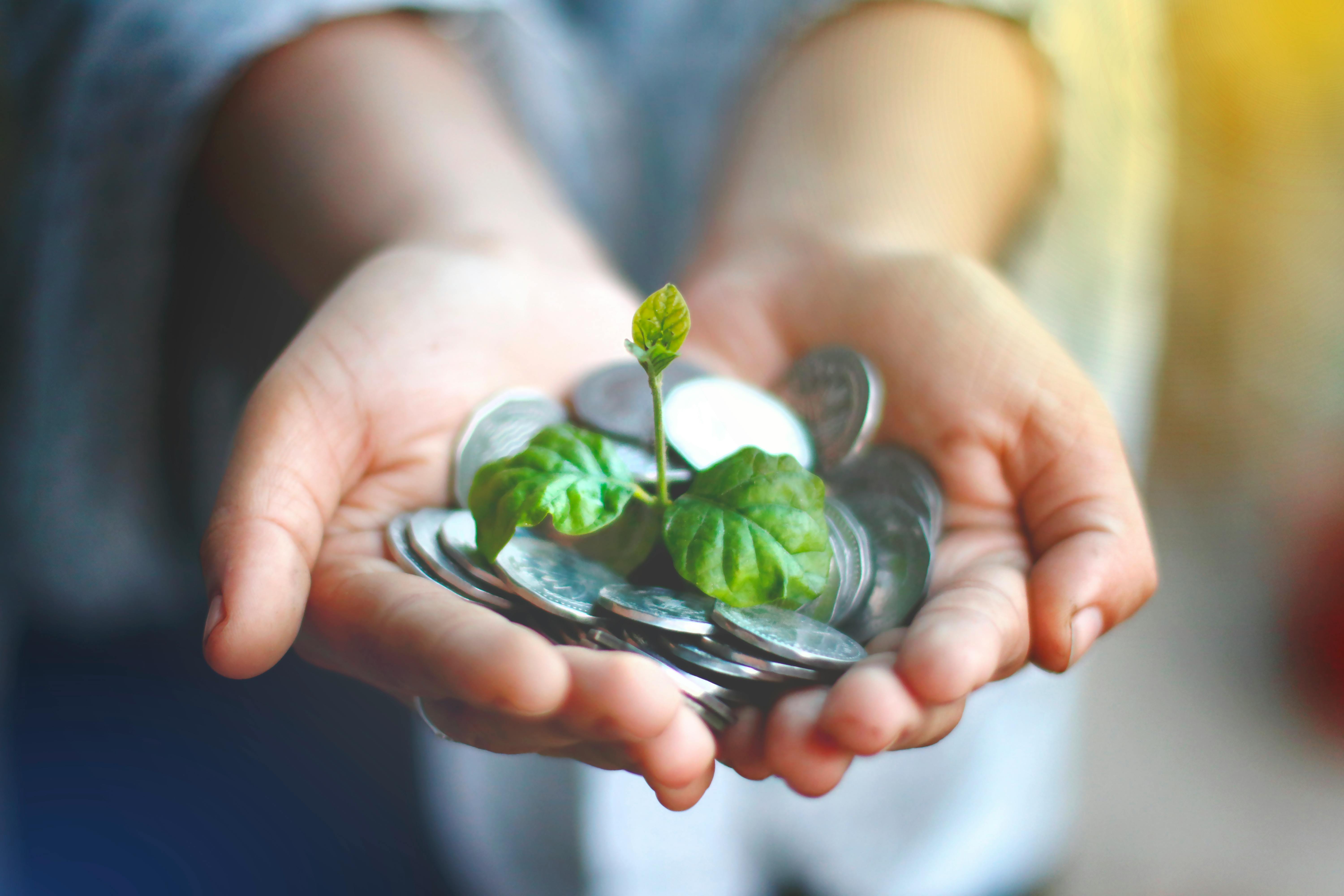
The Heating Energy Savings Bonus at UP
The Commission for Environment and Mobility (UMK) aims to encourage members of our university to actively conserve energy. To this end, it supports the initiative developed by the university administration, which is designed to allow all staff and students to share in the benefits of reduced energy consumption.
Since 2013, the university administration has offered an agreement that provides financial incentives for users to help reduce heating energy consumption in their immediate surroundings.
Further information on the heating energy savings bonus can be found under the “Campus and Operations” section.
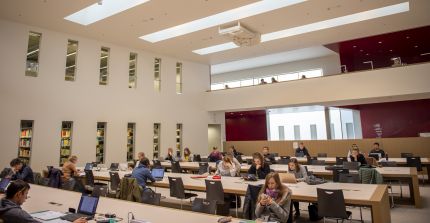
Commission for Environment and Mobility Supports Theses
Within the scope of the Commission for Environment and Mobility’s (UMK) areas of activity, there are interesting topics that could be of interest to students writing their bachelor’s or master’s theses. These include, for example, the development of energy-efficient campus operations, measures to protect biodiversity, the promotion of low-emission mobility, issues related to the integrated climate protection concept, or socio-empirical studies on environmental behavior at the UP. Please also refer to the current Sustainability Report.
If the UMK deems the topic to be of particular relevance to the action areas outlined in the environmental report, funding of up to 500 euros may be provided to cover necessary material expenses (including measurement technology, required data sets, and travel costs, if applicable).
If a bachelor’s or master’s thesis in the aforementioned context is planned in your department and you would like to apply for funding, please contact Daniel Bazant.
Tips for Saving Energy
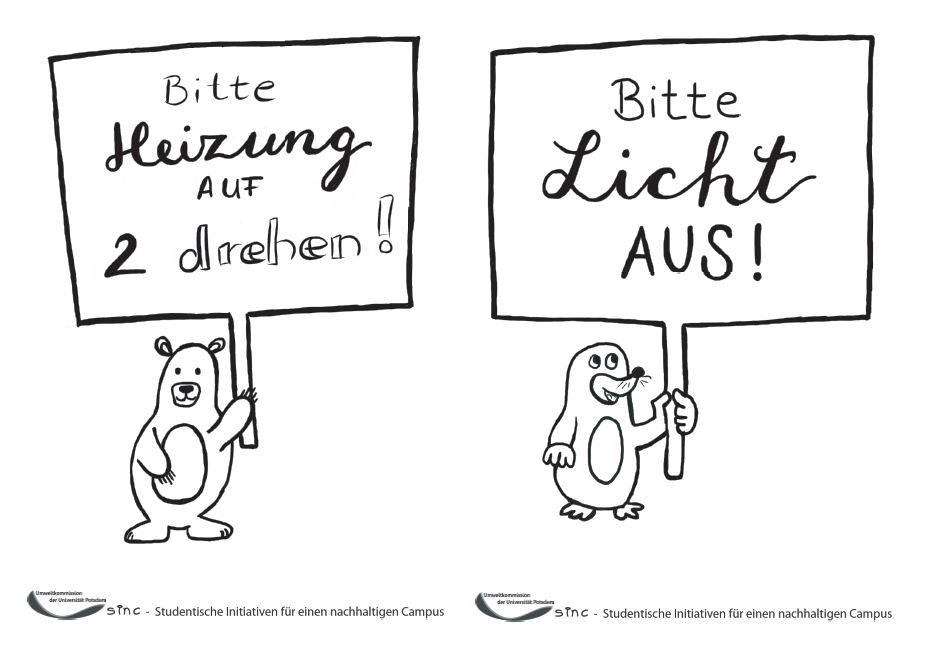
Does it annoy you to see windows left open in the middle of winter? Do you walk into seminar rooms that are way too hot? Are the lights on everywhere?
The University of Potsdam spends a lot of money on heating and lighting. Money that’s missing elsewhere because of unnecessary energy waste!
So: When leaving the room: Close the windows, turn the heat down to 2, and turn off the lights!
This saves the University money and makes the room much more comfortable for the next person to use it. If you have any questions or encounter any problems, please use the Department 5 report form (see below) or send us an email at umweltkommissionuuni-potsdampde.
Fault and Emergency Reports
Report Issues Early – Let’s Protect Our Resources Together
Taking good care of our infrastructure plays a key role in conserving resources. If technical issues are identified and reported early, we can reduce water, electricity, and heating costs and prevent further damage.
Please report technical malfunctions such as: running toilets or dripping faucets, broken heaters, doors or windows that won’t close, lights left on, other building-related issues, etc.
- Report via the central ticket system (online form)
- Alternatively: Technical Control Center of Department 5 at 0331 977-2010
Thank you for your support in ensuring sustainable and safe campus operations.
