Dear Readers,
Inclusion is a dream. In other words: It would be great if it existed. Everywhere. Yet in many parts of the world, it does not exist (yet). Germany clearly committed to this goal at the latest when ratifying the UN Convention on the Rights of Persons with Disabilities (UN CRPD) in 2009. But what does that actually mean? The goals are ambitious: Inclusion means nothing less than a society that ensures that everyone belongs and enjoys equal opportunities, can participate, and can contribute. Whether young or old, with or without physical or mental disabilities, women, men, or non-binary, poor or rich, with varying levels of education. This, however, means that the necessary conditions must be established everywhere and at all times. It means removing barriers and creating access – to healthcare, education, work, democratic involvement, social participation, and much more.
Since 2009, the United Nations has reviewed twice how well countries are progressing with inclusion. Germany has received praise twice – but also a lot of criticism. Barriers are being systematically dismantled and legal frameworks adapted; yet, in practice, these efforts continue to fail miserably. Instead of thinking inclusively and bringing everyone together, segregation persists. Special education schools, residential homes, and workshops for people with disabilities are not instruments of successful inclusion but rather structures of segregation. Exclusion instead of inclusion. Even worse, however, is that these are actually labeled as inclusion measures and legitimized by law. This kind of false labeling hijacks the concept of inclusion and obscures the goal. A sobering revelation. The task remains enormous; the road is still long.
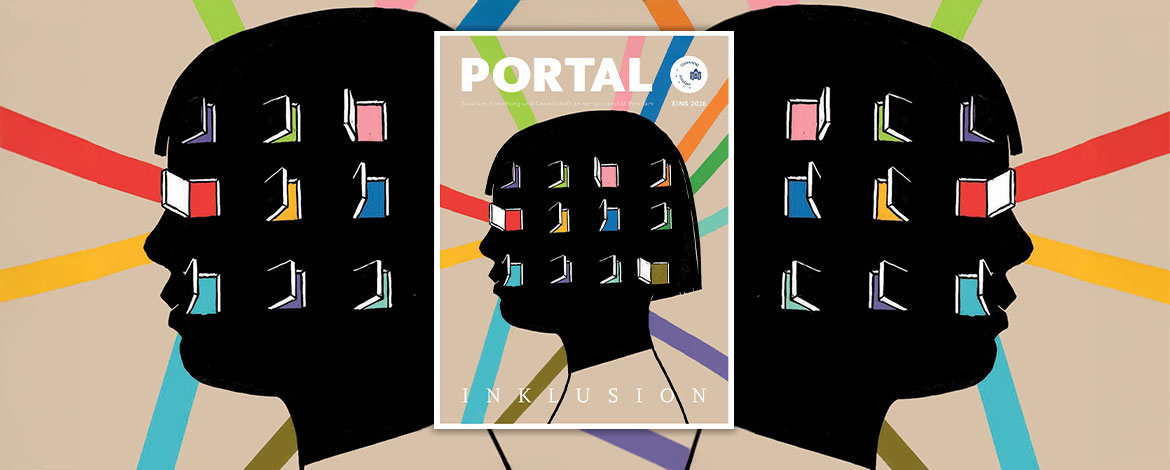
Reason enough for us to take a closer look and ask how things stand with inclusion at the University of Potsdam: in lectures and seminars, in inclusion research, and within its own structures. The cover story focuses on how inclusive the University of Potsdam already is, what has been achieved, and where more efforts are still needed. We hear from students and staff who themselves live with various disabilities, as well as researchers who study inclusion scientifically or work to ensure its success: from education to student health management.
As always, you can also look forward to additional stories about student life, research, and society. For example, about the university’s first beer cellar and several X-ray labs at the university, about seaweed salad from Brandenburg, and a model school in Berlin founded by graduates of the University of Potsdam. We also take a look at 20 years of the Potsdam Graduate School, a seminar on learning democracy in music class, and apps that help us stay healthy through play. And we asked how chatbots can assist in healthcare, why hippos bathed in the Rhine during the Ice Age, and how the head of security gets through his workday safely.
We hope you enjoy reading this issue!
Your Editorial Team