Study Trip to Estonia with the Group of KAS Scholarship-Holders


From April 7 to 12, 2026, Prof. Dr. Sönke Neitzel, in his capacity as liaison for scholarship-holders of the Konrad-Adenauer-Stiftung (KAS) at the University of Potsdam, led a study trip to Estonia for the KAS university groups. The group was accompanied by two students from the MA War and Conflict Studies program and Dr. Christian E. Rieck, a research associate at the chair and himself a former KAS scholar. The Association of Friends of the Chair of War Studies financially supported the participation of the two students, while the study trip was organized by the KAS office in Tallinn. In Narva, Dr. Igor Kopõtin joined the group, Research Director at the Estonian Military Academy who had previously been a visiting scholar in Potsdam at the Centre for Military History and Social Sciences of the Bundeswehr as well as at Professor Neitzel’s chair.
The trip began on Wednesday in Tallinn with a reception at the residence of the German ambassador in the Upper City, where the group was introduced to the current political situation, including the situation of the Russian-speaking minority, which was described as more heterogeneous than often assumed. This was followed by a visit to the Estonian parliament, the Riigikogu, including a discussion with Member of Parliament and former Minister of Foreign Affairs and former Minister of Defence Urmas Reinsalu of the conservative Isamaa party – likely the next prime minister. The program then continued with an expert exchange at the NATO Cooperative Cyber Defence Centre of Excellence, focusing on cybersecurity policy, particularly potential elements of an offensive strategy by NATO members in cyberspace as a response to the ongoing hybrid war. Afterwards, participants had the opportunity to visit the Vabamu Museum of Occupations and Freedom

On Thursday, in Tartu, the country’s main university city, the group took part in an academic exchange with faculty members of the Baltic Defence College, as well as a lecture by Professor Neitzel on the Zeitenwende. Dr. Rieck, who had been an Erasmus visiting lecturer at the Institute of Political Science at the University of Tartu in 2019, subsequently guided the group through Tartu’s old town and university campus.
Back in Tallinn, Friday was dedicated to lectures at the Estonian Ministry of Defence on the militia system and defence planning. At the Ministry of Foreign Affairs, the group held discussions with cybersecurity expert Dr. Mart Laanemäe and Martin Roger, Deputy Secretary General for Political Affairs.
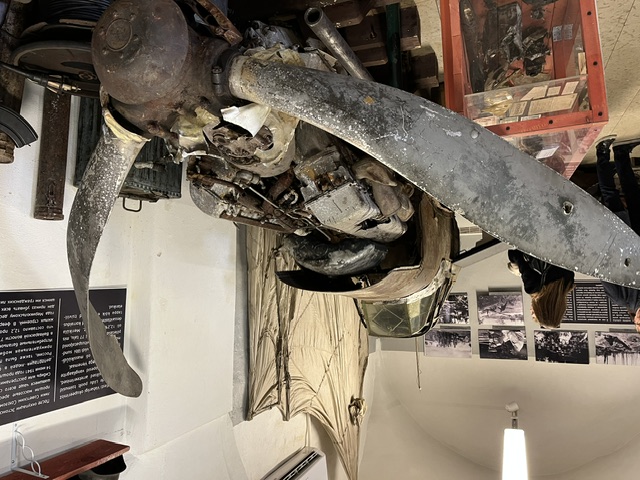
On Saturday, the group undertook a final day trip, this time to Narva on the border with Russia. The program included several military-historical sites, such as Narva Castle (Hermann Castle), German war graves along the Narva River, Narva-Jõesuu (Hungerburg), the site of a failed Soviet amphibious landing operation on the Baltic coast, as well as the memorial and museum of the so-called “Tannenberg Line.” The trip concluded with a visit to the controversial Estonian Independence memorial on Grenadier Hill, which has become a site of attraction for Central and Eastern European far-right groups that promote various forms of historical revisionism, particularly regarding the role of Estonian SS units in the “liberation” of Estonia. The evening concluded with a visit to the opera in Tallinn, welcome light entertainment after the heavy-hearted impressions in Narva.




Report on the Study Trip to Estonia by Marlene Heine and Leonard Kleiber
From April 7 to 12, two students from the Chair of Military History participated in a study trip to Estonia organized by the Potsdam university chapter of the Konrad Adenauer Foundation.
The program began with a visit to the German ambassador’s residence, where the focus was on German-Estonian relations. At the Estonian Parliament (Riigikogu), we discussed domestic and foreign policy challenges with former Foreign Minister Urmas Reinsalu. Further discussions at the NATO Cooperative Cyber Defence Centre of Excellence and at the Estonian Ministries of Defense and Foreign Affairs highlighted the close interconnection of the military, political, and technological dimensions of Estonian security policy.
A visit to the Baltic Defence College in Tartu provided insights into military debates and joint training approaches aimed at preparing both the Baltic states and their allies for local operational conditions in the event of a defense scenario. The excursion to Narva on the Estonian-Russian border highlighted how strongly the country is shaped by the culture of remembrance surrounding World War II.
Overall, the trip vividly demonstrated how Estonia remains capable of acting despite the constant Russian threat, thanks to clear interministerial coordination, societal resilience, and close international cooperation. Particularly impressive was the high level of willingness among Estonian civil society to take the initiative and assume responsibility for its own security and the defense of the alliance. At the same time, the appeal to German policymakers made it unmistakably clear in many discussions that Estonia’s security is inextricably linked to the support of its alliance partners. The trip underscored that the Russian threat must be understood as a pan-European challenge.
We extend our special thanks to the Military History Association, whose support made participation in this educational trip possible.