Student Experience
Internships
Elian Sonntag-Hadj Hamdi, WCS 2024/25, German security policy magazine Loyal, Frankfurt/Main
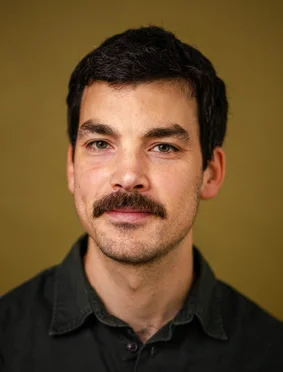
When asked about the MA War & Conflict Studies programme, one of the first characteristics I tend to emphasize is its interdisciplinary approach. Drawing on history, political science, international relations, sociology and related disciplines, the programme encourages students to examine war and conflict from a variety of perspectives. This breadth was certainly one of the aspects that initially attracted me to the programme.
At first glance, however, such interdisciplinarity may appear to be primarily an academic asset rather than a professional one. After all, how many careers require a truly balanced application of historical analysis, political thinking, social science perspectives and an understanding of contemporary international affairs? During my internship I reaffirmed one possible answer: journalism.
In the first quarter of 2026, I completed the MA programme’s mandatory internship as part of the editorial team of the German security policy magazine Loyal. Conversations with ambassadors, military and economic experts, established journalists as well as civil society actors all came together in an internship, that reflected the breadth and interdisciplinary DNA of the programme in a particularly striking way.
Published monthly by FAZIT Communication GmbH in Frankfurt am Main, Loyal serves as the official magazine of the German Armed Forces Reservist Association. While the back section of the publication is dedicated to the association’s activities and internal affairs, the independently produced editorial front section covers topics ranging from security policy and international affairs to conflict analysis, technology and military history. It was within this editorial section, produced by FAZIT’s small team of editors and journalists, that I undertook my internship.
With a circulation of around 125.000 copies per month, Loyal is – at least nominally – one of the highest-circulation security policy publications in Germany. I was already familiar with the magazine from my time in the German Armed Forces, where it was one of the few publications distributed across garrisons that I consistently looked forward to reading. What distinguished it was its scope beyond pure Bundeswehr affairs and onto broader questions of international politics and conflict. Being able to contribute to the magazine was therefore particularly rewarding.
Due to the editorial team’s small size, much of the work was carried out independently and relied heavily on individual responsibility. Coordination took place through editorial meetings and digital communication, requiring considerable self-organization and initiative. Prior experience in journalism and editorial work proved to be essential and was, in practice, expected. Research frequently involved communicating with sources across different countries or time zones, highlighting both the inherently international nature of security policy and the realities of journalism in a digital world.
My tasks included research, conducting interviews and, in a nutshell, translating complex security and societal issues into analytically sound yet engaging stories for a wider audience.
In this, the internship provided excellent ground to apply the knowledge and skills acquired during my studies. It also proved to be a nice change of pace since unlike purely academic writing, it required telling stories through the voices of experts themselves. Hence, exchanges with diplomats, academics, journalists and practitioners provided invaluable insights into the interests and perspectives that shape contemporary security debates.
Overall, the internship at Loyal was a highly rewarding experience, characterized by thematic diversity and strong practical relevance. More importantly, it demonstrated that the multi-faceted approach at the heart of the MA programme is not confined to academia. In this sense, the internship provided valuable professional experience while reaffirming the very interdisciplinarity that initially drew me to pursue War & Conflict studies.
Jonas Klünemann, WCS 2024/25, 'Deutsche UNESCO-Kommission', Bonn
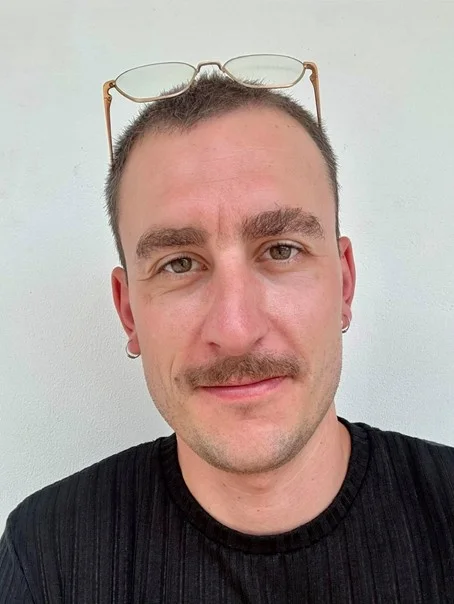
“Since wars begin in the minds of men, it is in the minds of men that the defences of peace must be constructed” – these words open the Constitution of UNESCO, founded in 1945 in the spirit of reconstruction after the Second World War. Eighty years later, the conviction that lasting peace must be built through international exchange and multilateral cooperation remains as relevant as ever – yet it is also increasingly being challenged. It was precisely this tension that motivated me to apply for an internship with the 'Deutsche UNESCO-Kommission' (DUK).
The history of the DUK is closely intertwined with the early years of the Federal Republic of Germany. In 1951, the Federal Republic of Germany was admitted to UNESCO – even before joining other organizations within the UN system and despite the existence of the so-called “enemy state clauses” in the UN Charter. In this sense, UNESCO played an important symbolic role in Germany’s reintegration into the international community after the war. Since then, the DUK has served as a multilateral intermediary between the German government, civil society, and UNESCO headquarters in Paris. It connects more than 50 World Heritage Sites, around 300 Associated Schools, as well as numerous biosphere reserves and UNESCO Chairs; advises federal and state institutions on UNESCO-related matters; and promotes the organization’s peacebuilding mission within public discourse – work that is coming under increasing pressure amid the recently announced US withdrawal from UNESCO and the global resurgence of nationalism.
From October to December 2025, I completed a three-month internship in the department for “International Cooperation and Emerging Topics” at the DUK in Bonn. There, I was able to observe firsthand how the vision articulated in UNESCO’s preamble – peace secured through education, science, and culture – is translated into concrete project work. As part of the UNESCO programme “Man and the Biosphere,” which links sustainable development with environmental conservation, I supported international workshops in Southern Africa, coordinated organizational processes, and collaborated with UNESCO National Commissions from various African countries. I was particularly fascinated by my involvement in projects related to the “UNESCO Recommendation on the Ethics of Neurotechnology.” This recommendation is a compelling example of so-called 'soft international law': while not legally binding, it nonetheless exerts political influence by establishing international standards and formulating shared ethical guidelines for emerging technologies – negotiated collectively by all 194 UNESCO member states.
The internship gave me a vivid understanding of how soft-power instruments of multilateralism operate in an increasingly hard-power-driven world – and why they remain indispensable.

Lennart Neunzert, WCS 2025/26, Naval Command, Rostock
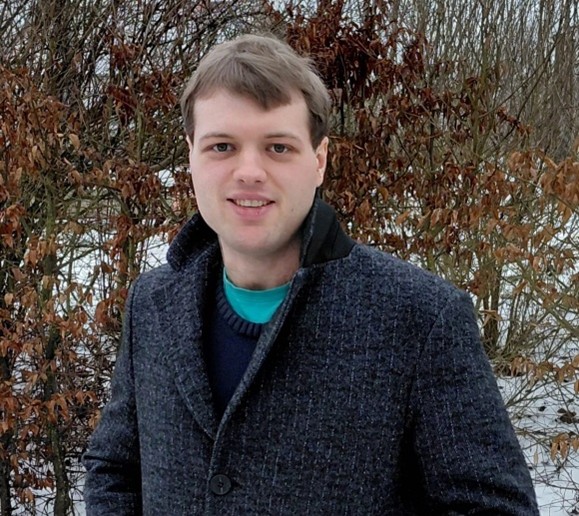
During my master’s program in War and Conflict Studies, I had the opportunity to do an exciting internship as early as my first semester. After a meeting with Prof. Neitzel, during which I was able to outline my academic and professional interests, I was soon offered the chance to work as an intern for several weeks in the Strategy and Planning Division at the Command.
After a few phone calls with my future direct supervisor, Commander von Puttkamer, everything was set in stone. The internship ran from February 9 to April 3, 2026.
During those nearly eight weeks, Mr. von Puttkamer assigned me a wide variety of tasks. These tasks focused in particular on the strategic communication of the Navy leadership—specifically, the messages the Navy intended to convey to various audiences at private or public events, such as the National Maritime Conference.
My tasks were always very varied and challenging. These included, among other things, drafting concepts for senior officials, conducting initial assessments of inquiries to the Navy, and compiling resumes of key event organizers and participants. One particularly positive aspect worth highlighting is that I was treated more like a full-fledged staff member than an intern.
For these reasons, I would definitely recommend this internship. In addition, all the colleagues I met were very friendly, courteous, and always helpful.
Jasper Hufschmidt-Morse, WCS 2024/25, EY, Berlin
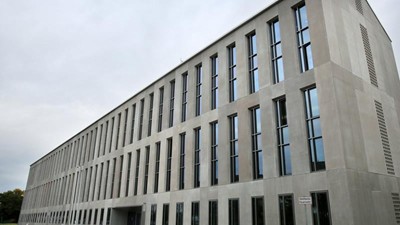
What role do businesses play in the defence, national security and foreign policy realm? How do corporations adapt to domestic and international political developments? What can expertise in security and defence provide to the private sector? These, and similar questions, accompanied my internship with the Public Policy department of EY Germany, between October 2025 and March 2026. At the beginning of the War and Conflict Studies degree, joining a “Big Four” company had not entered my mind, and I wondered what an academic background in international security and war studies could provide such a company. Subsequently, throughout the course of the internship, I was able to glean an unexpected insight into the nexus between foreign policy, defence and national security, and private enterprise.
From the very beginning, the Public Policy team integrated me exceedingly well into their daily activities and entrusted me with meaningful tasks, not least due to a highly effective onboarding process which allowed me to find my feet quickly in an enormous international corporation. Among the responsibilities with which I was entrusted were such things as the monitoring of political and geopolitical developments (somewhat akin to an internal OSINT unit), contributing to briefings for the national corporate leadership, participating in and preparing for high-level background conversations, and researching security-related topics. In such assignments I was given many opportunities to contribute to studies and research papers. These provided a fascinating quantitative, as well as qualitative, approach that is somewhat to be expected from a numbers-driven organisation, such as EY.
The most noteworthy highlight – and arguably the project which occupied most of the duration of the internship – was the Munich Security Conference, in February. As a main sponsor of the world’s most significant security conference, EY organised and participated in several events in and around the conference. As such, I was privileged in being able to travel to Munich and participate in many of these events, some within the security area. In contributing to EY’s presence at the conference I gained an invaluable insight into the daily implementation and formation of security policy, while incorporating the knowledge I have gained from the degree.
In sum, this internship was an unforeseen opportunity that presented itself at the beginning of the degree programme – one that I am glad that came my way. It provided exceptional insights into the interconnected worlds of politics, academia and business, broadened my horizon, and opened a potential career path that had hitherto not been on my radar. Many expect that a degree in War and Conflict Studies primarily prepares you for a career in the public sector or academia. However, my above experience has clearly shown that the scope and opportunities provided to me by this degree are both multifaceted and stimulating across a broader field than I had earlier imagined.
Fabian Wiesnet, WCS 2025/26, Federal Foreign Office, German Embassy in Oslo, Norway
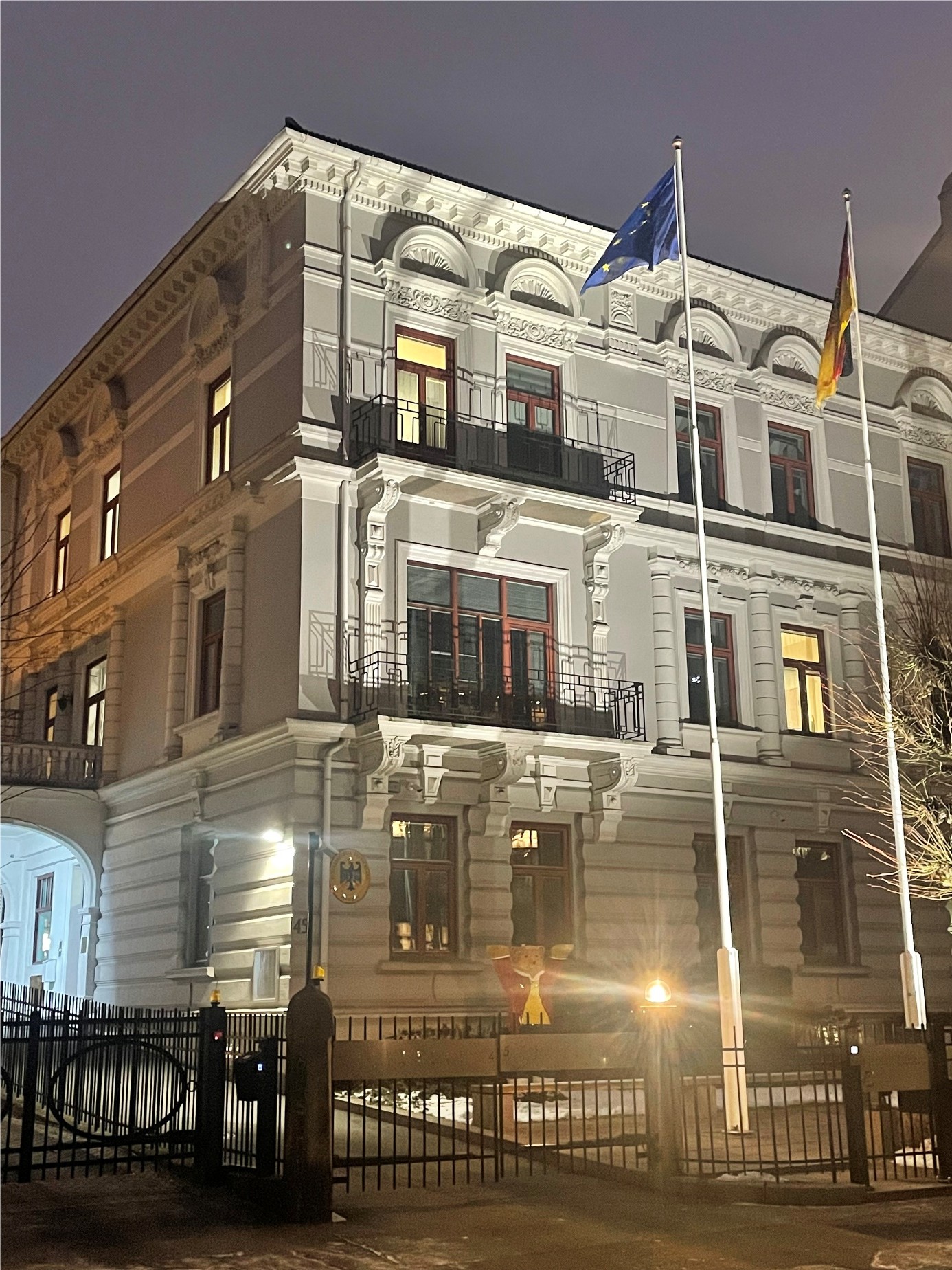
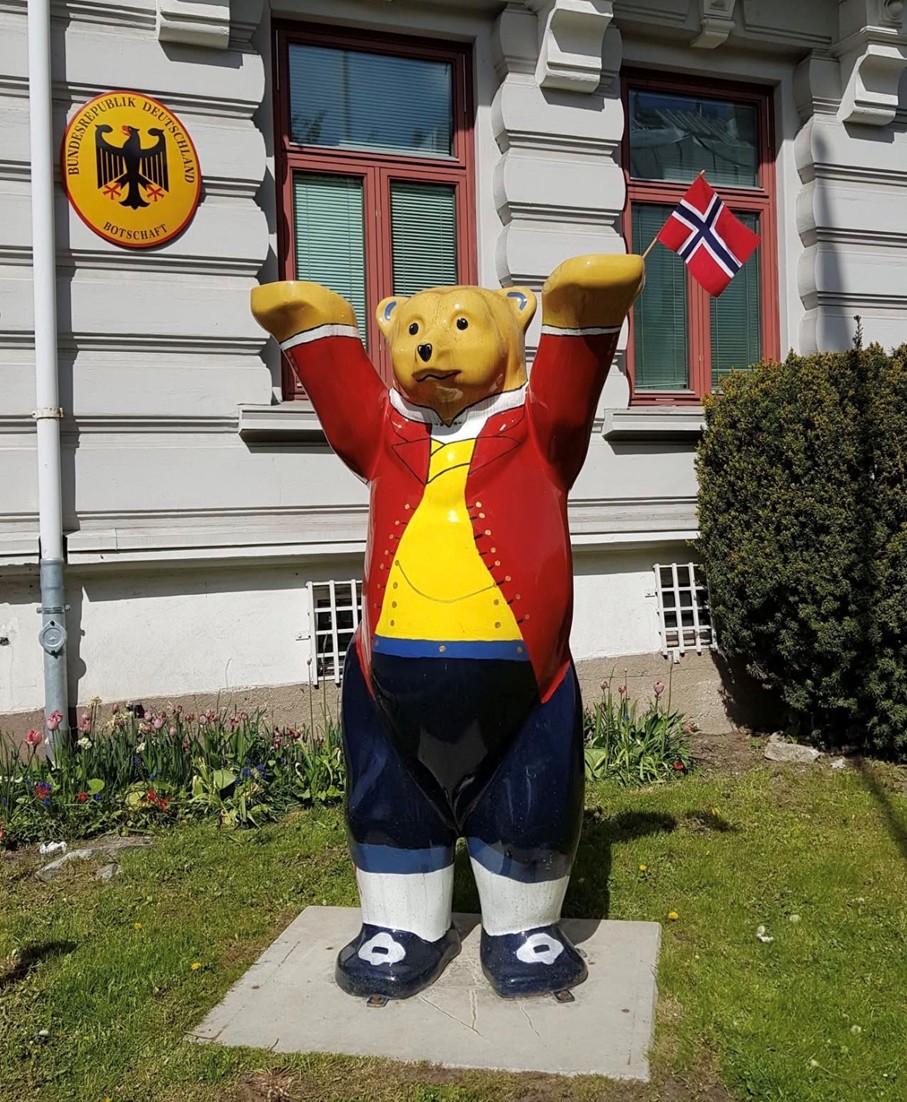
For Germany, Norway is a strategic partner with shared values and interests—whether in Arctic policy, space policy, maritime security, energy security, or joint defense projects. Through an internship at the German Embassy in Oslo, I was able to specifically deepen my interest in these relationships as well as in the Far North as a whole.
The War and Conflict Studies program provides a valuable foundation for this practical experience. Through thematically relevant courses and the opportunity to spend a semester abroad in the Nordic countries—for example, at the University of Oslo or the Swedish Defence University—it creates excellent conditions for working in this region.
Thanks to a wide range of responsibilities on site, I gained comprehensive insight into the workings of a German diplomatic mission abroad. My duties included conducting research and preparing background analyses on political, economic, and social developments in Norway, as well as on the state of German-Norwegian relations. In addition, I contributed to the embassy’s public relations efforts and assisted with the planning, organization, and execution of public events. In addition, I had the opportunity to represent the embassy at external events. A particular highlight was my participation in the Oslo Security Conference, which gave me direct insight into current security policy discussions at the international level.
The German Embassy in Oslo is a medium-sized diplomatic mission; the size and focus of German diplomatic missions worldwide vary depending on their location. The Federal Foreign Office offers internships both abroad and at its headquarters in Berlin. There are separate application processes for these two options via the Federal Foreign Office’s online portals. Please note that the application must be submitted no later than six months before the potential start of the internship. The internship typically lasts two to three months.
Overall, I highly recommend an internship at a German diplomatic mission abroad, as it provides valuable insights into diplomatic practice and international political contexts.
Charlotte Soulé, IWS 2023/24, KAS, Amman in Jordan

My experience in Amman was both enriching and memorable, despite an initially challenging start. Finding accommodation proved to be the most difficult aspect of my arrival. Although I had arranged a place through what seemed to be a reliable contact, the condition of the apartment was unsanitary, and I was unexpectedly asked to leave the day after I arrived. I subsequently searched through Airbnb and was fortunate to find a great apartment in the 7th Circle area. I would strongly recommend this neighbourhood, as it offers a lively environment where it is relatively easy to meet international students and other interns. For future participants who may feel uncertain about where to stay, booking a hotel for the first week and then searching for accommodation through Airbnb once in Amman can be a practical and reassuring solution.
The internship itself was an outstanding experience. I had the pleasure of working closely with Philipp, Nicolas, Duaa’, Mohamad, and, later, Layan. Under Nicolas’s mentorship in particular, I was able to explore many different aspects of working within an international organisation such as the Konrad-Adenauer-Stiftung. From acting as a contact point and managing the implementation of projects to designing concepts and workshops, I gained invaluable practical experience. Over time, I also discovered the administrative and organisational dimensions of project work with Duaa’, as well as the financial management aspects during the afternoons spent with Mohamad. These complementary perspectives provided a comprehensive understanding of the different elements required to ensure that projects are implemented smoothly and effectively. In addition, I had the opportunity to conduct my own research throughout the internship, always with Nicolas’s guidance and support.
Beyond the professional experience, Amman and Jordan more broadly quickly became one of my favourite places to spend time. Weekends are easily filled with exploration, both within the city and across the country, as well as discovering the local cuisine. For anyone visiting Amman, I would particularly recommend the restaurant Old View, which offers both excellent food and a memorable atmosphere. Getting around is relatively straightforward: travelling by bus is possible, but it is equally convenient to use Uber or rent a car, even for destinations that might initially seem quite distant. Travelling with Jordanians or with people familiar with the country can make these journeys even smoother and more enjoyable. Above all, what leaves the strongest impression is the kindness and generosity of the people (and the food). If you ever feel uncertain or lost, someone will almost always be ready to offer assistance and help you find your way.

Penelope Wessel, IWS 2022/23, NATO, Office of the Political Advisor (POLAD) at Allied Joint Force Command Brunssum, NL
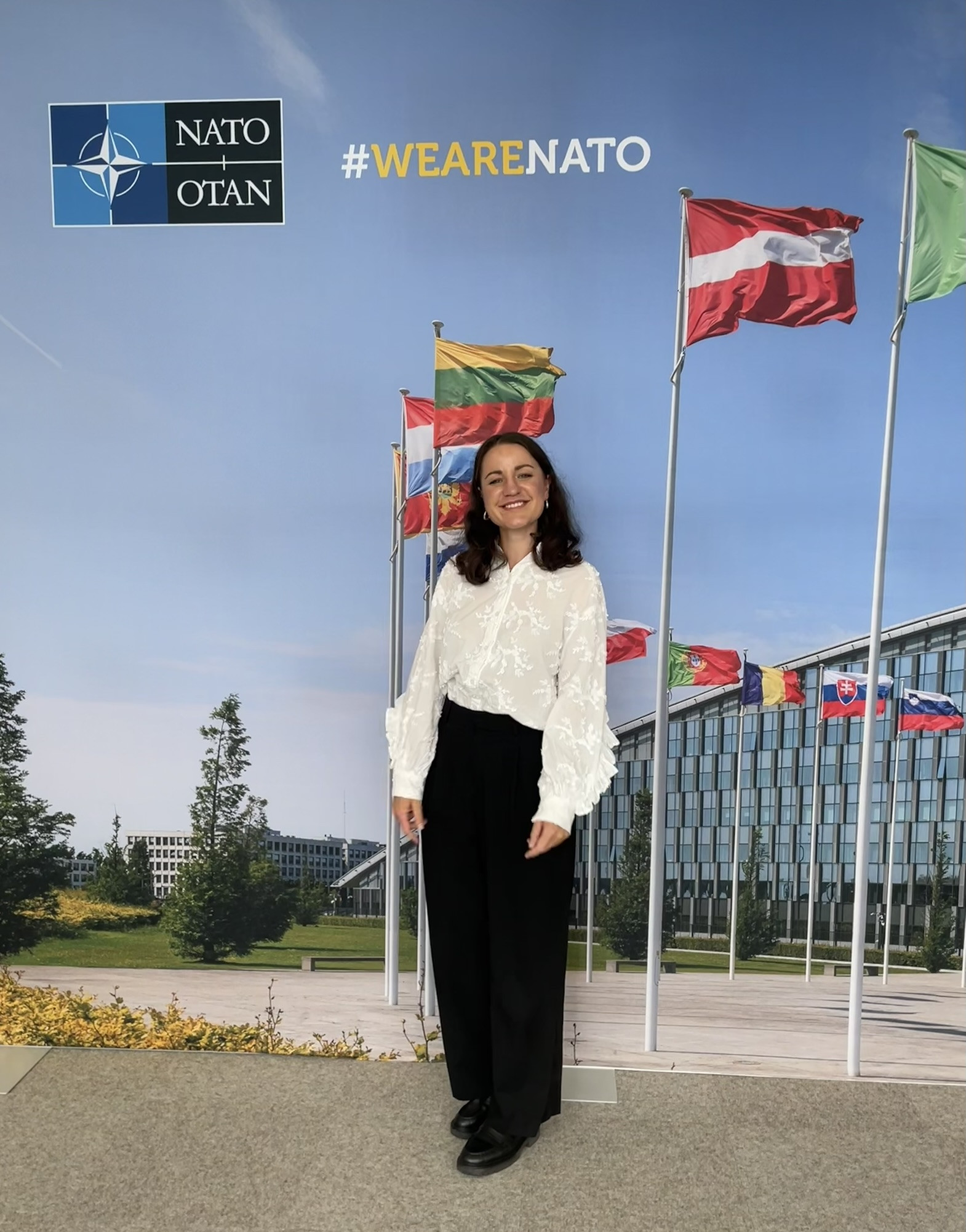
From February to August 2025, I completed a six-month internship at the Office of the Political Advisor (POLAD) at Allied Joint Force Command Brunssum (JFCBS), one of NATO's three operational commands. After several study-related positions at the Bundestag and political foundations, I was specifically looking for an opportunity to gain international and multinational work experience. I was particularly attracted by the opportunity to not only view the alliance, which forms the cornerstone of European and thus also German defence, from an academic perspective, but also to get to know it up close. I made a conscious decision to go to Brunssum in order to understand the operational level of the alliance and to change my perspective – moving away from political strategy and towards the concrete implementation and coordination of military tasks.
From the outset, my team treated me like a regular staff officer: under supervision, and later independently, I wrote briefings and background papers for senior management and leadership. I contributed to the political assessment of ongoing operations, analysed security policy developments and supported the daily work of the POLAD office in a dynamic, multicultural environment. Over time, I gained a comprehensive understanding of NATO's operational command structures and the interfaces between political advice, military planning and multinational decision-making.
A particular highlight was attending the change of command ceremony in May 2025, at which command was handed over from an Italian general to General Ingo Gerhartz, the former Inspector of the Air Force. Through close interaction with the German soldiers on site, I was also able to gain a deeper understanding of the role of the German Armed Forces within NATO. At the same time, I gained insights into the diversity of national perspectives within the multinational structure – and into the associated challenges and strengths. It was precisely the diversity of the employees' backgrounds, experiences and ways of thinking that showed me one of NATO's key strengths: its ability to remain capable of action through diversity.
I can recommend an internship at NATO operational level to anyone who wants to develop a realistic understanding of the North Atlantic Alliance – beyond theory, right at the interface between politics and military practice.
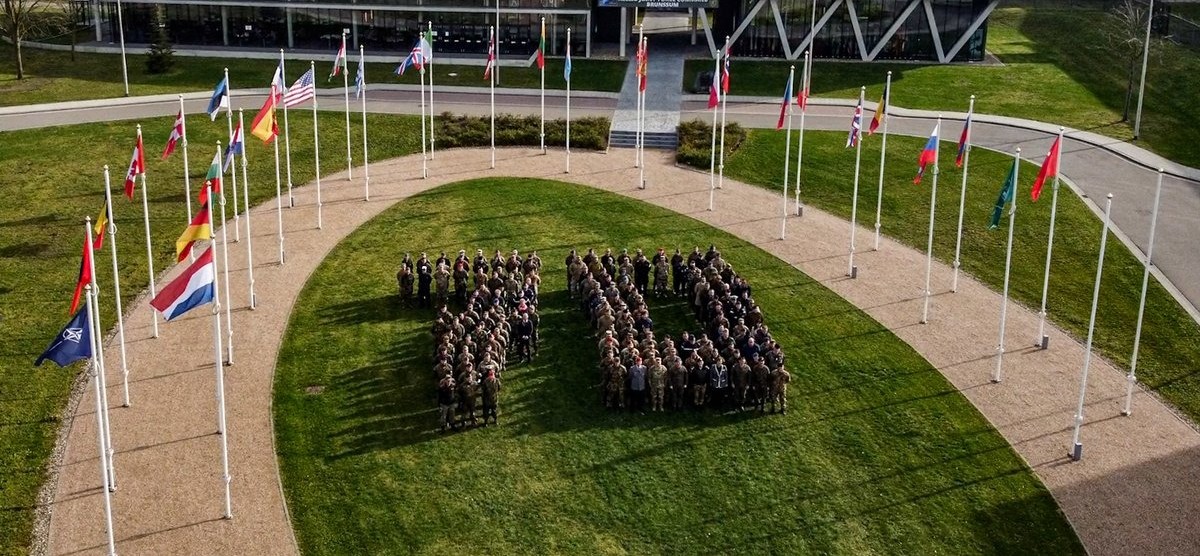
Justus Pochhammer, WCS 23/24, Zentrum für Militärgeschichte und Sozialwissenschaften der Bundeswehr, Potsdam

One of the main reasons why I applied for the WCS program was the comprehensive cooperation between the faculty and its partners. It was important for me to gain as much practical experience as possible in security policy and an internship at the Centre for Military History and Social Sciences of the Bundeswehr (ZMSBw) offered the perfect opportunity for this. The ZMSBw is the research institute of the ministry of defence and employs over 100 civilian and military staff in the west of Potsdam. Its core tasks are to promote education, research and consult the federal government in the fields of military history, military science, and security policy. As a publicly funded institution, it can also carry out basic and archival research, which otherwise is commonly overlooked.
I completed my internship as part of the “Operations” research group, which deals with recent military history since 1990. I was primarily involved in a new book project and assisted with researching graphical elements and pre-editing of the scientific texts. Due to the length of the internship, I was able to work with parts of this project from the initial research, through coordination with other departments, to the first drafts. As the centre for military history in Germany, the ZMSBw also frequently hosts interesting conferences which offer you the opportunity to expand your horizon and network.
Due to a three-month extension, I spent about half a year at the ZMSBw. During this time, I was able to steadily expand my own knowledge of military history and security policy. I am grateful for the outstanding collegiality and can only recommend anyone interested to consider an internship at the ZMSBw.
Lukas Rijntalder, IWS 23/24, Konrad-Adenauer-Stiftung, Singapore


During the semester break I had the honour and pleasure of contributing to the Regional Programme Policy Dialogue Asia (PDA) of the Konrad Adenaur Stiftung (KAS) in Singapore for two months as an intern. The PDA office aims to bolster political dialogue and promote democratic principles in especially the South-East of Asia.
As an intern I was involved in a great deal of events, such as event management, assisting in research and even attending conferences. As such, I was able to attend a round-table discussion with a visiting German general and conferences regarding AI policies in Asia and piracy in the Strait of Melacca. Furthermore, I was able to accompany the PDA delegation to Bangladesh to attend a conference on labour migration in South-Asia, a meeting at the Bangladesh Institute for International and Strategic Studies and visit the Asian University for Women, which is supported with scholarships by the KAS.
Apart from witnessing such eye-opening events first-hand, I researched the state of digitalistion in Singapore for a presentation, assisted in the research for papers for the site and supported the preparation of a presentation on the European Elections of 2024 at the German European School Singapore. I was also able to contribute to the comic series of the KAS aimed at reaching people regarding political subjects and helped out with multiple admin tasks.
Moreover, besides learning a great deal of things through in-field experience and research, I had the privilege of spending those two months in one of the most sophisticated and cosmopolitan cities in the world. Learning about the perspectives of the city-state and the wider region and having lived there are experiences I will forever carry with me.
Neven Berringer, WCS 2021/22,
Korad-Adenauer-Stiftung, Jordanien


I had been interested in the Middle East for a long time and had already studied the region in various seminars during my bachelor's degree. For this and other reasons, I really wanted to work and live in the region for a longer period of time in order to gain more direct access and engage more intensively with the local people, culture and politics, thereby broadening my perspective.
The KAS has offices abroad around the world, which support more than 200 projects in over 120 countries. In the Gulf region, the KAS is particularly keen to promote multinational dialogue platforms for decision-makers and the joint transfer of knowledge, with a focus on cooperation in matters of common security.
The tasks I was given were very interesting and varied, and I was able to work freely and independently. For example, I was asked to research a new security architecture in the Gulf including Iran, the relationship between the Gulf states and Syria and the development policy of the Gulf states. I was involved in the planning and realisation of upcoming events from the outset and was subsequently asked to write both internal and public reports on the events. The head of the international office also enabled me to take part in events organised by other institutions/think tanks, such as a conference on the relationship between Palestine and Israel.
The highlight of the internship was certainly the fact that I was able to travel to Kuwait for a civil society event sponsored by the Gulf States Regional Programme. As a representative of the office, I took part in the event, but was also able to have background discussions with the organisers and learn more about their work and problems in Kuwait.
In general, it can be said that the entire team went to great lengths to give the interns a very good experience in Amman and always made sure that interns were present at events and were able to gain as much insight as possible into the work of the office and the many other international organisations in Amman. In this sense, I can draw a very positive balance and would do the internship again at any time.
Lukas Joselewitsch, IWS 2021/22,
Bundesamt für Sicherheit in der Informationstechnik
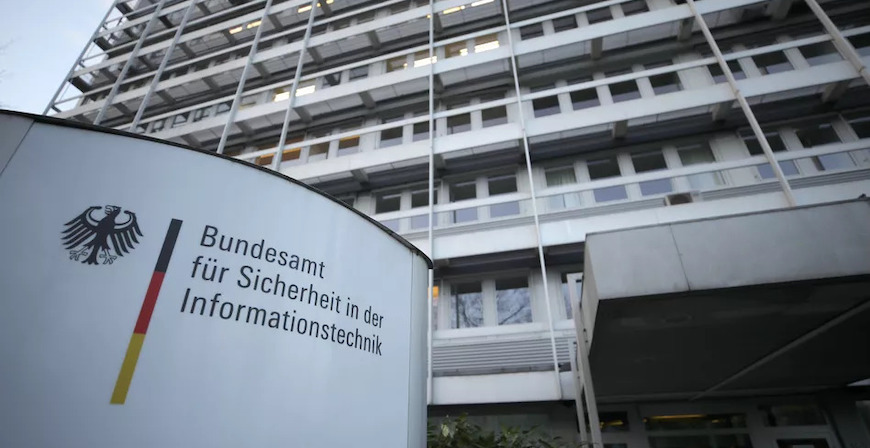
Das Bundesamt für Sicherheit in der Informationstechnik (BSI) ist die nationale Cyber-Sicherheitsbehörde. Es gestaltet Informationssicherheit in der Digitalisierung durch Prävention, Detektion und Reaktion für Staat, Wirtschaft und Gesellschaft. Das BSI beschäftigt 1.733 Mitarbeiter mit Hauptsitz in Bonn. Meine Tätigkeit erfolgte in der Abteilung Operative Cybersicherheit (OC), die die Aufgabengebiete "Detektion", "Reaktion" und "Lage" sowie andere damit verbundene Tätigkeiten umfasst. Ziel des Aufgabengebiets "Detektion" ist dabei, sicherheitsrelevante Ereignisse zeitnah und zuverlässig zu erkennen. Falls notwendig, ergreift das BSI im Rahmen des Aufgabengebietes "Reaktion" geeignete Maßnahmen. Dazu gehört etwa die Warnung der von Cyber-Vorfällen betroffenen Personen und Organisationen sowie in besonderen Fällen auch die Unterstützung bei der Wiederherstellung des sicheren Betriebs.
Zu meinen wichtigsten Aufgaben gehörten die Analyse und Erstellung von Lageberichten im geopolitischen Kontext. Mein Fokus lag dabei auf promienten staatlichen Bedrohungsakteuren oder sogenannten APTs. Die behandelten Aktivitäten umfassten disruptive Angriffe, Spionage und Informationsoperationen. Auch wenn ich in meinem Bachelor einige Berührungspunkte mit Themen der IT-Sicherheit hatte, war die von mir ausgeführte Tätigkeit nichttechnischer Natur. Ein Cybersicherheitsstudium ist folglich keine zwingende notwendige Vorrausetzung für eine Beschäftigung im BSI.
Ferner konnte ich an verschiedenen internen Lagebesprechungen teilnehmen und Einblicke in die sicherheitspolitische Behördenlandschaft des Bundes gewinnen. Das BSI zeigte sich durchweg hilfsbereit und interessiert an angrenzenden sicherheitspolitischen Themenfeldern des IWS-Studiums, die in die Arbeit mit einfließen konnten.
Ich habe meine Zeit im BSI als äußerst positiv empfunden und werde meine Masterarbeit in Kooperation mit dem Hause verfassen.
Steven Dewart, WCS 16/17,
Konrad-Adenauer-Stiftung, Lebanon

Als mir über den Lehrstuhl die besondere Möglichkeit eröffnet wurde, ein dreimonatiges Auslandspraktikum in einem Field Office in Nahost zu absolvieren, nahm ich dankend an. Dieses Büro befasste sich im Schwerpunkt mit sicherheitspolitischen Entwicklungen in Syrien und dem Irak, die Einrichtung selbst arbeitete jedoch, der Praktikabilität wegen, von Beirut aus. In der libanesischen Hauptstadt fließen Orient und Okzident in bemerkenswerter Weise ineinander und vermischen sich zu einem komplexen, kaum vergleichbaren Gemenge aus Politik, Religion und Kultur. Dieses faszinierende Chaos bot in jedem Falle ein besonderes Arbeitsumfeld.
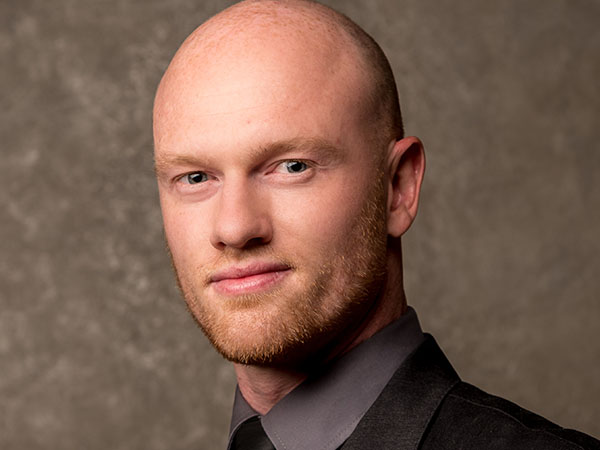
Der Auftrag der Einrichtung, welche bei einer politischen Stiftung eingegliedert war, war das Monitoring der sicherheitspolitischen Lage im nahöstlichen Raum, insbesondere im Rahmen des damaligen kurdischen Unabhängigkeitsreferendums im Nordirak sowie den damit einhergehenden Konflikt in der Region. Auch die Untersuchung der Beteiligung deutscher Rüstungsgüter war hier Gegenstand der Untersuchung. Darüber hinaus wurde eine Vielzahl von Konferenzen ausgerichtet, beispielsweise um künftigen irakischen Entscheidungsträgern das Konzept der Good Governance näherzubringen.
Im Zuge meiner Tätigkeit selbst, und auch des heiß ersehnten Wochenendes, konnte ich schließlich Land und Leute kennenlernen. Der Libanon ist stabil in seiner Instabilität. So wie das gesamte Land von Korruption, Krieg und Zerstrittenheit geprägt ist, so sind es auch die Menschen in ihm. Hier hat man es verstanden, das Leben in seiner tatsächlichen Vergänglichkeit voll auszukosten. Dort wo vor nicht allzu langer Zeit noch Nachbarn einander ermordeten, ist es nun eine temperamentvolle Hassliebe, welche die Menschen in diesem Land zusammenhält. Die Stadt sucht mit ihrer warmen, beinahe exzentrischen Schizophrenie vergeblich ihresgleichen. Kaum eine Region ist kulturell, sprachlich und konfessionell so heterogen. Von den dekadenten Luxusyachten in der nördlichen Bucht sind nur es nur wenige Minuten in einem der unzähligen Taxis bis zu Flüchtlingslagern und brennenden Müllhalden. Vollkommen zerschossene Ruinen lehnen sich mahnend an glitzernde Fensterfronten. Wenn Paris und Bagdad ein uneheliches Kind hätten, es wäre Beirut. Ein unvergessliches Abenteuer, das ich nicht missen möchte.
Niklas Ebert, WCS 17/18,
International Institute for Strategic Studies, London
Die Arbeit des IISS war mir bereits aus meinem Bachelorstudium bekannt, daher war ich besonders erfreut zu sehen, dass der Studiengang die Möglichkeit eines Praktikums dort unterstützte und, um es kurz zu halten, die Arbeit in London hat mir von meinen bisherigen beruflichen Erfahrungen am besten gefallen.
Über den gesamten Zeitraum meines Aufenthalts fühlte ich mich immer wie ein gleichrangiges Mitglied des Teams und hatte stets das Gefühl, dass ich mit meiner Arbeit aktiv zum Vorankommen der Projekte beitrug. Positiv überrascht wurde ich auch von der angenehmen Arbeitsatmosphäre. Trotz des hektischen Betriebs haben sich alle Mitarbeiter, mit denen ich zu tun hatte als sehr hilfsbereit und zuvorkommend erwiesen. Während meiner Zeit beim IISS arbeitete ich eng mit Bastian Giegerich, dem Leiter des Defence and Military Analysis Programms zusammen.
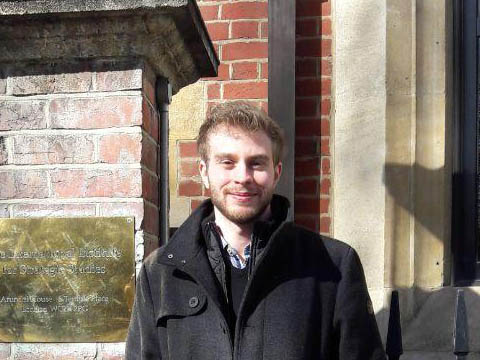
Dies funktionierte trotz seiner häufigen Dienstreisen ausgezeichnet und ich hatte die Gelegenheit ihn bei vielen unterschiedlichen Themen zu unterstützen. Unter anderem forschte ich zu europäischer Außen- und Verteidigungspolitik, 3D Drucken im militärischen Bereich und den Anstrengungen der NATO in Bezug auf Resilience. Zusätzlich haben wir gemeinsam einen Kommentar zur Deutsch-Britischen Militärkooperation veröffentlicht. Neben meiner Arbeit hatte ich außerdem die Möglichkeit den zahlreichen interessanten Veranstaltungen des Instituts beizuwohnen, zu denen nicht selten hochrangige Vertreter aus Politik und Diplomatie erschienen.
Insgesamt war das Praktikum beim IISS in London also eine sehr bereichernde Erfahrung. Das Team hat mich freundlich aufgenommen, ich konnte meine Research Skills weiter ausbauen und habe Einblicke in viele verschiedene und spannende Themen bekommen. Für all diejenigen mit einem Interesse an Rüstungs- und Sicherheitspolitik kann ich das IISS uneingeschränkt empfehlen.
Moritz Kosel, WCS 16/17,
BwConsulting, Berlin
Ich absolvierte ein Praktikum in der Inhouse-Beratung der Bundeswehr, der BwConsulting, am Standort Berlin. Die BwConsulting unterstützt das Bundesministerium der Verteidigung (BMVg) insbesondere bei seinen strategischen Projekten und ist dabei in den Beratungsfeldern Strategie & Steuerung, Prozesse & Organisation und Projektmanagement tätig.
Durch dieses Aufgabenspektrum war es mir in meinem Praktikum möglich, Einblicke in den Geschäftsbereich des BMVg zu erhalten und aktiv an dessen strategischen Projekten mitzuarbeiten. In der täglichen Praxis gestaltet sich dies durch eine Vielzahl an Aufgaben, die u.a. von Recherche- und Analyseaufgaben bis zu Entwicklungs- und Konzeptionsaufgaben, wie z.B. einer Unterstützungssoftware für den Geschäftsbereichs BMVg oder von Haushaltsvorlagen, reichte.
Das Studium unterstütze mich bei diesen Aufgaben auf mehrfache Weise. Beispielhaft sind dafür die Ansätze zur Organisationskultur aus der Militärsoziologie, die mir einen schnellen Zugang zu den kulturellen Eigenschaften der Bundeswehr ermöglichten. Zudem erhielt ich durch das Studium von militärgeschichtlichen Themenfelder ein tiefes Verständnis für das Aufgabenspektrum der Bundeswehr.
Christopher Smith, WCS 18/19,
Deutsche Gesellschaft für Auswärtige Politik, Berlin
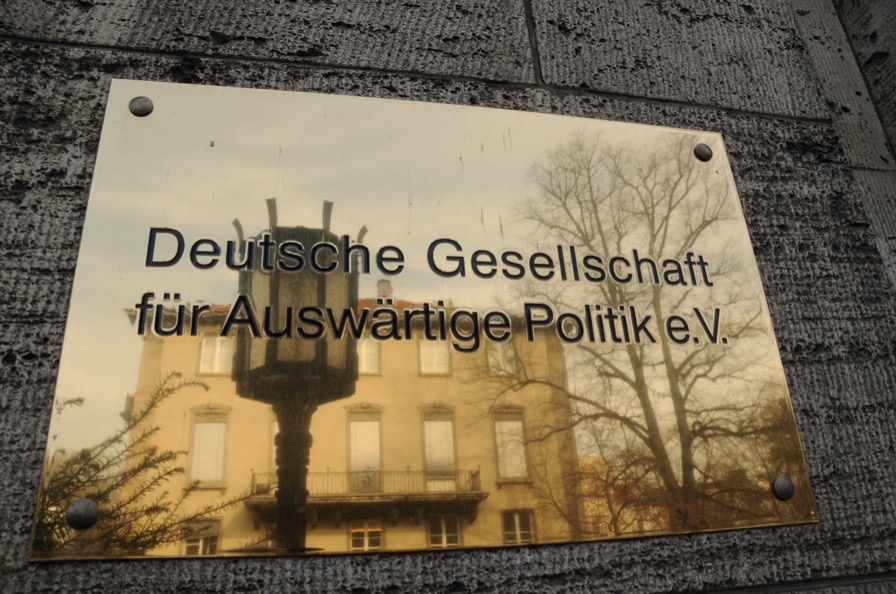
When I decided to pursue a Master’s Degree in War & Conflict Studies at the University of Potsdam, my decision was based in part on the close proximity of Potsdam to Berlin and the opportunity that would arise in the course of studies to participate in an internship with one of the many renowned think tanks in the greater Berlin metropolitan area. The reason this was important to me, is that my professional goals involve the practical implementation of theoretical knowledge in real life. More specifically, my goal is to use the theoretical knowledge gained in the academic sphere to inform the policy-making process, and the implementation of the results of that process. An internship promised to provide a window into how a think tank uses theoretical academic knowledge to inform the policy-making process at the ground level. Furthermore, I wanted become better informed about the German political discourse on security policy within the EU and NATO frameworks. The German Council on Foreign Relations (DGAP) provided an unbeatable opportunity to achieve these goals.
I had the opportunity to work in the security and defense team, where my daily activities support research on a range of relevant security policy issues: possible impacts of the SARS-COV-2 pandemic on European defense spending and budgets, the German debate on nuclear sharing in NATO, deradicalization of extremists, the transition process in Sudan, the future of conflict, and the possible effects of the pandemic on crisis management and the EU’s Civilian Security and Defense Policy (CSDP). The DGAP provided an excellent complement to the War & Conflict Studies program, helped me better understand how academic knowledge informs the policy-making process, and provided me with an excellent opportunity to network with researchers and decision makers. The internship fully met and exceeded my expectations, and I am thankful to have had such an opportunity.
Johanna Steger, WCS 16/17,
Konrad-Adenauer-Stiftung, Namibia and Panama
Die Entscheidung für ein Auslandspraktikum stand für mich relativ schnell fest. Ich wollte unbedingt die Erfahrung machen für längere Zeit im Ausland zu leben, neue Menschen, Kulturen und Landschaften kennenzulernen. Interessensbedingt fiel meine Wahl auf die Konrad-Adenauer-Stiftung. Ende August 2017 begann meine Reise in Namibia. Ich absolvierte ein viermonatiges Praktikum in der Hauptstadt Windhuk.
Während meiner Zeit arbeitete ich hauptsächlich für das EU-Projekt „Action for becoming a credible Civil Society Organisation in Namibian communities“, in dem 50 namibische CSOs aus fünf verschiedenen Regionen durch Capacity Building Aktivitäten unterstützt wurden. Ich unterstützte das EU Team der Stiftung bei der Organisation, Umsetzung und Nachbereitung des Training Moduls „Public participation and engagement skills“. Die Zivilorganisationen wurden auf zweitägigen Workshops von externen Trainer*innen geschult. Ich durfte meinen Kollegen auf die Workshops in zwei Regionen begleiten. Neben den Workshops wurden Vorortbesuche abgehalten, um den bisherigen Fortschritt der teilnehmenden Zivilorganisationen zu analysieren und Evaluierungen durchzuführen. Aufgrund der großen Distanzen Namibias und der Straßenumstände waren wir bei beiden Workshops jeweils eine Woche unterwegs. Es war eine tolle Erfahrung meinen Kollegen in die Regionen zu begleiten, da ich einen direkten Einblick bekommen habe, wie die verschiedenen Organisationen tatsächlich arbeiten.
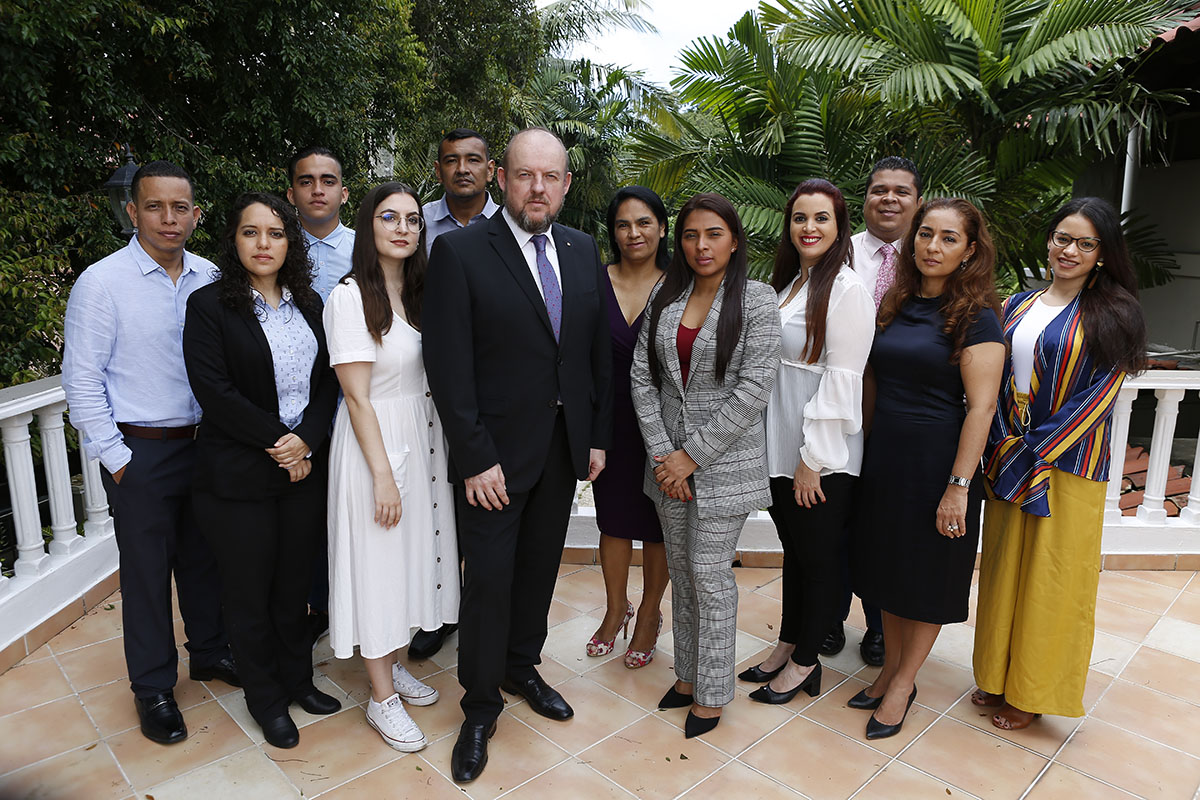
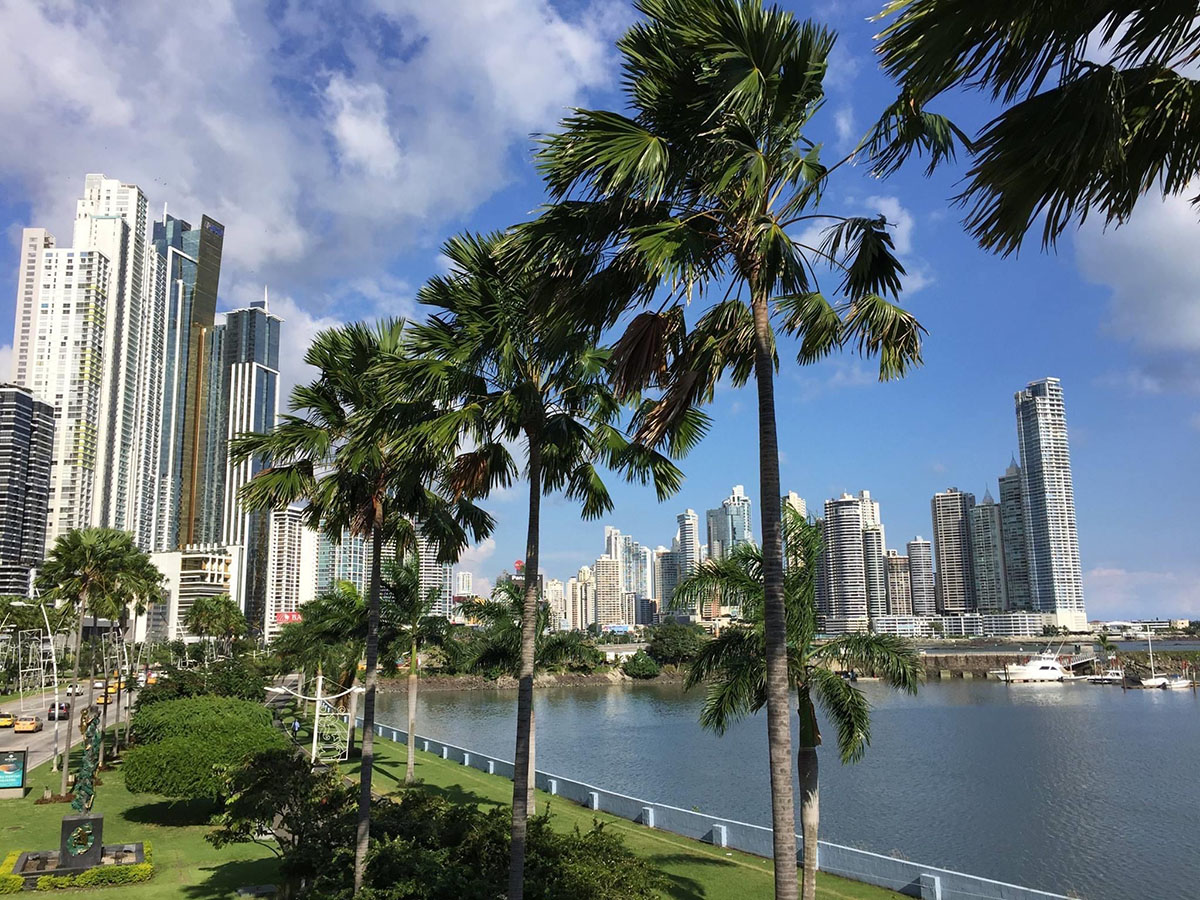
Im August 2019 zog es mich erneut ins Ausland. Nun ging es für mich nach Panama-Stadt. Hier arbeitete ich ebenfalls für die Konrad-Adenauer-Stiftung. Das Stiftungsbüro in Panama wurde im März 2019 erst eröffnet, deshalb arbeitete ich größtenteils an der Eröffnungsveranstaltung und den damit verbundenen Besuch von Prof. Dr. Norbert Lammert, Vorstandsvorsitzender der Konrad-Adenauer-Stiftung. Des Weiteren begleitete und unterstützte ich die Organisation von Veranstaltungen im Rahmen des Regionalprogramms „Allianzen für Demokratie und Entwicklung mit Lateinamerika“. Hierbei bekam ich unter anderem die Möglichkeit am lateinamerikanischen Think Tank Summit 2019 in Bogota, Kolumbien teilzunehmen. Außerdem unterstützte ich das Team bei der Organisation und Durchführung der Veranstaltung „Simulación de Parlatino Joven“. Schwerpunkt der Simulation war die Herausforderung politischer Partizipation junger Erwachsener.
Zusammenfassend lässt sich sagen, dass ich recht unterschiedliche Erfahrungen gemacht habe. Namibia und Panama sind natürlich recht unterschiedliche Länder in denen sich auch die Stiftung anderen Herausforderungen stellt. Dennoch waren es tolle Erfahrungen die ich nicht mehr missen möchte. Die Konfrontation mit den jeweiligen politischen und sozialen Realitäten waren sehr lehrreich. Ich durfte tolle Menschen kennenlernen, habe wunderschöne Orte bereisen dürfen und habe Erfahrungen für mein Leben gemacht, an die ich nach wie vor gerne zurück denke. Ich würde die Entscheidung für ein Auslandspraktikum jedem raten, denn die Erfahrungen sind einzigartig.
Erina Waldmann, WCS 18/19,
Bundesministerium der Verteidigung, Berlin
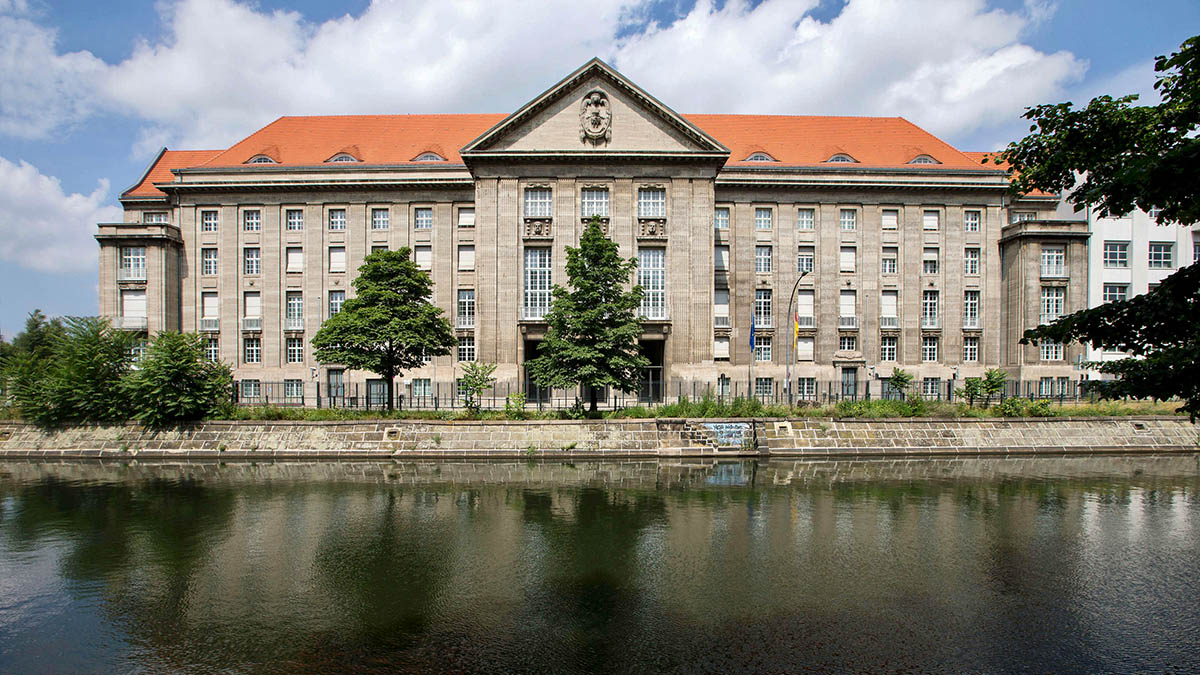
Nachdem ich bereits praktische Erfahrungen im Bundestag und bei der Konrad-Adenauer-Stiftung gesammelt habe, strebte ich an, auch ein Bundesministerium näher kennenzulernen. Positive Berichte seitens des Lehrstuhls über Praktikumserfahrungen früherer Studenten bestärkten meinen Entschluss, mich frühzeitig um einen Praktikumsplatz im Bundesministerium der Verteidigung (BMVg) zu bewerben. Von einem Praktikum im BMVg erwartete ich mir nicht nur einen umfassenden Einblick in den Arbeitsalltag, sondern auch in die Besonderheiten des Hauses. Ebenfalls erhoffte ich mir, testen zu können, ob ich mir das BMVg als einen zukünftigen Arbeitgeber vorstellen kann.
Im Sommer 2020 durfte ich schließlich mein zweimonatiges Praktikum bei der Leitungsinformationszentrale (LIZ) am Dienstsitz Berlin absolvieren. Die Schnittstellen zum Studium waren zahlreich. Obwohl der Fokus meiner dortigen Tätigkeiten weniger auf Theoretischem oder Historischem lag, waren die Kenntnisse aus Geschichte und Politikwissenschaft von großer Hilfe. So fiel es mir leicht, mich in die umfassenden Themen, insb. Krisen und Kriege einzuarbeiten und jüngste Entwicklungen in die Bewertung miteinzubeziehen. Durch den täglichen „Überschuss“ an Nachrichten, hatte ich einige Wochen lang zu vielfältigen Themen einen außergewöhnlich detaillierten Zugang. Wie erwartet ist es nach Beendigung des Praktikums unmöglich gewesen, diesen hohen Informationsstand aufrechtzuerhalten.
Meine Zeit im BMVg habe ich sehr genossen, sodass ich ein positives Fazit ziehe. In einer sympathischen Arbeitsatmosphäre durfte ich abwechslungsreiche und fordernde Tätigkeiten absolvieren. Nur selten konnte ich bisher behaupten, jeden Tag etwas Neues gelernt zu haben. Als besonders angenehm empfand ich die klaren Strukturen und Hierarchien, die das Arbeiten miteinander wesentlich erleichtert haben. Dass ich die einzige Frau im Team war, spielte zu keiner Zeit eine Rolle.
Nicholas Czichi-Welzer, WCS 17/18,
Amnesty International, Berlin

Da ich während meines Bachelorstudiums bereits erste Arbeitserfahrungen bei einer kleinen Nichtregierungsorganisation sammeln konnte, reizte es mich, während meines Masters ein Praktikum bei einer großen Mitgliederorganisation zu absolvieren. Dabei war mir neben einem Aspekt der Gemeinnützigkeit wichtig, einen Bezug zu meinen Interessengebieten Internationale Beziehungen und der Region Nahost herstellen zu können – zwei Felder, denen ich zuvor bereits im Rahmen der Kursauswahl des MA War and Conflict Studies nachgegangen war. Ein Praktikum bei Amnesty International in der Abteilung Politik & Activism mit Fokus auf die Regionen Naher Osten & Nordafrika sowie Europa & Zentralasien stellte für mich deshalb ein ideales Konglomerat der für mich interessantesten Aspekte dar.
Meine Hauptaufgabe während des Praktikums bestand darin, den für die Regionen zuständigen Referentinnen zuzuarbeiten. Daraus ergab sich ein breit gefächertes Feld an Aufgabenarten. So erstellte ich etwa Briefings über Menschen- und Völkerrechtsverletzungen in verschiedenen Staaten wie Syrien, entwarf einen Text über Sorgfaltspflichten von Rüstungsunternehmen und recherchierte zu internationalen Strafrechtsprozessen nach dem Weltrechtsprinzip. Dabei halfen mir Vorkenntnisse aus dem Studium, u.a. zu aktuellen Konflikten und deren Hintergründen. Ich erhielt zudem einen tiefgehenden Einblick in laufende Kampagnen von Amnesty International und konnte an mehreren Fachtagungen teilnehmen.
Dank meines Praktikums bei Amnesty habe ich viel über die internationale Menschenrechtsarbeit gelernt und konnte mein Wissen in Bezug auf die betreffenden Regionen um ein Vielfaches erweitern. Mir wurden von Beginn an anspruchs- und verantwortungsvolle Aufgaben übertragen, was ich für ein Praktikum im Masterstudium als essentiell erachte. Nicht nur aufgrund des hohen Lernaspekts, sondern auch wegen des sehr netten Teams kann ich ein Praktikum im Generalsekretariat von Amnesty International in Deutschland wärmstens empfehlen.
Laura Wurmbach, WCS 18/19,
Gesellschaft für Internationale Zusammenarbeit, Bonn
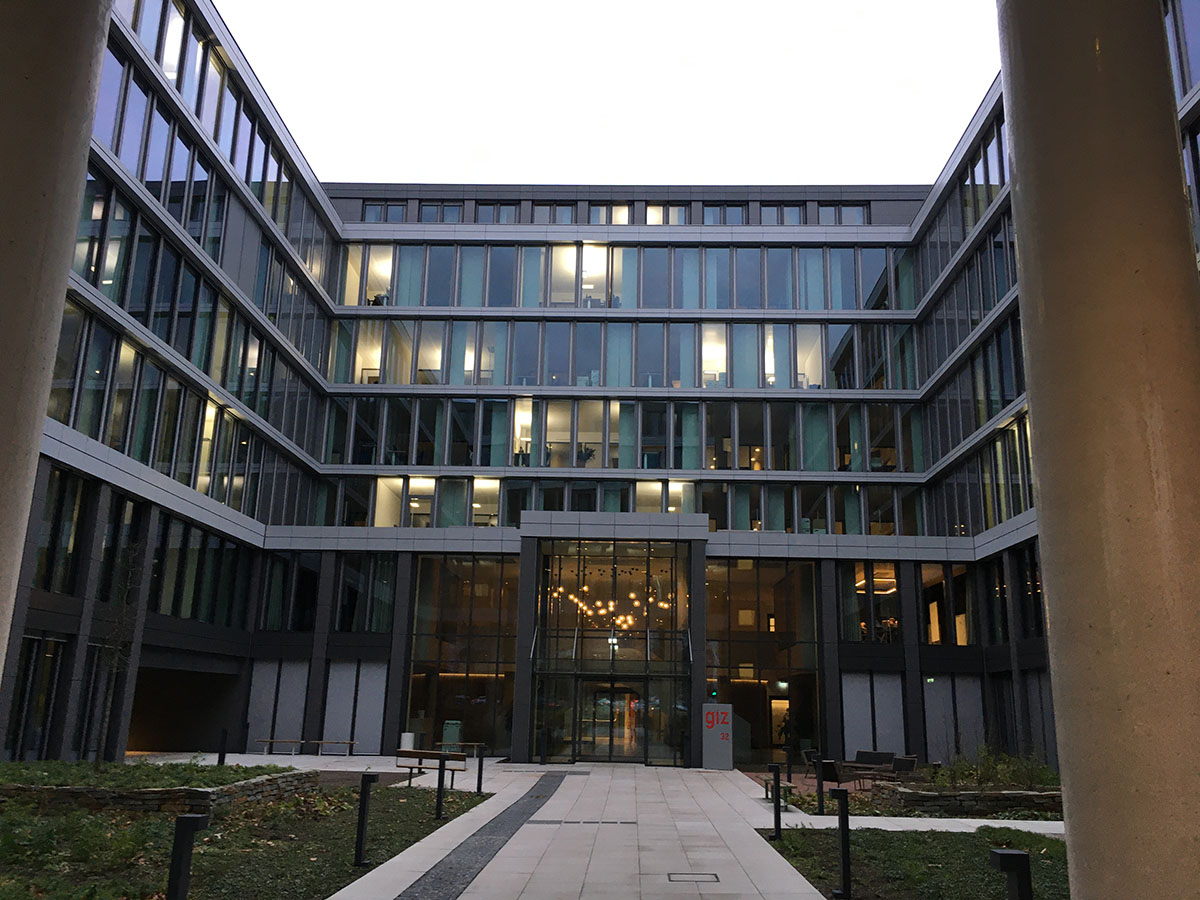
Von September 2019 bis Februar 2020 absolvierte ich ein sechsmonatiges Praktikum bei der Deutschen Gesellschaft für Internationale Zusammenarbeit (GIZ) in Bonn. Im Rahmen der Umsetzung entwicklungspolitischer Maßnahmen beauftragt und fördert das Bundesministerium für wirtschaftliche Zusammenarbeit und Entwicklung Projekte, welche von der GIZ als Bundesunternehmen durchgeführt werden. Ich arbeitete in der Abteilung Krisenmanagement, Migration, Bauen, genauer in der untergeordneten Einheit, welche die entwicklungspolitischen Vorhaben in fragilen Kontexten konzipiert und umsetzt – die Übergangshilfe (ÜH). Die ÜH ist ein Instrument der Krisenbewältigung, welches zwischen der vom Auswärtigen Amt verantworteten humanitären Soforthilfe und der langfristigen Entwicklungszusammenarbeit ansetzt – um ebendiesen Übergang zu schaffen und beide Bereiche miteinander zu verzahnen.
Zu meinen wichtigsten Aufgaben gehörte die analytische und inhaltliche Zuarbeit zu dem Bereich der Qualitätsverbesserung und strategischen Weiterentwicklung der ÜH-Maßnahmen. Diese Maßnahmen sollen die Widerstandsfähigkeit der Menschen in Krisen und Katastrophen erhöhen. Die Stärkung dezentraler und zivilgesellschaftlicher Strukturen sowie der Aufbau von Infrastruktur wie Schulen, Gesundheitszentren und Brunnen tragen dazu bei. Dafür analysierte ich Evaluationen verschiedener ÜH-Vorhaben in den Einsatzländern – mit dem Fokus Irak – und erarbeitete eine Querschnittsanalyse. Auch befasste ich mich intensiv mit dem kontext- und konfliktsensiblen Monitoring dieser Vorhaben.
Neben diesen hauptsächlich inhaltlichen Aufgaben hatte ich aber auch ausreichend Gelegenheit die GIZ als riesiges Unternehmen in ihren internen Abläufen kennenzulernen. Ich hatte die Möglichkeit zahlreiche interne Veranstaltungen zu verschiedenen Themen zu besuchen und ergriff auch die Gelegenheit, im Rahmen des Praktikantenprogramms, an einer viertägigen Exkursion zu den internationalen Organisationen nach Genf teilzunehmen.
Ich hatte eine höchst interessante und lehrreiche Zeit bei GIZ in Bonn und war von einem tollen Team umgeben, welches mich stets unterstützte und mir Verantwortung übertrug.
Marlene Wulf, die WCS 21/22,
Leo Baeck Institut, New York City
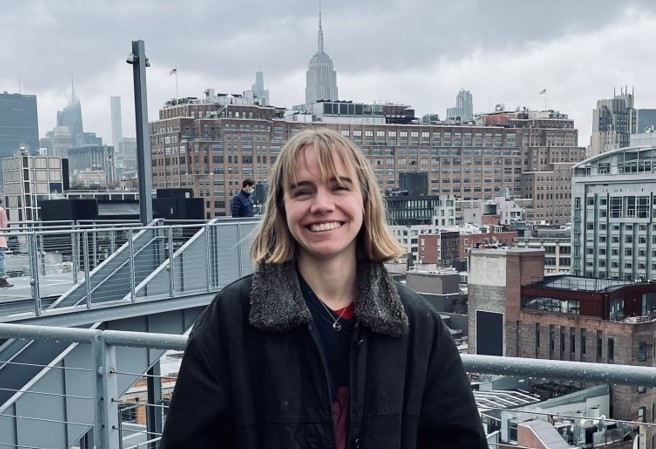
The Leo Baeck Institute New York is a research and documentation center that collects materials on German-speaking Judaism, and was founded in 1955 in memory of Rabbi Leo Baeck. Today, about twenty people work at the Leo Baeck Institute New York and there is a small branch in Berlin as well as partner organizations in London and Jerusalem.
I did my internship in the Leo Baeck Institute archives, working in the documentation and organization of family legacies. The Leo Baeck Institute receives donations, for example documents, letters, art objects, or books, from deceased (descendants of) German-speaking Jews, which then have to be recorded, put into a certain order, and documented. I helped with this work and processed the documents of various people. This was exciting because one got to know the vita of different people, such as Kurt Rosenfeld, Rosa Luxemburg's lawyer. In this way, I was able to gain insights into the lives of Jews and Jewish culture in Germany and Austria before the Shoah.
Nevertheless, I also wanted to get to know other areas of work. So I also supported the museum part of the Leo Baeck Institute by creating a virtual version of the current exhibition "Last Stop before the Last Stop" - an exhibition about Theresienstadt. You can find that exhibit here: www.lbi.org/exhibitions/virtual-exhibition-last-stop-before-the-last-stop/.
New York is one of the most diverse cities in the world. There is always something to do and events for everyone's taste. I already lived in New York for a year in 2017/18 for a volunteer service, so I already knew some people. A special aspect of New York for me are the numerous synagogues and Jewish life. I often went to synagogues with friends or was invited to Shabbat dinners or the Jewish holidays like Passover or Shavuot. This is something very special for me, because, unfortunately but for obvious reasons, one hardly sees this in Germany. I always find the intercultural and interreligious exchange very exciting and am grateful that my Jewish friends in New York welcomed me so warmly into their homes.
Overall, the internship was a very positive experience for me. For anyone who is interested in German-Jewish culture and history and wants to contribute to the preservation of this heritage, the Leo Baeck Institute in New York is the ideal place.