The military representative of the Taipei Representative Office visited the Neues Palais campus

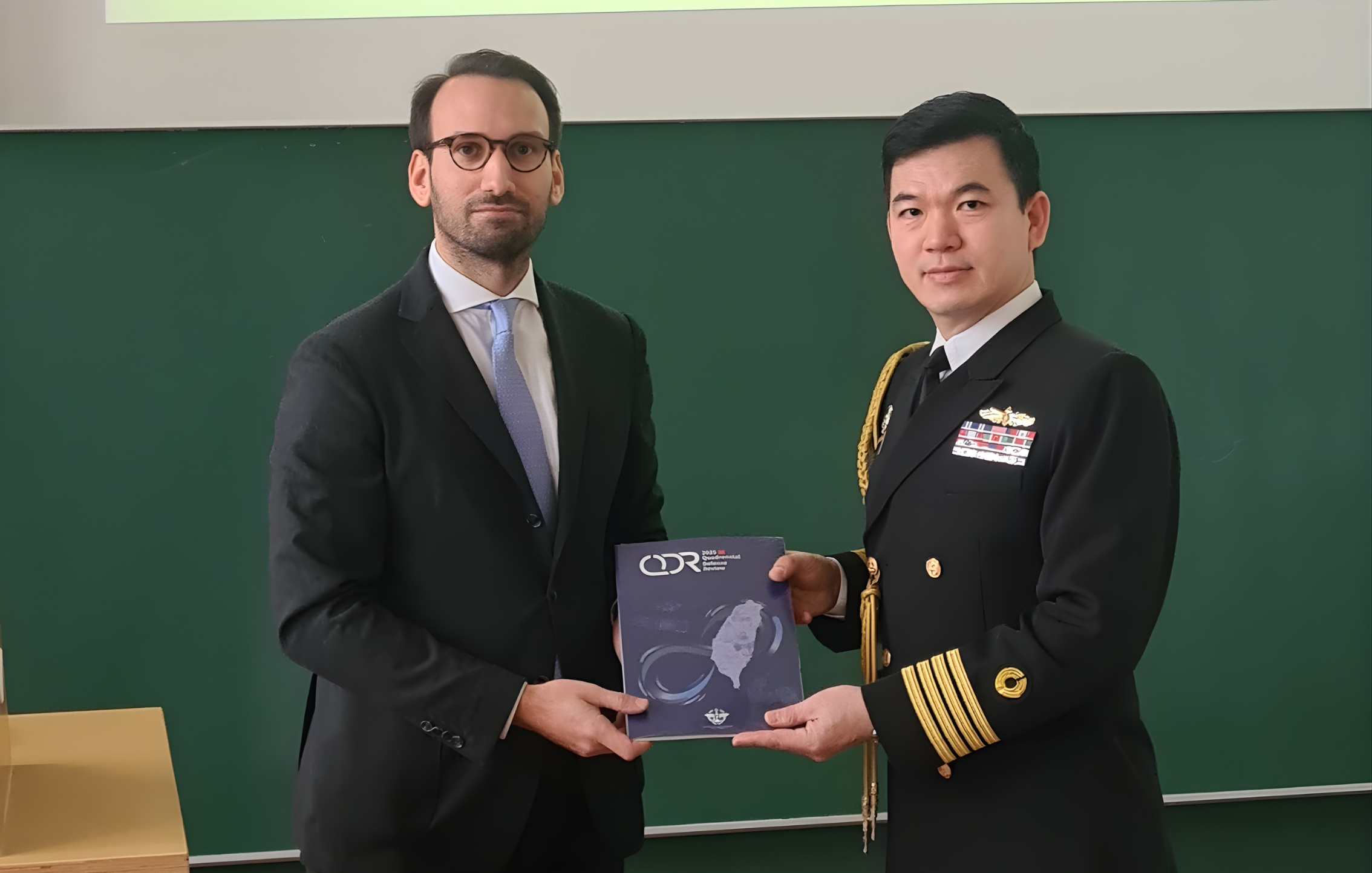
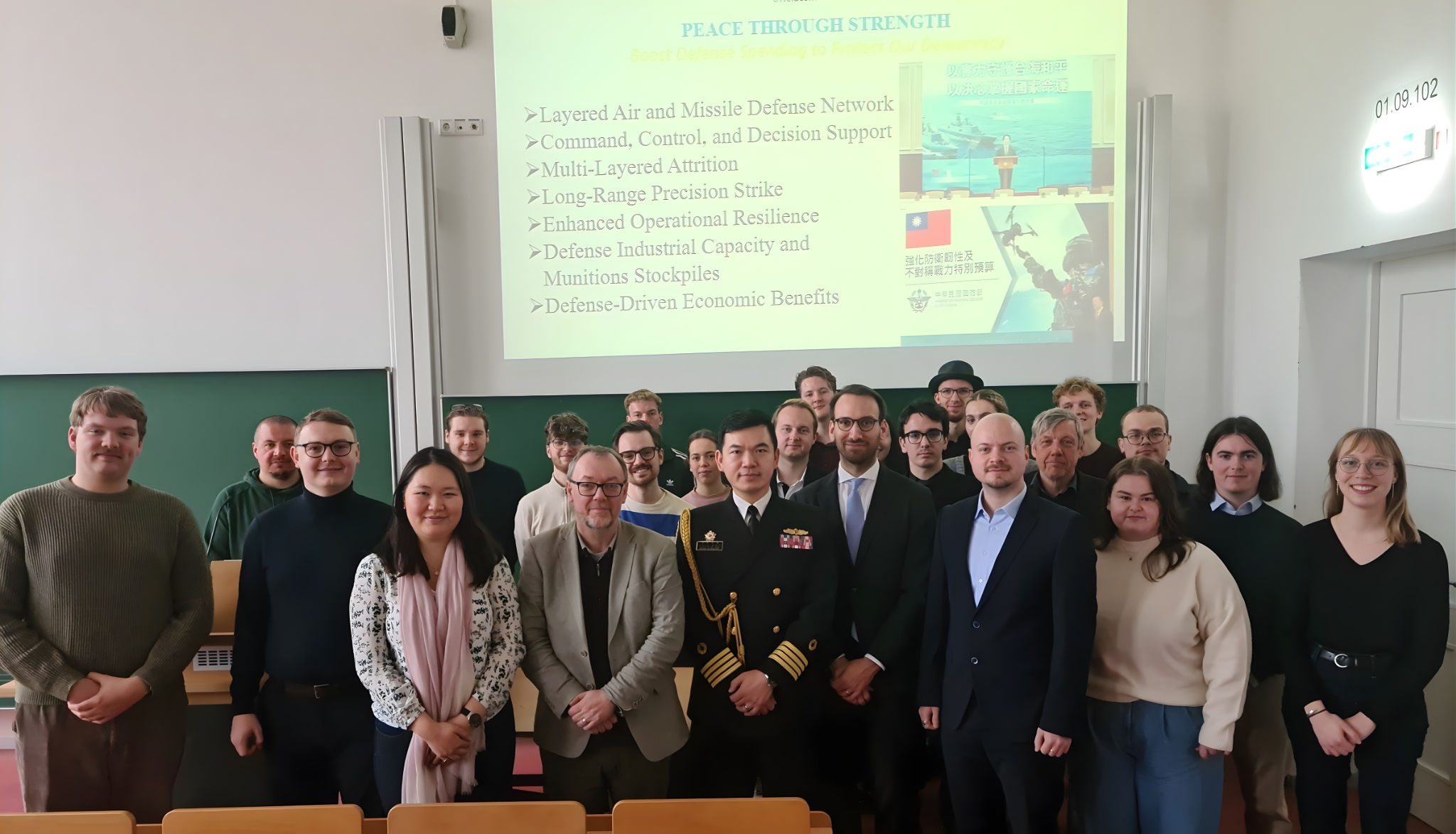
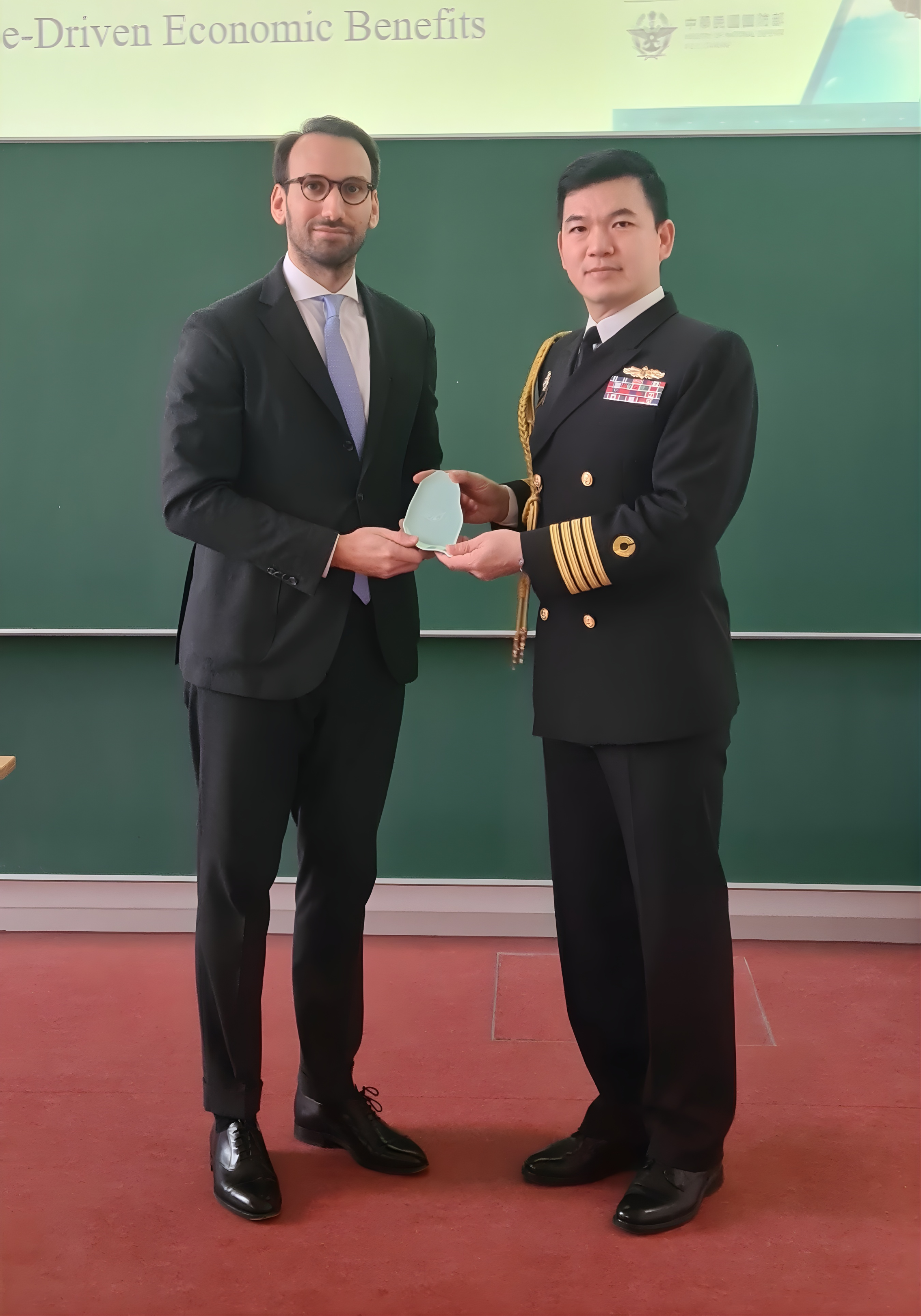
On 28 November 2025, the Chair of War Studies welcomed a special guest: the military representative of the Taipei Representative Office visited the Neues Palais campus to discuss security challenges in the Indo-Pacific and its significance for Europe with our students.
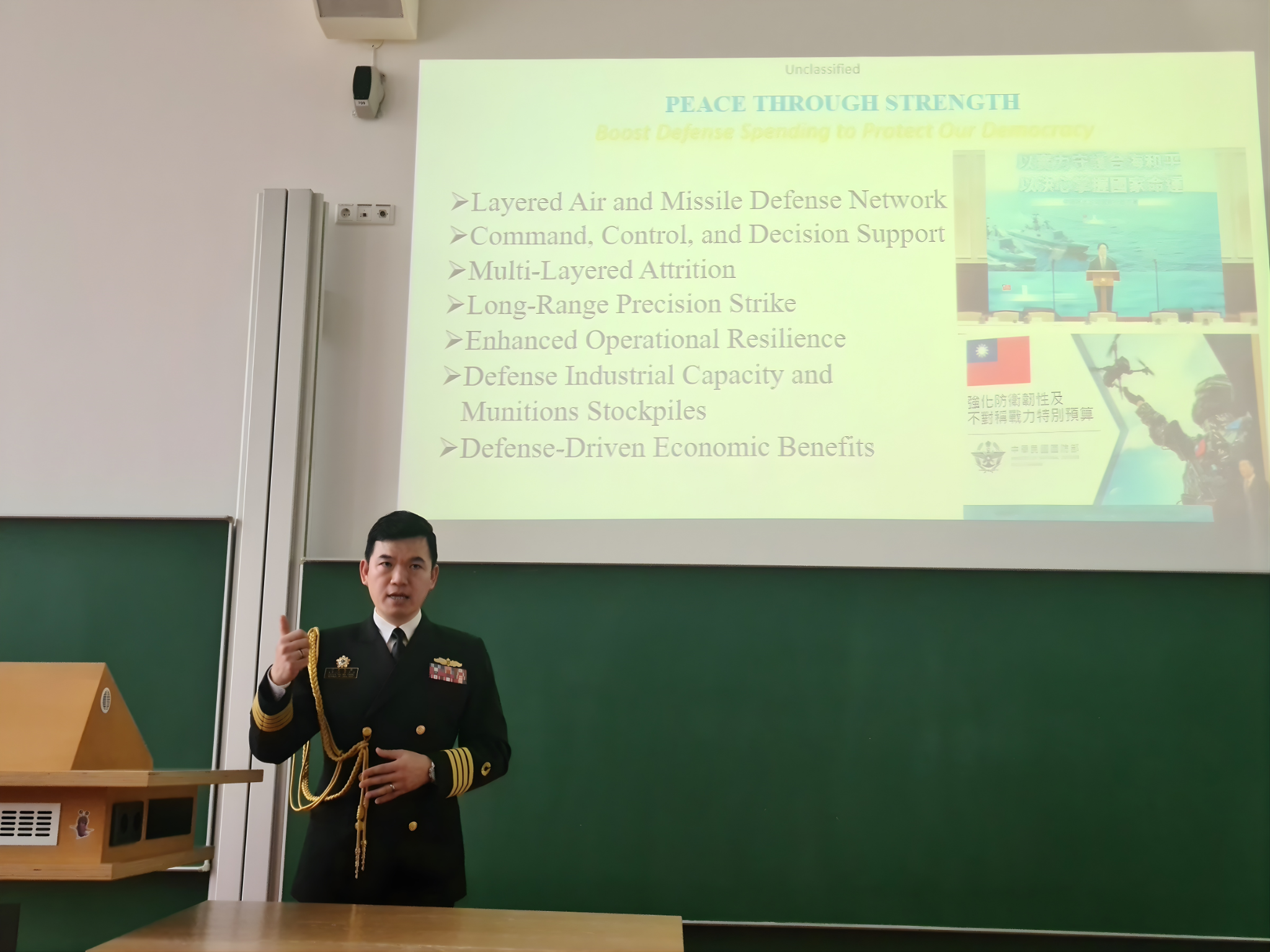
After a brief welcome by Professor Neitzel, the military representative opened the event with a keynote lecture, focusing at first on the People’s Republic of China’s recent military activities in the Western Pacific and the strategic orientation of Chinese defence policy.
The talk addressed both the scale and nature of China’s military exercises and the underlying strategy. Particular attention was paid to the direct and indirect implications of these developments for the Euro-Atlantic area. The speaker underlined that regional tensions in the Western Pacific are no longer merely a matter for East Asian states, but are closely linked to European security considerations, economic interdependencies, and alliance structures.
In the second part of the lecture, Taiwan itself moved into the spotlight. The military representative explained how Taiwan is responding to growing pressure from Beijing, which defence policy reforms have been initiated and how military preparations have changed in recent years. This included both operational concepts and the adaptation of the armed forces, such as major increases in defence spending, the launch of a multi-year special budget to accelerate force modernization and new investments in layered air and missile defence, as well as the role of society and civilian resilience. This gave students an immediate insight into the security policy thinking of an actor who is confronted daily with the practical consequences of strategic decisions.
Following the keynote, Dr Scianna moderated a lively question-and-answer session. Questions from the audience ranged from very concrete aspects, such as about Taiwan’s armed forces or cooperation with international partners, to more fundamental considerations. On several occasions, the discussion turned to how Taiwan perceives the role of Europe, and Germany in particular, what expectations it has of European politics, and how debates in Berlin, Brussels and other capitals are viewed in Taipei. The discussion also addressed the relationship between public opinion, media reporting, and political decision-making in Taiwan and the importance of these factors for the country’s defence and deterrence policy.
The event highlighted how closely questions of military history and security policy are linked to current developments. For many students, the visit offered an exciting opportunity to compare theoretical models from their studies with the perspective of an experienced practitioner. Accordingly, the debate was lively and enriching: while Taiwan remained at the centre, the discussion repeatedly touched on possible consequences conflict risks in the Indo-Pacific might have for Europe, NATO, and German security and defence policy.