07/2026 Anwar
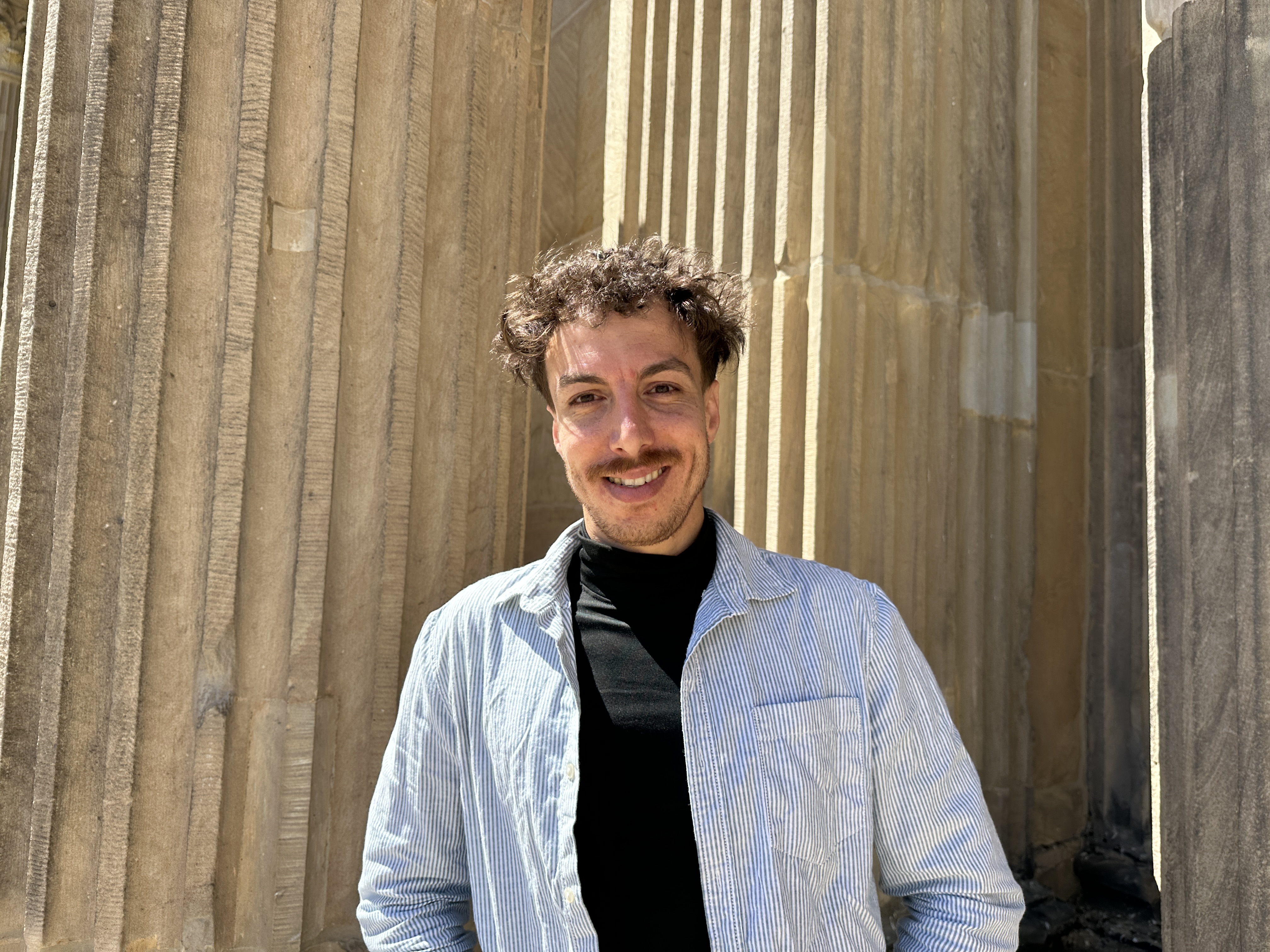
Age: 29 | Nationality: Syria
Can you briefly introduce yourself and tell us where you’re from and how you came to Germany/Potsdam?
My name is Anwar, and I’m originally from Syria. Due to the difficult conflict situation in my home country, I had to leave Syria and came to Germany. I ended up in Potsdam as part of the nationwide resettlement program for refugees.
You’re very far away from your family. What places and moments here make you feel at home?
I live in Potsdam, and the proximity to Berlin plays an important role for me. Both cities give me a sense of home in different ways. In Potsdam, I find above all peace, structure, and a daily routine that gives me stability. The paths along the Havel River and the beautiful parks, in particular, help me unwind and feel at ease.
Berlin, on the other hand, gives me a sense of familiarity and diversity. There are many places there where I meet people from different cultures, can move about freely, and consequently feel less alone.
I often think back to my hometown of Homs in Syria. There, too, there was a lot of vibrancy, a strong social life, and a special energy in everyday life. For me, this memory is linked to the feeling that I’m rediscovering that same vibrancy here in Berlin.
What are you currently studying at our university, and what inspired you to choose this major?
I’m studying German Studies and History at the University of Potsdam, with a focus on German as a Foreign and Second Language (DaF/DaZ). I learned German systematically, and even during that process, the structure of the German language and its unique features fascinated me time and again. This enthusiasm for language and its structures ultimately motivated me to choose this field of study and to learn more about language teaching and the German language.
What challenges have you faced—and are you still facing—in your life and studies here?
At the beginning of my life and studies in Germany, linguistic and cultural challenges were particularly prominent. Even though I had already learned German, using the language confidently and spontaneously at a very different level in an academic context was a new experience.
Added to this were bureaucratic hurdles, which were often complex and time-consuming, as well as navigating the German higher education system and, not least, understanding tasks of varying complexity. Some of these challenges still accompany me, though today I handle them with greater confidence and composure.
Your bachelor’s program is in German. Can you tell us a bit about your journey in learning German?
At the very beginning, I taught myself German, mainly with the help of YouTube videos and other online materials, since I initially had to wait a long time for an official German language course. During that time, I taught myself the basics on my own and tried to understand and use the language as much as possible in everyday life, but that was difficult at first since I was living in the Spreewald.
After I moved to Potsdam, I finally started taking regular German courses, where I was able to systematically expand and consolidate my knowledge. Later, while preparing for my Abitur, I continued to deepen my understanding of the language and steadily improved my skills. This journey has shown me how important initiative, discipline, and responsibility are.
You’re actively involved in supporting others through administrative assistance and language courses. Can you tell us more about this work and what it means to you personally?
I know from my own experience how challenging it can be to arrive in a new country—especially when you don’t yet speak the language and have to find your way in a new culture. That’s why I’m committed to helping people with migration and refugee backgrounds, supporting them with administrative matters, cover letters, résumés, the recognition of academic credentials for job, study, or apprenticeship searches, and other everyday issues.
I also run several learning and language cafés where people from diverse backgrounds and cultural contexts come together to speak German and learn from one another. It’s not just about language, but also about connecting, exchanging ideas, and participating in society.
This work means a great deal to me because I get to accompany people on their journey and witness their progress. For my efforts, I was honored in the “Individual Achievement” category for my outstanding commitment to the Arabic-speaking community, my language support work, and my role as a role model and integration ambassador. This recognition motivates me to continue advocating for equal opportunity, education, and social cohesion.
And you’re also an international campus ambassador at UP! Can you briefly tell us what you do in that role?
In my role as a campus ambassador at UP, I support international students as they settle in at UP, share my own experiences, and help them find their way around and make connections more quickly. I also help out with events organized by the International Office, such as information sessions, workshops, and other activities. We also organize and carry out our own projects. It’s important that international students feel at home at UP and find their place in the university community. I’m very grateful to UP for that.
What advice would you give to future international students in Potsdam?
My most important advice to future international students in Potsdam is to actively give yourself time to settle in. The beginning can be challenging—a new language, a new higher education system, and a new environment all require patience. I also recommend getting involved and taking advantage of what the university has to offer. At the UP, there are plenty of opportunities, such as exchange programs, language and study cafés, and student initiatives like field trips or events organized by the International Office, which offer many chances to make connections and feel integrated more quickly. From my own experience, I know very well that these encounters not only help with learning but also create a sense of belonging.
What are your plans for the future, and what connects you to Germany and Potsdam in the long term when you think about your future?
First, I’d like to successfully complete my bachelor’s degree. In the long term, I’d like to apply my knowledge in the areas of language, education, integration, and migration in my professional life. It’s especially important to me to continue supporting people and contributing to an open and diverse society.
For me, Germany has long been more than just the country where I live and study. Here, I’ve had the opportunity to grow personally and academically, gain new perspectives, and forge my own path. For that, I am deeply grateful to Germany.
Potsdam has grown very dear to my heart. Over the years, the city has become my second home. Here, I’ve studied, made friends, volunteered, and had many formative experiences.
When I think about my future, I therefore see it as closely tied to Germany and Potsdam. Regardless of the career path I choose, I want to remain part of this community and give back some of what I’ve experienced and received here myself.