Research Project IX: Teaching English inclusively – A toolbox of resources and activities for adult education
General Project Outline
How can inclusive English language learning programmes in adult education be designed to enable as many people as possible to participate linguistically and culturally?
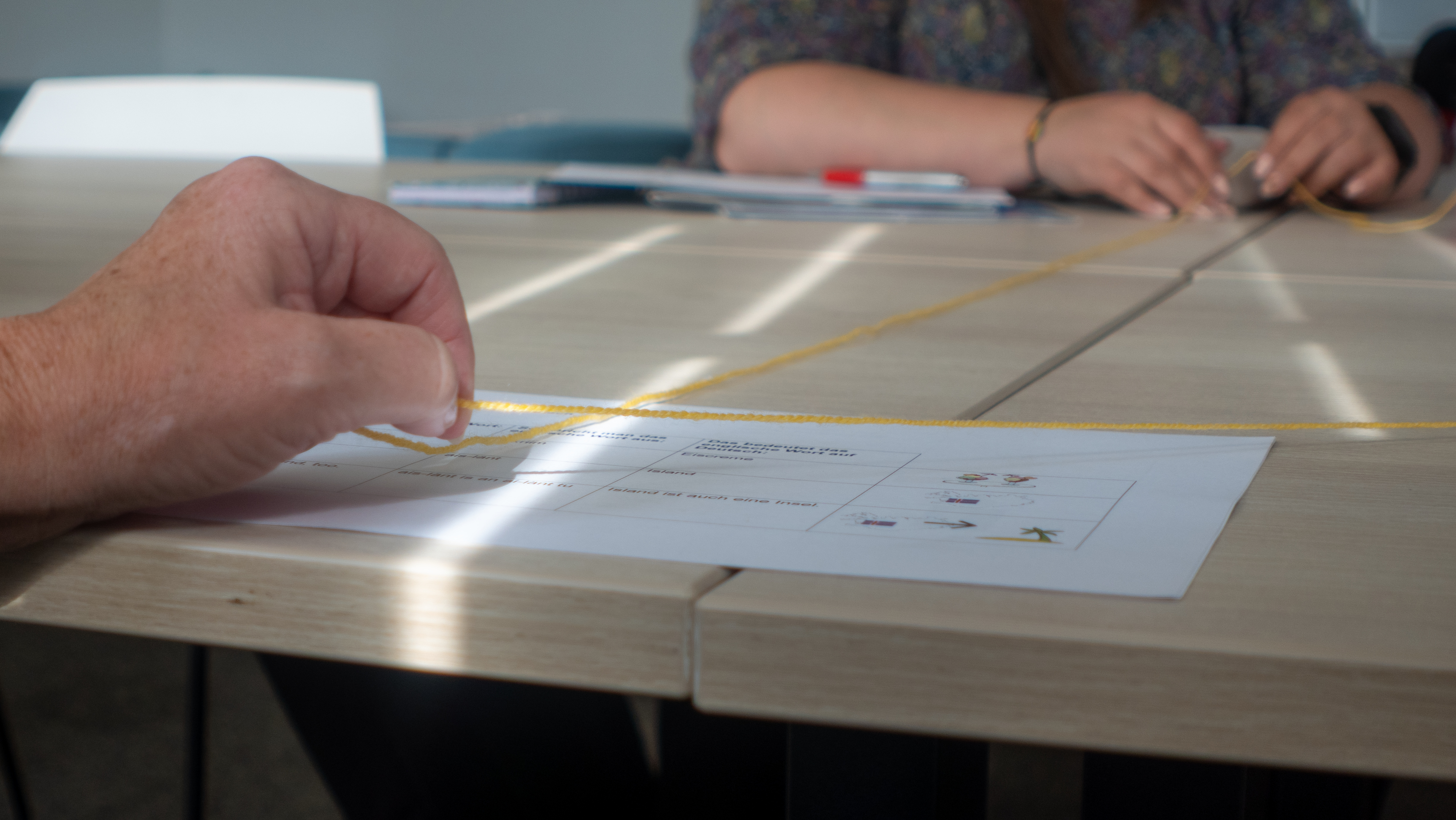
This research project examines participation and language learning processes in an inclusive English course for adults at the VHS Oberhausen. The project (period: 04/2026-01/2027) is a collaboration between the University of Potsdam and the VHS Oberhausen.
The focus is on a broader understanding of inclusion: The course is not aimed exclusively at people with diagnosed special educational needs, but at a heterogeneous learning group with diverse linguistic, biographical and learning-related backgrounds. Learning challenges may arise, for example, from migration experiences, age, varying educational backgrounds or individual support needs. The research project therefore understands inclusion in an intersectional manner and regards diversity as a resource for shared learning.
Methodologically, the study follows a qualitative research design in the form of a case study. The data is based on participant observation, structured observation logs, interviews with teachers, support staff and participants, as well as accompanying reflective discussions, followed by the evaluation of the data through qualitative content analysis according to Kuckartz.
The aim of the project is to identify the conditions for successful participation in inclusive foreign language teaching and, on that basis, to develop practical teaching strategies and adaptive lesson and resource concepts (‘toolboxes’) for adult education. The project is intended as a contribution to the further development of inclusive English language teaching at the intersection of special education, cultural education and adult education research.
Contact | Prof. Dr. Winnie-Karen Giera
Project Manager
- Campus Am Neuen Palais
Am Neuen Palais 10
14469 Potsdam
Haus 4, Raum 1.01
Contact | Dr. Uta Woiwod
Project Manager
- VHS Oberhausen / Bert-Brecht-Bildungszentrum
Langemarkstraße 19-21
46045 Oberhausen
Germany
Contact | Nadine Nather
Research Assistant