NamTip concludes second project phase with strong scientific, societal and educational impact
From long-term experiments and interdisciplinary research to stakeholder engagement and capacity building, NamTip has advanced understanding of social-ecological tipping points in Namibia’s drylands and translated findings into practical tools for sustainable land management.
May 2026: Another Bachelor’s thesis completed in NamTip
New research by Carlo Renner at the University of Potsdam provides important insights into how grazing pressure and drought jointly affect the resilience of Namibian rangelands under increasing environmental stress.
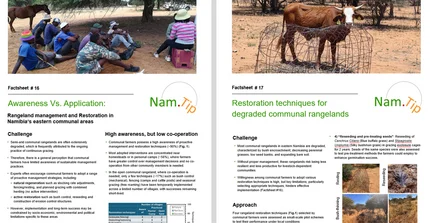
New publications on rangeland restoration complete the NamTip factsheet series and provide practical guidance for farmers and decision-makers in Namibia.
April 2026: NamTip Writing Retreat advances key joint publications
Project partners met in Potsdam to push forward collaborative papers, syntheses, and practice-oriented outputs in an intensive and productive writing retreat.
February 2026: New batch of factsheets published on bush thinning and bush use
New insights on the long-term effect of bush thinning rangeland restoration and on biomass value chains as pathways to address bush encroachment in Namibia.
January 2026: Two Master's theses successfully completed in NamTip
From rangeland resilience to bush biomass value chains: Marlen Britsch and Svea Muche presented new insights from the social science component of the NamTip project.
January 2026: New article on "social tipping points" in pastoral systems
The ethnographic study by Diego Menestrey Schwieger explores how "social tippint points" shape livestock loss, recovery, and resilience among Ovaherero pastoralists under growing environmental and social pressures.