Laboratories

https://www.uni-potsdam.de/en/babylab/index

BabyLab

In the BabyLab, the cognitive and language-related development of children, aged four months or older, is studied. The laboratory is under the direction of Prof. Dr. Birgit Elsner, Developmental Psychology, and Prof. Dr. Barbara Höhle from the field of Psycholinguistics and Language Acquisition.

https://www.uni-potsdam.de/en/eyelab/welcome
Image: EyeLab

EyeLab

In the EyeLab, linguistic, visual, and oculomotor processes are studied. Research focuses on reading and reading processing, shifts of attention, and other processes loading working memory. In the Eyelab, psychologists, physicists, computer scientists, mathematicians and linguists co-operate closely.
https://www.uni-potsdam.de/en/sozialpsychologie/index
Image: Social Psychology Lab

Social Psychology Lab

The Social Psychology Laboratory has focused its research on aggression and the media. Research questions relate, for example, to the effects of media violence or the risk factors for sexual aggression among young adults.

https://www.uni-potsdam.de/en/pecog/index

PECoG - Potsdam Embodied Cognition Group

The PECoG studies conditions and consequences of "embodied knowledge". How do sensory and motor experiences become part of our knowledge representation? How do they affect the recall of knowledge? To answer these questions, the Group uses several methods. They range from behavioral measurement (e.g. reaction times, error rates, body temperature) and measurement of motion (e.g., kinematics analysis, eye tracking, power production) to neuroscientific methods (eg, TMS, EEG, fMRI).

https://vasishth.github.io/

Vasishth Lab

Central concern of the Vasishth Lab is the research of processes of human understanding of sentences. To this end, the research group, led by Shravan Vasishth, uses mathematical models of syntax analysis and experimental methods, such as eye tracking, self-directed reading and event-related potentials. With the help of the obtained data, predictions of mathematical models can be reviewed and assessed.

https://www.uni-potsdam.de/en/nola/index

NOLA - Neurocognition of Language

NOLA is an interdisciplinary team of Linguists, Psychologists, and Neuroscientists led by Prof. Dr. Isabell Wartenburger. The goal is to characterize language – from basic acoustic processing to complex sentence processing –, its development and plasticity, and the respective underlying cerebral mechanisms. This is done by combining behavioral, psychophysiological (eye-tracking), neurophysiological (EEG), and neurovascular (fMRI, NIRS) methods in various populations.

https://www.uni-potsdam.de/de/regphys/forschung/neuromechanics-lab

Neuromechanics Lab

The Neuromechanics Lab (headed by Dr Laura Schaefer) focuses on neuromuscular control and regulation processes. The aim is to understand adaptation and regulation processes, as well as injury mechanisms. To this end, neuromuscular oscillations and adaptive strength (the ability to maintain stability in the face of varying external forces) are investigated in healthy individuals and in patients. Teaching and research responsibilities are undertaken by the Chair of Health Education in Sport.

https://www.uni-potsdam.de/en/trainingswissenschaft/index

ATB-Lab – Department of Training and Movement Sciences

The laboratory focuses on the assessment of strength and balance, as well as the development, implementation and evaluation of effective measures to enhance performance and promote physical activity and health in various settings and amongst different populations. Targeted training of balance and strength is regarded as a key factor in improving performance across a range of sports, as well as in reducing sports injuries and falls during everyday activities.

https://clp.ling.uni-potsdam.de/resources/

Potsdam Interaction Lab

The interaction lab, run by the "foundations of computational linguistics" group (Prof. David Schlangen), provides space and equipment for recording and analysing human/human interactions, and for testing models of interaction in human/robot settings.

https://www.uni-potsdam.de/de/medizinischesoziologie-psychobiologie/index
Photo: Sandra Scholz

Stress Laboratory

Prof Dr Wippert and her team are investigating the influence of biopsychosocial factors on the maintenance of mental and physical health and the development of diseases.

https://www.uni-potsdam.de/en/treatmentlab/index

TreatmentLab

The TreatmentLab conducts clinically-oriented research into the diagnosis and treatment of language disorders in adults and children. This includes:
Acquired language disorders (aphasia, dyslexia and dysgraphia); progressive language disorders (primary progressive aphasia); developmental disorders of written language (LRS); specific language development disorders (SES)

https://www.uni-potsdam.de/de/swallow/index

Swallowing Research Lab

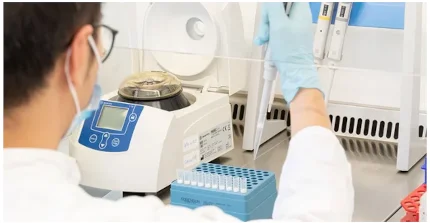
The Swallowing Research Lab at the University of Potsdam was founded in 2009. It offers students of the Cognitive Sciences department and clinically active therapists infrastructure, inspiration and individual support for the implementation of research projects and collaboration in multi-centre cooperation projects for the development and validation of innovative methods for the diagnosis and treatment of oropharyngeal dysphagia in children and adults.