

There’s not only one answer to that question but asking it gave us many reasons packed with lessons from nature and history that amazed us in every possible way.
Today the excursion transported us to thousands of years ago. At Winklen, Prof. Dr. Bernhard Dieckman explained us how to recognize the types and the ages of the rock.
On the way to our next destination, our conversation lead us to talk about the similarities and differences of the Alps, the Andes and the Himalayas. We realized that they might share some physical features but what makes them unique it’s their identity, culture and traditions. A topic that we will be learning in our next stop.
Finally we arrived to the Ötztaler Heimat Museum in Längenfeld where we learn about the ancient livelihoods of the people in the city of Tyrol, how tourism and farming have changed from the past until now and their cultural heritage.
After a full day of adventures and new stories we arrived to our cozy hut to finalized with a delicious Egyptian meal called “koshari”. Interesting fact: this dish is registered in the Unesco cultural heritage.
Exploring the Ötztal Alps – Day 3: A mummy and cultural heritage of the Ötztal Alps
Field Trip Diary of the CLEWS Master’s Program on Climate Change and Sustainability
-
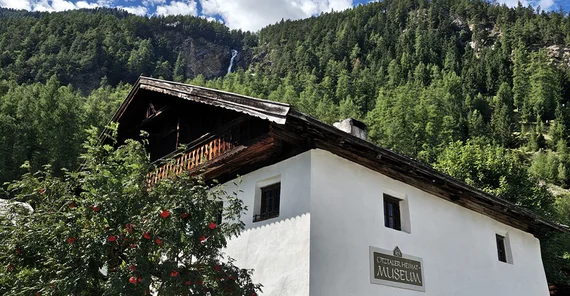
Ötztal Local History Museum -
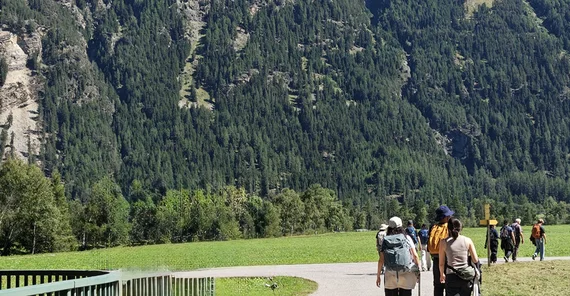
Walking towards the museum
What makes 17 people from 11 different countries go to the Alps and feels like child entering to a candy shop? The weather that was luckily enchanting us, the scenery with huge grass landscapes, the strength, resilience, history of the Alpine ecosystem and communities or the mysterious history behind “Otzi”, the mummy.