09/2026 Fahmida
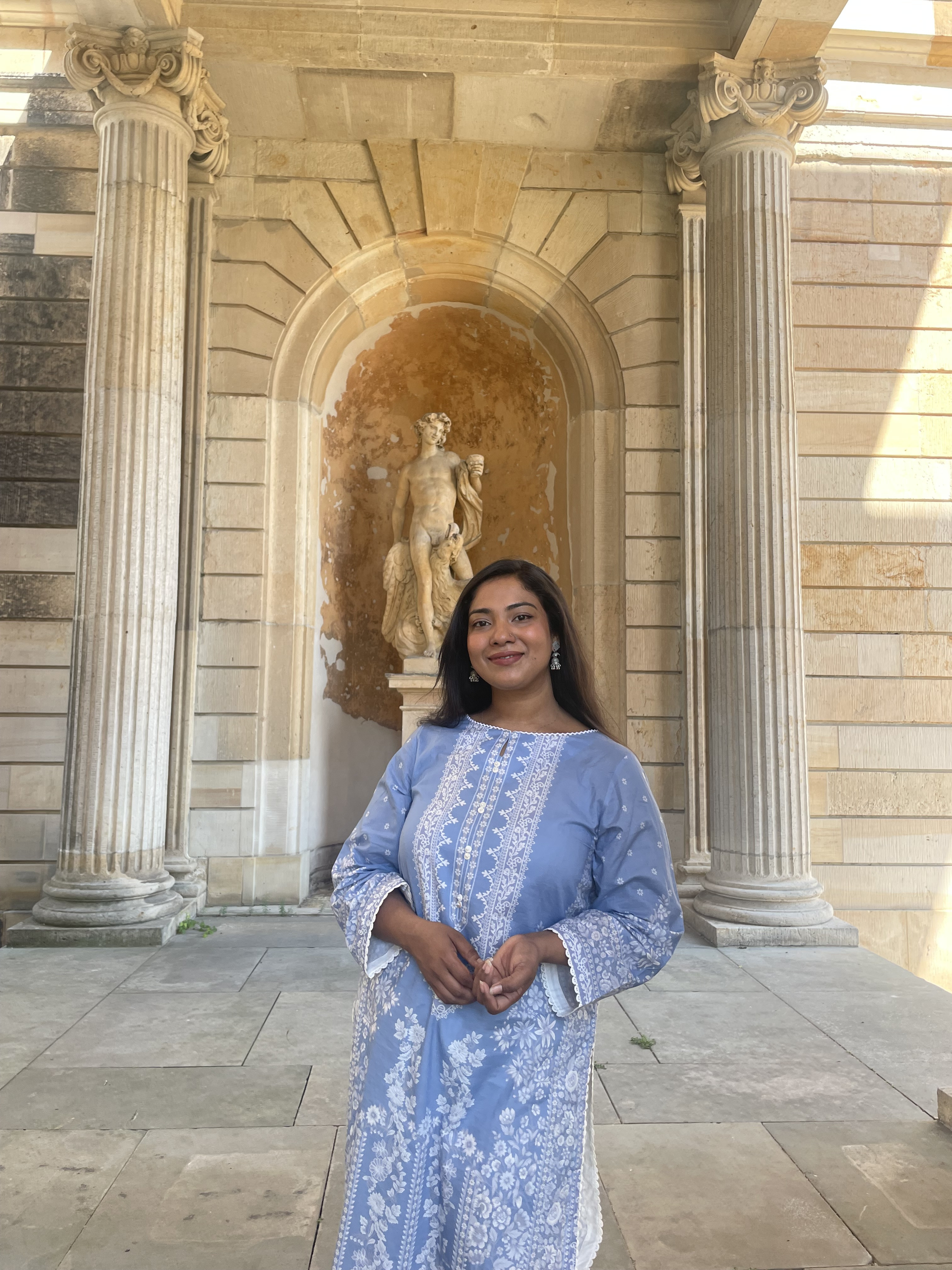
Nationalität: Bangladeshi
Can you briefly introduce yourself and tell us where you are from and how you came to Germany and Potsdam?
My name is Fahmida Ferdows, and I am from Bangladesh. I wanted to meet people from different cultures, hear new stories, and learn how people connect with each other. That dream brought me to the University of Potsdam.
What are you studying at our university, and what inspired you to choose this field?
I am studying Anglophone Modernities in Literature and Culture at the University of Potsdam. I grew up in a small village in Bangladesh where everyone knew each other. Life was simple and peaceful. Bangladesh is a culturally diverse country but it is very rare to see other nationalities there, I wanted to experience a truly cosmopolitan environment. This field inspired me because I wanted to go deep into understanding how culture and literature shape the human race.
What do you remember most about your first weeks and months in Germany? Were there any moments that were especially challenging, unexpected, or memorable?
I arrived during the winter semester in October, and it was a massive shock because I never experience that kind of winter in Bangladesh in Bangladesh its endless summer. By December and January, the freezing minus temperatures became too much for me. I got sick and faced many difficulties because I did not even know how to dress properly for that kind of weather. It was a very difficult period to cope with.
Many international students find that everyday life can be more expensive than expected. How did you experience this, and how did you manage financially?
Finances are very important and stressful for an international student. specially for me I came from a moderate economic background, I experienced a real shock at the beginning because I kept comparing Euro prices to Bangladeshi currency. Everything felt so expensive. When my blocked account was running out, it served as a stark reminder that I needed to find a way to support myself.
You work alongside your studies on a mini-job basis. How did you find this opportunity, and what role did your German language skills play in making it possible?
When my blocked account finished, I was left with nothing and felt extremely anxious. I applied for hundreds of jobs online but received nothing but rejections. It felt discouraging, but I refused to give up. One day, I gathered my courage, walked into my local supermarket (REWE), and asked if they were hiring. That one small step changed everything I got a job. My German language skills were essential because customer-based roles always prioritize German speaker candidates.
Learning German can open many doors beyond university. How did you learn German, and how have your language skills influenced your everyday life and experience here?
I learned German for free right here at the university through the ZESKO program, which was amazing because private language schools can be very expensive. Learning the language is the absolute key to enjoying life and getting the true essence of Germany. Because of my job at the super shop, I know almost everyone in my neighborhood. Greeting them on the street gives me a beautiful feeling of belonging, and I no longer feel like an outsider. Potsdam feels like home to me.
In addition to your studies and work, you are also involved in the AStA. Can you tell us more about this engagement and what motivated you to become active there?
I work in the AStA department for Anti-Fascism, Anti-Racism, and Jewish and Muslim Life. I love this engagement because the theories about racism and fascism that we read in university can often feel purely bookish. Working at AStA gives me a practical field to apply those theories, promote equal opportunities, and stay deeply connected to the university community.
What advice would you give to future international students coming to Potsdam and UP?
First, learn German because language is the ultimate key to communication and inclusion. It connects you to the neighborhood, so you do not feel isolated or depressed. Second, keep patience. The first semester will always feel like a turmoil or a storm, but when the storm ends, the good days show up. Finally, do not worry too much. The faculties at Uni Potsdam are incredibly nice, and you can always reach out to AStA, the international office, or counseling. Everyone replies so fast.
Looking ahead, what are your future plans?
My current plan is to keep working towards creating more inclusion and hope to focus my research on understanding and improving the lives of immigrants abroad. I believe, kindness, courage, and hope can make even a faraway place feel like home.