
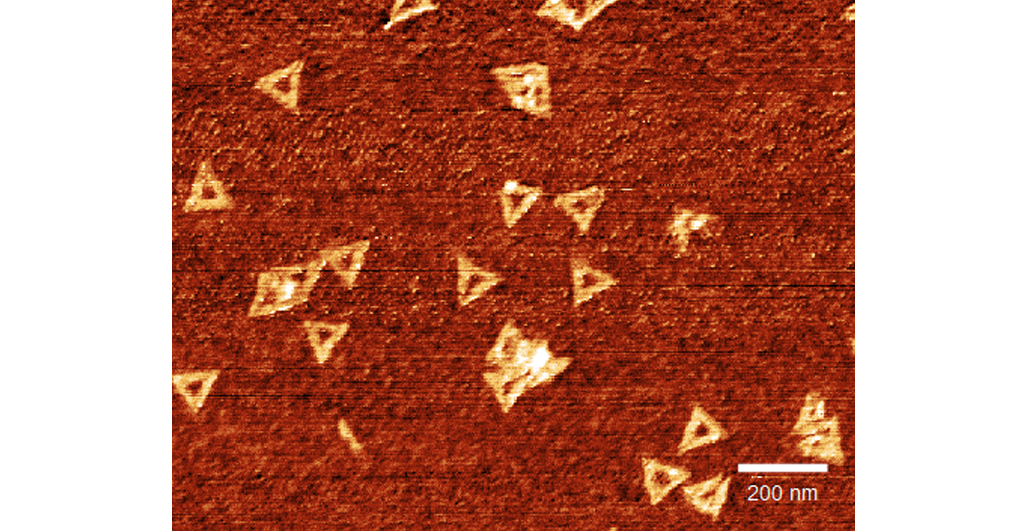
The key method is what is known as DNA origami, a technique in which many short DNA strands are used to fold a longer DNA scaffold strand into three-dimensional shapes on the nanometer scale. This technique makes it possible to produce structures with defined sizes and shapes.
The project aims to investigate whether DNA origami-based nanostructures can be designed to recognize, bind to, and ultimately encapsulate specific virus-like particles. The goal is, on the one hand, to detect viral particles and render them harmless, and, on the other hand, to explore new principles for the formation and control of DNA origami structures.
In the long term, these results could serve as a foundation for better integrating DNA nanostructures with biological systems, thereby enabling new biomedical applications.
The project is being carried out in the working group of Prof. Dr. Ilko Bald at the Institute of Chemistry and is funded with approximately 218,000 euros by Horizon Europe, the European Union's research and innovation program. The project will run for two years from Sep 1st, 2026 until August 31, 2028.