News from the University of Potsdam

Subjects
Selected Subject:
The possibilities of molecular biology are developing rapidly. | Photo: AdobeStock/ipopba

Scissors for Genetic Material – Lena Hochrein optimizes molecular methods

The possibilities of molecular biology are developing rapidly. Today, researchers are able to modify the genome of every cell quickly, economically, …
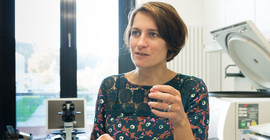
Prof. Dr. Katja Hanack in the laboratory. | Photo: Karla Fritze

"Each virus develops its own survival strategies" – biochemist Prof. Katja Hanack on the difficulties involved in developing vaccines against viruses

On the corona pandemic – contributions from the University of Potsdam

In just a few weeks, the corona virus SARS-CoV-2 has spread around the world from Wuhan in China. Wherever there are people, there is also the …
Foto: Prof. Dr. Katja Hanack. Photo: Karla Fritze.

Cozy in the Petri Dish – Bioscientists at the University of Potsdam are breaking new ground in antibody production

They are the weapons of our body against unwanted invading microorganisms. Antibodies bind to the surface of viruses and bacteria. Specialized …
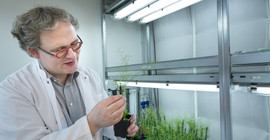
Markus Grebe looks at an eight-week-old Arabidopsis thaliana in the plant room. Photo: Thomas Roese.

Everything in Its Right Place – Plant physiologists examine control mechanisms in cell plants

Whether in plants, animals, or human beings, cells are the buildings blocks of life. Their interiors are little organisms in themselves, consisting of …
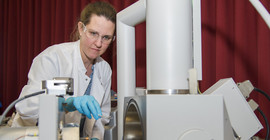
Dr. Claudia Pacholski in the lab. Photo: Thomas Hölzel.

All about Chemistry – Heisenberg Fellow Dr. Claudia Pacholski is at home in many laboratories

She is active, goal-oriented, welcomes new challenges, and enjoys teaching and research. Food chemist Dr. Claudia Pacholski has been teaching and …
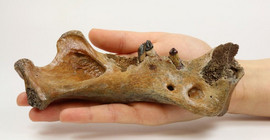
Foto vom Kieferknochen

Gemeinsame Vorfahren – DNA enthüllt die Geschichte der Säbelzahnkatzen

Wissenschaftlern der Universität Potsdam ist es gelungen, wesentliche neue Erkenntnisse zur Geschichte zweier Arten von Säbelzahnkatzen, speziell …

„Eiskalte Schnappschüsse molekularer Maschinen“ – Antrittsvorlesung von Prof. Dr. Petra Wendler

Über „Eiskalte Schnappschüsse molekularer Maschinen“ spricht Prof. Dr. Petra Wendler in ihrer Antrittsvorlesung an der Universität Potsdam am 12. …

Neue Wege in der Antikörperherstellung - Antrittsvorlesung von Prof. Dr. Katja Hanack

Um „Neue Wege in der Antikörper-Herstellung“ geht es Katja Hanack, Professorin für Immuntechnologie, in ihrer Antrittsvorlesung, die sie am 20. Januar …
While the invasion of plants and animals has been widely examined, microorganisms have received little attention. At the University of Potsdam, PD. Dr. Guntram Weithoff and his team will contribute to filling this gap. Photo: Karla Fritze

Who Is the Strongest? – Team of biologists is looking for the invasive success of blue-green algae


The Himalayan balsam (Impatiens glandulifera) has succeeded. So has the Chinese mitten crab (Eriocheir sinensis). Both belong to the plant and animal …
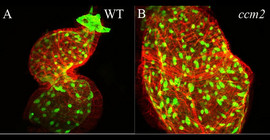
Konfokalmikroskopische Aufnahme des Herzens eines Zebrafischembryos. Der Verlust eines bestimmten Proteins führt zu einer ballonartigen Vergrößerung des Herzschlauchs (rechts). Fotos: Salim Seyfried und Marc Renz.

Die Suche nach dem Wirkstoff – Potsdamer Zoophysiologen untersuchen seltene Erkrankungen

Salim Seyfried, Professor für Zoophysiologie an der Universität Potsdam, koordiniert ab Juni 2015 ein transatlantisches Konsortium, das seltene …