


8:00 am
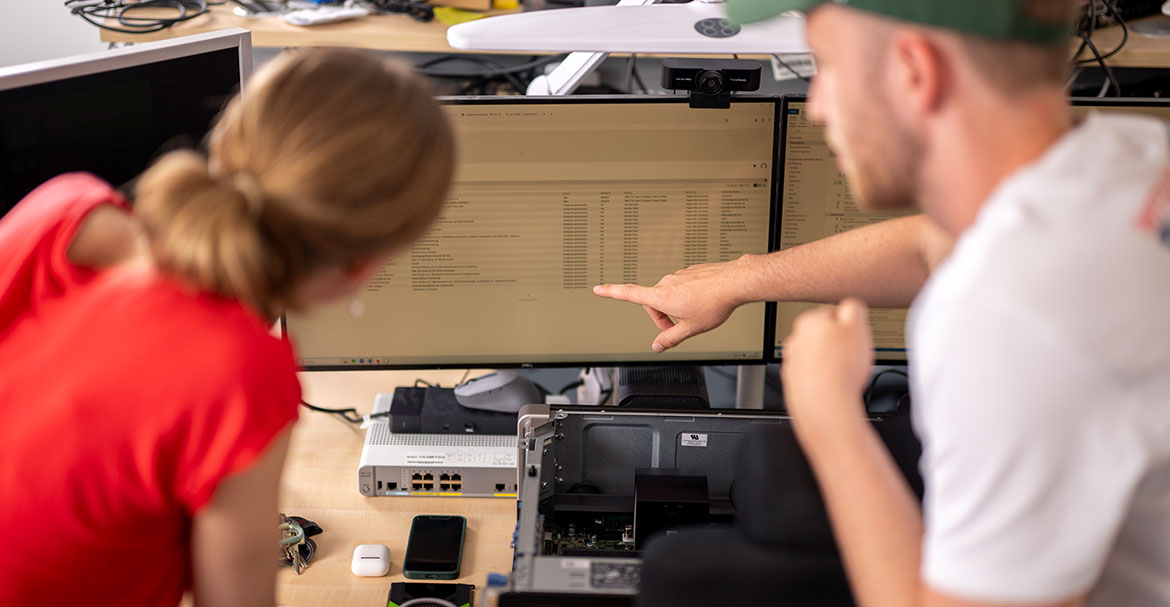
His working day usually starts in the office, where he is in regular exchange with the team. Nothing happens at the ZIM without “tickets”. The first thing he does every day is therefore to check the system for customer requests – i.e., from the employees of the University of Potsdam. “Every request ends up in a large virtual funnel, where it is filtered and processed according to subject area. It looks like Wikipedia before the turn of the millennium, but it works great. I check in here several times a day.” Depending on the volume of requests, Schneider then plans and structures his day, creating his own plan with a to-do list, which he prefers to tick off in a completely “analog” way. “I actually like to write many of my tasks down by hand – that’s the best way for me to remember them, despite all the other digital tools I use every day. 99% of my learning tools are index cards.”
10:00 am
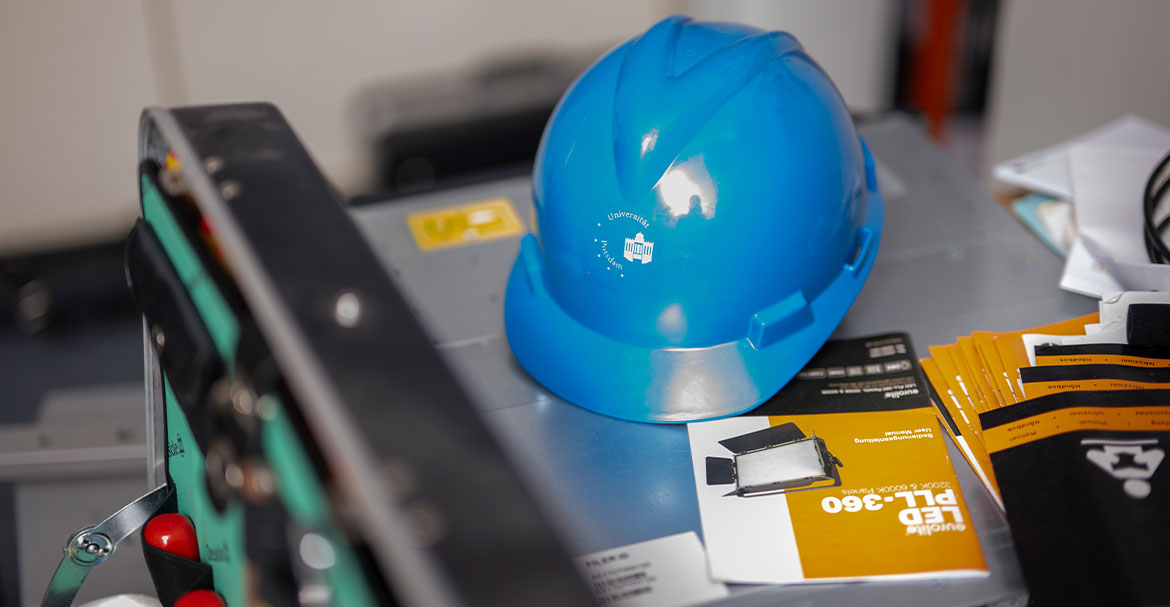
During the morning, the team is often on duty where something is no longer working properly or needs to be set up. Friendly, attentive, and diligent, the trainee supports the team and does not let supposedly “boring” routine tasks spoil his mood. A classic job is setting up PCs and laptops and arranging appointments for their collection and installation. If a dozen new computers need to be prepared, they are neatly lined up and updated in a routine process. “Actually, there’s almost always a laptop somewhere that is being set up. In some cases, we have to take them apart completely. That’s very hands-on work that provides a nice change.”
12:00 pm
Exchange with colleagues is very important to the team, and this includes lunch as well as a joint breakfast at the end of each week. During the second half of the day, Hagan Max Schneider is often on support tours or assists “walk-in customers”. It is not uncommon for someone to spontaneously appear at the door with a question or an urgent request. “Sometimes we find out on site that a plug is simply not where it should be. Then the solution is quick and easy, of course,” says Schneider with a smile. The top priority is always to ensure that everyday life at the university runs smoothy. Various systems such as Outlook, VPN, or file boxes depend on this. For these, he creates instructions or provides support via email, Zoom, telephone or on site whenever problems arise.
2:00 pm
Although Hagan Max Schneider is still an apprentice, he is already responsible for administering a central system: the Baramundi Kiosk. This tool is used to manage software on all PCs in the central administration department. For example, Schneider uses remote access to start an update on another computer, monitor its progress, and ensure successful completion. “I’m a diligent person; I like to prepare things carefully and follow up on them. I’m trusted in this area, which is why I am able and allowed to work independently,” he explains. Before heading home, his to-do list often includes work on final projects, project documentation, or setting up a so-called media table. He leaves the office satisfied – while the next ticket is already waiting.
More about vocational training at the University of Potsdam: https://www.uni-potsdam.de/de/bausbildung/index
This text was published in the university magazine Portal - Zwei 2025 „Demokratie“. (in German)
Here You can find all articles in English at a glance: https://www.uni-potsdam.de/en/explore-the-up/up-to-date/university-magazine/portal-two-2025-democracy