
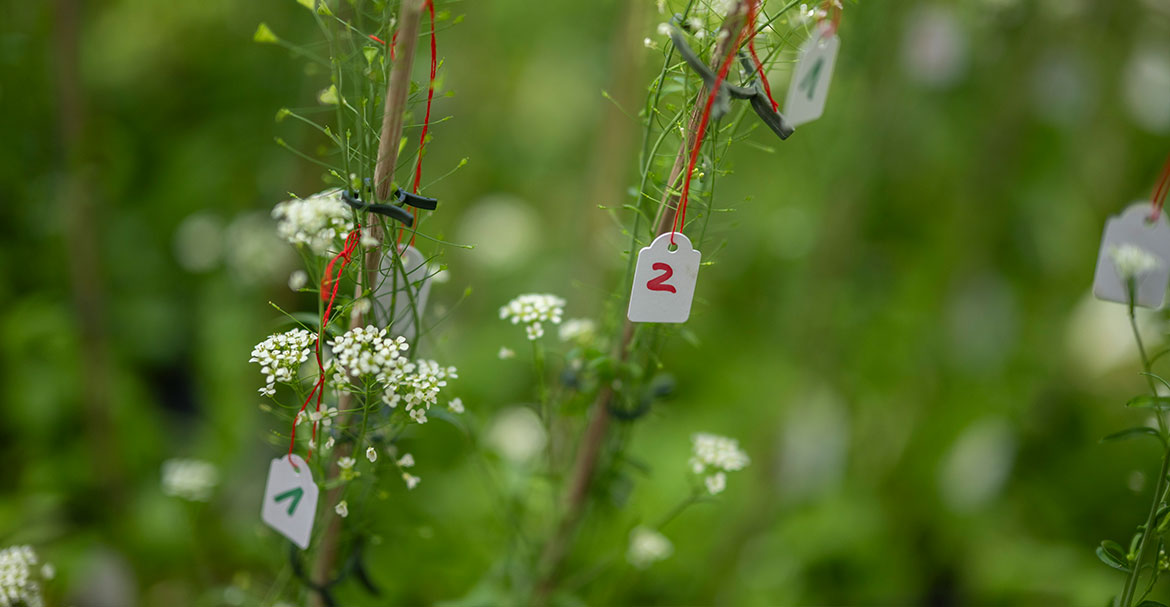
“Our research is essential because without plants there is no human nutrition,” emphasizes Michael Lenhard, Professor of Genetics and spokesperson of the new Collaborative Research Center “Phenotypic Plasticity in Plants.” “They are also used to produce biofuels and medicine,” adds project and junior research group leader Dr. Anika Küken. To make our crops fit for climate change in the future, scientists in CRC 1644 have been working together in an interdisciplinary program since April 2024. They want to understand the ability of plants to adapt to changing temperature and nutrient conditions as a result of climate change. The aim is to decipher what plasticity is based on at the molecular level. This may form the basis for better understanding the relationships between crops, plasticity, and yield. In addition to the University of Potsdam, the project involves the Max Planck Institute of Molecular Plant Physiology, Humboldt University of Berlin, the University of Cologne, the Hasso Plattner Institute, and the Leibniz Institute of Vegetable and Ornamental Crops.
Plants as masters of adaptation
How biologists and bioinformaticians study the interplay between genes and the environment