
In just a few decades, the appearance of glaciated regions around the world has changed dramatically. Where thick ice streams once carved out valleys and depressions, glacial lakes are now becoming increasingly common. More than 71,000 such lakes have recently been recorded worldwide. Their number and area continue to grow as glacier melt accelerates due to atmospheric warming. Scientists from the Universities of Potsdam and Leeds have investigated how the melting ice masses have changed the globally available water volume in glacial lakes – and what resource potential these could have in the future.
To date, the volume of only little more than 300 glacial lakes is known from direct depth measurements. Such measurements are logistically complex and, not least, risky, as many lakes are located near unstable high mountain flanks. The researchers therefore developed a new method that uses these known volumes to estimate the water volume of all glacier-fed lakes within a ten-kilometre radius of today's glaciers. The results show that glacial lakes worldwide store around 2,000 cubic kilometres of fresh water – more than 40 times the volume of Lake Constance.
“This enormous volume of water is extremely unevenly distributed,” emphasises Dr Georg Veh, lead author and scientist in the Natural Hazards research group at the University of Potsdam. “More than 80 per cent of all glacial lakes are smaller than 0.1 square kilometres and together store less than one per cent of the total volume.” In contrast, the 40 largest lakes together contain more than half of the global meltwater in glacial lakes.
These steadily growing water reservoirs are increasingly attracting econmic interest – for example, as tourist attractions in the high mountains, as potential drinking water and irrigation reservoirs, or as a source of energy for hydropower. But where can this resource potential be found? The largest lakes and water volumes are located where the thickest glaciers still exist today: around two-thirds of the global glacial lake volume is stored in Greenland, Alaska and the Canadian Arctic. However, under current infrastructural conditions, it is difficult to derive any economic benefit from these remote lakes.
In contrast, the European Alps account for only about 0.2 per cent of the global glacial lake volume – a negligible amount by global standards. The lake volume in the European Alps will continue to change only slightly in the future, as much of the glacier mass has already been lost and the remaining cirques in the steep high mountains only offer space for smaller lakes. In addition, the hydropower potential of most large Alpine lakes has already been exhausted. Nevertheless, new hydropower projects could significantly increase the volume of individual lakes: for example, the Gornerli project in the Swiss Alps envisages the construction of an approximately 85-metre-high dam at the outlet of a small natural lake in the early 2030s. “This would create a reservoir impounding over 150 million cubic metres of water that could supply hydroelectric power to more than 140,000 households – at an estimated construction cost of around 375 million US dollars,” says Georg Veh.
At the same time, it is important to find a balance between economic use and the protection of natural systems. Glacial lakes are young, highly dynamic habitats whose shape and depth can change rapidly due to large sediment loads from tributary rivers. The scientists simulated this filling process and found that small glacial lakes in particular will only exist for a few hundred years before they gradually fill with sediment. In the European Alps, their volumes could already have decreased by 10 to 50 per cent by the year 2200.
As glacial lakes are a public good, sustainable management requires the consideration of several functions, from hydropower and tourism to the preservation of sensitive ecosystems. The new estimates of the volume and lifespan of glacial lakes provide an important decision-making framework for policymakers and planners to better assess regional freshwater supplies and ecosystem services in the future.
Link to publication: Georg Veh, Wolfgang Schwanghart, Oliver Korup & Jonathan L. Carrivick, Evolving resource potential of glacial lakes with ongoing deglaciation, Nature Water, 2026
https://www.nature.com/articles/s44221-025-00578-6
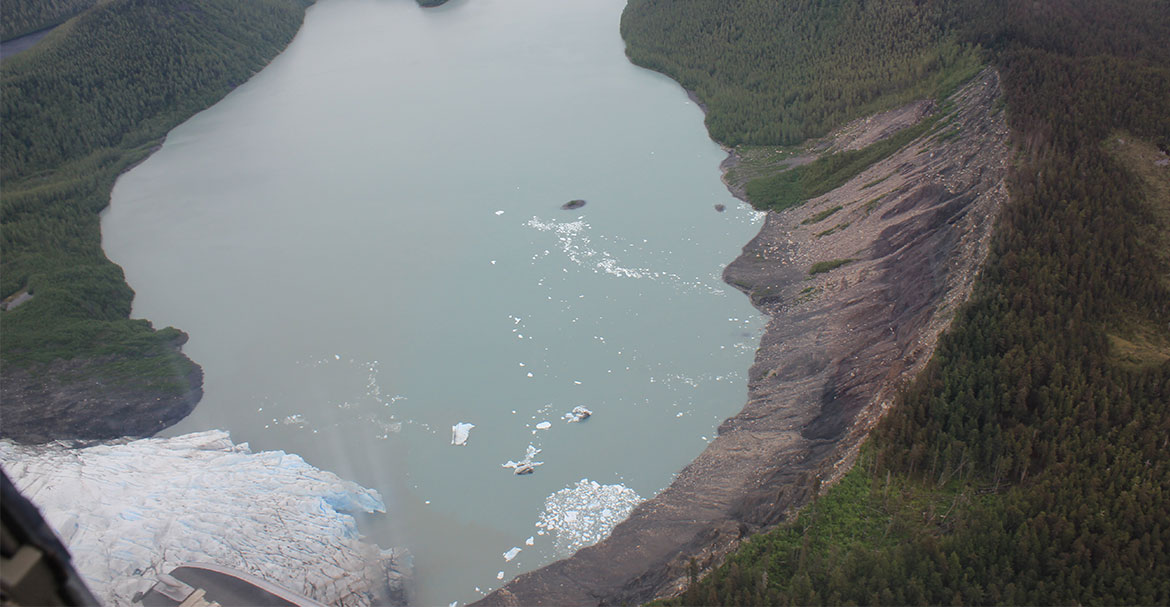
Photo 1: A moraine-dammed lake below the Finger Glacier in Glacier Bay National Park, Alaska, in 2023 (Photo: Georg Veh)
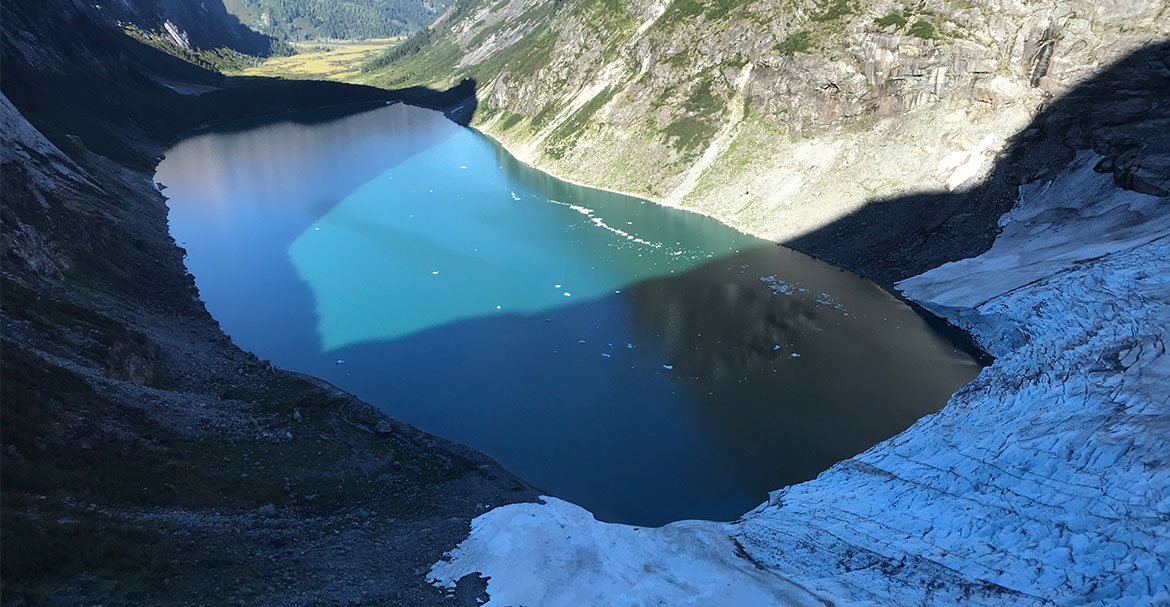
Photo 2: A recently formed glacial lake near Terrace, British Columbia, Canada in 2022 (Photo: Georg Veh)
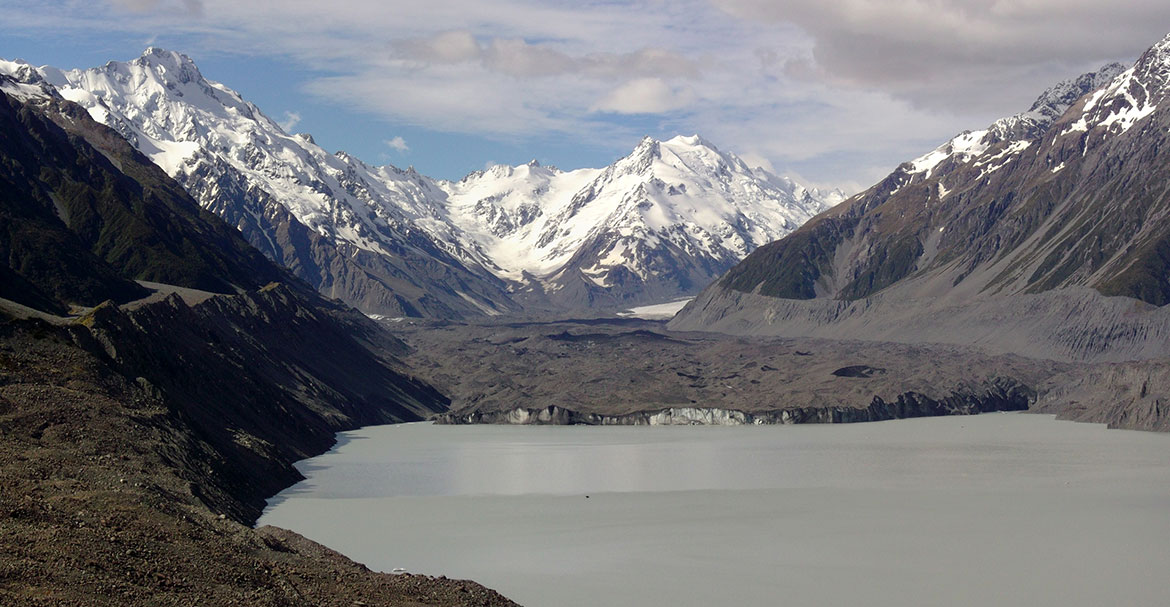
Photo 3: Tasman Lake, fed by the Tasman Glacier in the background, in New Zealand (Photo: Jonathan L. Carrivick)
Contact:
Dr. Georg Veh, Institute of Environmental Science and Geography
Tel.: 0331/977-5875
E-Mail: georg.vehuuni-potsdampde
Media Information 28-01-2026 / Nr. 013