Self-organised ecogeomorphic systems: confronting models with data for land-degradation in drylands

07-10 June 2010, Potsdam, Germany

Home Context Programme Participants Contact Outcome

Scientific report of the workshop


Executive summary:
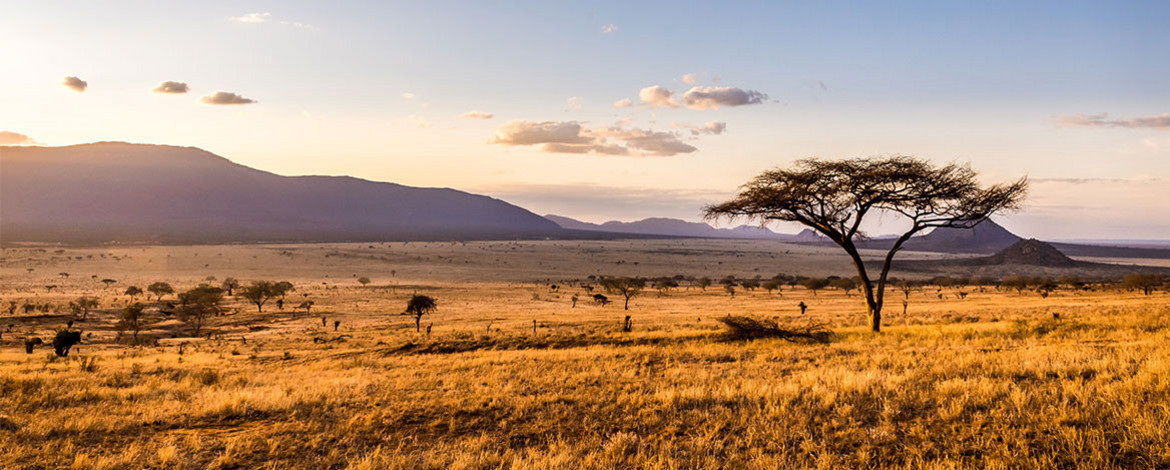
The workshop on ecogeomorphic systems was dealing with a new, interdisciplinary science field at the border of dryland hydrology-geomorphology and landscape ecology research. Main focus of the workshop was the comprehension of land degradation processes in dryland settings as a functioning of interactive biotic and abiotic processes within an ecogeomorphic system.

Land degradation is a global problem and the areal extent of degraded land is likely to increase in the future due to population pressure and the adverse effects of changes in the climatic regimes of dryland regions. Desertification and land degradation pinpoint a fundamental paradox of dryland ecosystems. On the one hand, dryland plants are, individually, adapted to be resilient. On the other, dryland ecosystems are subject to catastrophic changes. One of the focal discussion point of the workshop was how individually resilient plants succumb to stress in sufficient numbers to cause ecosystem-wide sudden and catastrophic change - as a function of both biotic and abiotic processes and their feedback interactions.

Over the last decade, there was a tendency to study land degradation as a public policy issue focusing on regulations in regard to land-use, land abandonment and effects of subsidies. However, as land pressure increases, and potential effects of climate change potentially change inherent ecosystem functioning, it becomes fundamental for a stustainable future land management to study land degradation in a much more science-based, interdisciplinary manner including potential feedback mechanics between ecological and geomorphological processes. The difficulty of understanding these vegetation-environment interactions requires major changes to the ways in which dryland environments are investigated.

The workshop evaluated approaches based on complexity theory and advanced self-organized models for such investigations, and deals with the difficult issue of how to use existing data to test these approaches, as well as to identify the need for new datasets. During the workshop, the availability, need and short-coming of recently developed ecogeomorphic models were discussed. It was agreed that ecogeomorphic models are required to understand the patchiness of vegetation and resource islands typical for dryland settings and that advanced methods need to be developed for analysis of complex spatio-temporal patterns in ecogeomorphic systems, both produced by self-organizing models and apparent within environmental data sets. If a model of desertification and land degradation is to have practical application, it must be both quantitative (so that measurable impacts of environmental change can be identified), grounded in knowledge of the propagation and resource requirements of particular species (so that it may be applied at particular localities) and include a quantitative understanding of ecogeomorphological interactions (so that feedbacks can be included within the model). No existing model meets these requirements.

Main outcome of the workshop is the set-up of a communication basis to produce a keystone manual that is supposed to provide the basis of future interdisciplinary research on ecogeomorphic systems and will allow advancing analysis methods for complex spatio-temporal patterns in ecogeomorphic systems, both produced by self-organizing models and within environmental data sets.

Scientific content of the workshop:
The two-day exploratory workshop enabled a multi-disciplinary discussion on current advances in the study of dryland ecosystems. For the first time, scientists from three science communities covering the field of landscape ecology (in specific: vegetation dynamics in drylands), geomorphology-hydrology (soil erosion and transfer processes through water) and mathematics (self-organisation, complexity theory) had the opportunity to discuss their definition of land degradation, questions of corresponding spatial and temporal scales, the importance of self-organisation and the application and availability of integrated modelling frameworks. It was apparent that the three communities were lacking to a certain extent a common scientific language. The multi-discipline perspectives on ecosystem functioning were so diverse that frequently members of different communities would talk at cross purposes during the discussions. For example, the geomorphologists were stressing the importance of the redistribution of soil resources as a major driver of land degradation, whereas ecologists would focus their analysis on the pattern dynamics of vegetation patches - the importance of the linking elements of redistribution and pattern dynamics was not considered in both perspectives. However, the multi-disciplinary discussion let to to the identification of several important gaps in the current understanding of ecogeomorphic systems: common definitions of degradation concepts and processes, the relevant temporal and spatial scales and key challenges as detailed below.

The first day of the workshop was reserved to lectures and seminars that would introduce current fronties in the three disciplines, i.e. current advances in land degradation and the study of ecogeomorphic systems from the perspective of geomorphologists and ecologists and the advances in self-organisation modelling. The seminars identified the different approaches of modellers and field experts (approximately 50 % of the participants in each group) to quantify and understand land degradation. To enable a coherent approach for the group's scientific perspective on land degradation, a mind map was created that summarised and categorised the scientific understanding of the term. The compiled definitions of the term were as diverse as the composition of experties amongst the participants; the following keyword definitions give an overview:

'Land degradation describes':

  1. Opposite of productivity / use (e.g. pushing system beyond qualitative threshold so level of productivity is significantly lower);
  2. Ecosystem service (loss of services be e.g. the reduction in carbon storage, grazing potential, aquifer recharge etc.);
  3. Change (alteration of ecological systsems which degrades the 'expected' natural biodiversity);
  4. Functionality (loss of functionality of any ecosystem or surface area by natural or anthropic factors);
  5. Resilience (loss of resilience / ecological adaptability / slow down response to perturbation);
  6. Human perspective (decision-making and trade-offs relative to different land uses);
  7. Specific science perspective (a user-defined series of output variables: soil loss, vegetation density, runoff/runon).

The diversity of perspectives on the analysis of land degradation and the discussed methods for data analysis, self-organisation and model formulation during the first workshop day clearly showed the current discrepancies in the study of drylands. Ecogeomorphic system analysis for land degradation studies was identified as a new science field which requires substantial development in the analysis methods of complex vegetation and resource patterns, an interdisciplinary approach for data compilation and an integrated modelling perspective to study degradation processes and patterns and links between them.

The second day of the workshop was filled with seminars and workshops on integrated modelling and the analysis of pattern formations of dryland ecosystems. The need, scientific rationale and requirements for ecogeomorphic models were identified for a widely-spreat scope varing between:

  1. Pure science application: comprehension of linkage between processes and pattern, understanding vegetation structuring processes, understand the system's self-evolution as constrained by any given initial condition and parametric state;
  2. Identification of data gaps and limitations: how developing models can be useful to further field observations, to infer degradation processes from data and to identify key variables;
  3. To understand and predict: to understand the structural-functional relationships of landscape units and to be able to extrapolate this understanding to other climatic / geograhic regions, to develop an integrated understanding of dryland environments, to evaluate their behaviour and responses to change;
  4. Only to predict: to predict the evolution of areas with a potential for degradation;
  5. To manage and restore: for the optimisation of management and land-use, enable restoration of degradation.

The group identified that currently no modelling framework exists that would be able to address any of the listed application areas. One of the key challenges for the three disciplines has thus been defined and postulated: the development of partly and/or fully integrated models that couple vegetation dynamics and pattern formation procedures with process-based hydrological transport models at spatial scales relevant for land management.

To enable the development of ecogeomorphic models, the following research fields were identified for future research collaborations within the group:

  • Advances in process understanding: understand feedbacks between abiotic and biotic processes, identify key interactions and controls, understand hierarchical pressures for a given landscape;
  • Establishment of indicator systems: derive key parameters, identify a minimal set of dominant processes to be measured, identify a signature of simple system characterisation;
  • Merging data with model; effective uncertainty analysis, develop frameworks to link models over temporal/spatial scales;
  • Self-organisation assessment: integrate interdisciplinary feedbacks across spatio-temporal scales;
  • Assessment of the human elements of the system: communication with agricultural and rural policy, identification of what is useful for management.

It was also established that without including the expertise and methods of the other disciplines, neither ecologists nor geomorphologists will be able to understand and control catastrophic feedback loops that lead to desertification. The workshop ended with a concordant agreement that more interactive discussions between the three disciplines are necessary before it is possible to proceed with the preparation of joint research applications.

Assessment of the results and future directions:
The workshop brought together experts from three disciplines which normally do not meet on conferences or science meetings: geomorphologists, ecologists and mathematians. From the beginning of the workshop, the participants were excited to discuss the interdisciplinary field of dryland research and to share and communicate different science perspectives on the study of both the biotic aspects (vegetation dynamics) and the abiotic aspects (transfer of water and soil resources) of dryland ecosystems. Most participants were suprised to see how differently the disciplines define, analyse and interpret the same ecosystem functioning, as both disciplines merely include their either biotic or abiotic process understanding and do not include interacting mechanisms in both their conceptual and model descriptions of dryland systems.

To fill the apparent gap between the disciplines, it was decided to publish a keystone manual that provides a basis of future interdisciplinary research on ecogeomorphic systems. We have signed a publication contract with Springer, Utrecht for a book publication with the title: "Pattern of land-degradation in drylands - Understanding self-organised ecogeomorphic systems". The aim of the keystone manual is to advance methods for analysis of complex spatio-temporal patterns in ecogeomorphic systems, both produced by self-organizing models and apparent within environmental data sets. The content will be based on the current research of the participants and their individual contribution to the workshop sessions.


Please report any problems with this website to the webmaster.

Copyright to ECHO 2009 impressum