
Fresh from our Blender 3D workshop and inspired by Douglas Hofstadter’s "Gödel, Escher, Bach (GEB)" —a book that fittingly opens in Potsdam, at the City Palace, where Frederick the Great (an important patron of science) meets Johann Sebastian Bach—we challenged our PhD students with a playful yet brain-twisting puzzle:
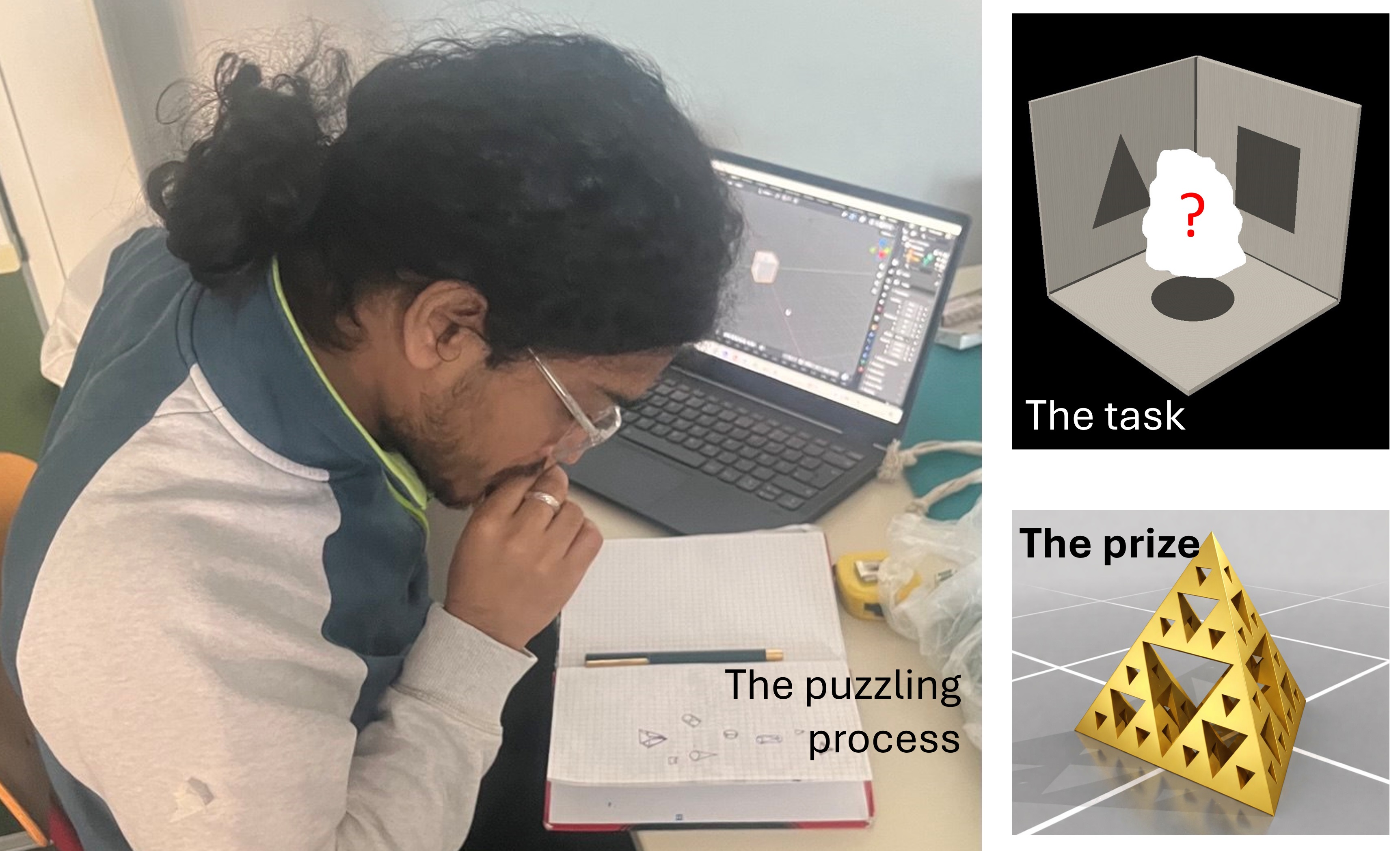
What 3D object casts three different shadows—triangular, circular, and square—when projected onto three mutually perpendicular planes? And even more: Could they reconstruct it in Blender?
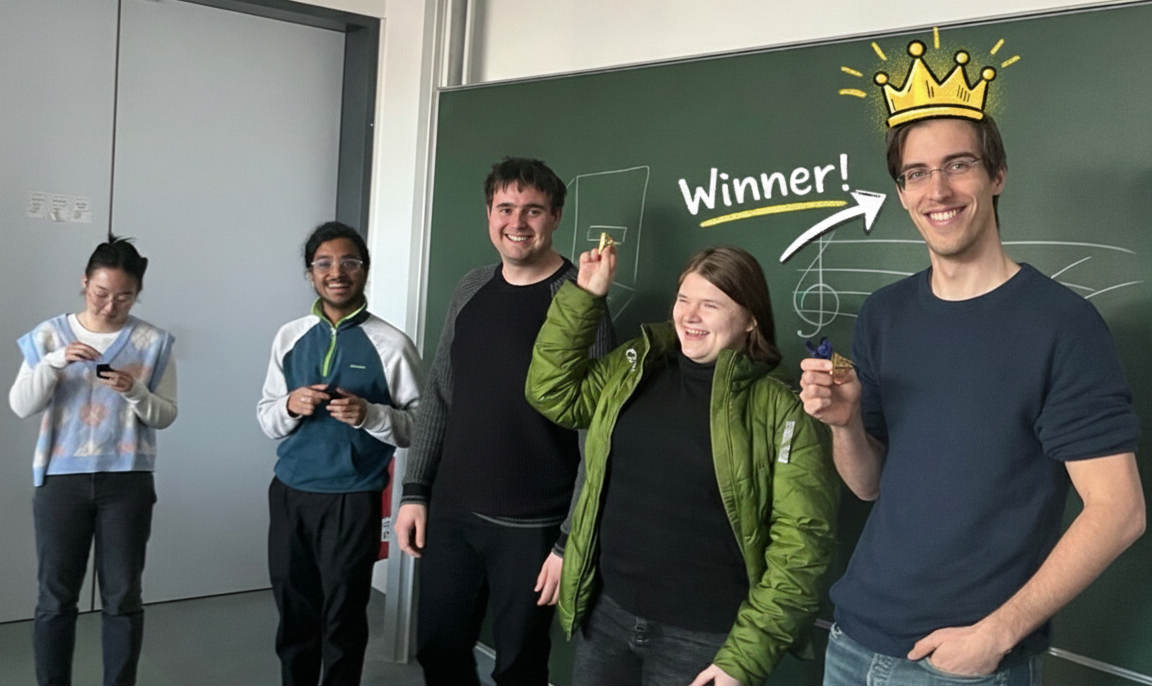
Our PhD students Victoria, Anant, Nicolas, Olga, and Richard solved the puzzle brilliantly and received a very special prize: A body that, when “dropped” onto the same three planes, forms square shadows. But no—this is not a cube. At least not a real one. It is one of several fractal solids sometimes referred to as imaginary cubes: the Sierpiński tetrahedron. This prize was lovingly designed and 3D-printed at the University of Potsdam by PhD student Sarah Loebner from Prof. Santer’s group. Many thanks to Sarah!
⸻
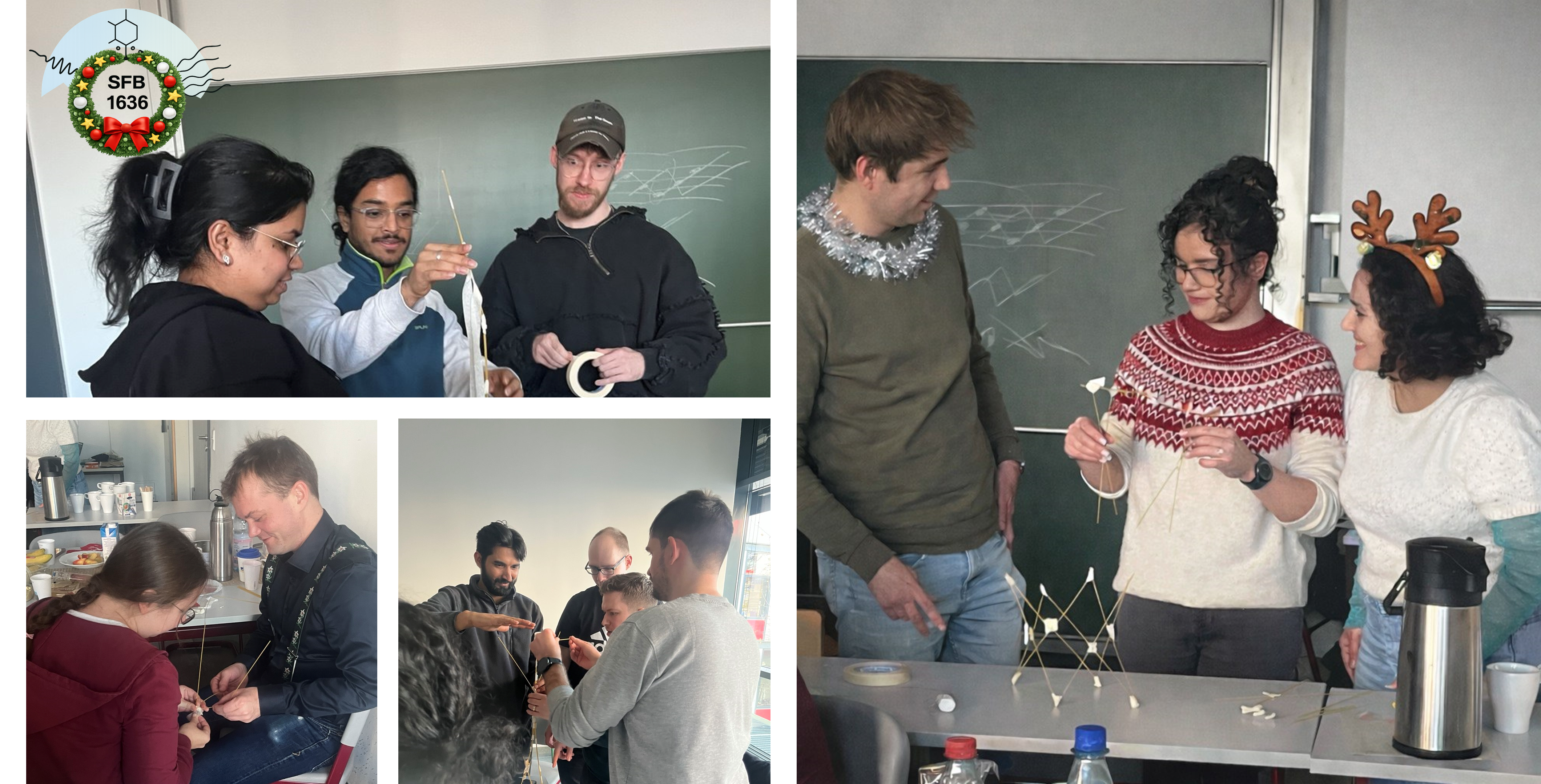
While one group wrestled with geometric projections and imaginary solids, the rest of our PhD students ventured into the frontier field of experimental structural snack mechanics:
The Spaghetti–Marshmallow Tower Challenge
Their mission:
Engineer a structure capable of lifting a marshmallow as far from the floor as possible using only
dry pasta, gravity, optimism, and questionable design philosophies.
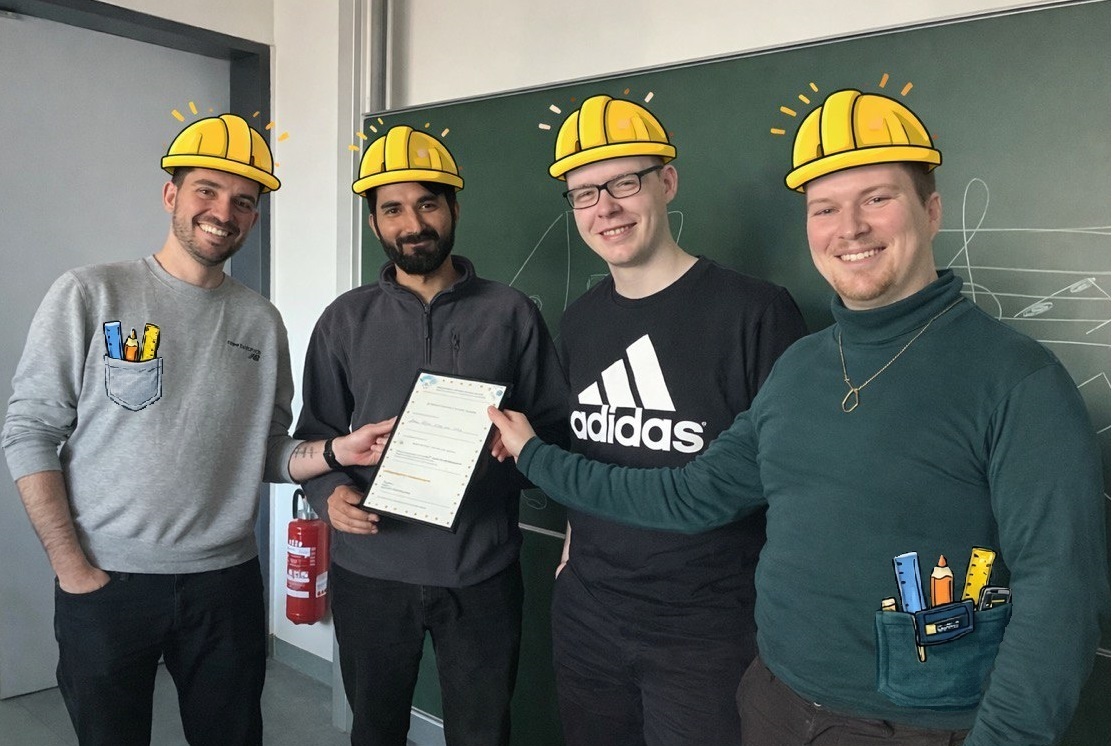
The victorious team earned the highest honor we can bestow: The Golden Spaghetti Trophy —
in recognition of extraordinary carbohydrate-based engineering under severe time constraints. Congratulations to Tobias, Sufian, Niklas, and Jannes — their tower reached an impressive height of 65 cm!
⸻
We trained our skills, our teamwork, and quite a few brain cells—and now we’re energized and ready for all the scientific adventures ahead.
Wishing everyone relaxing Christmas holidays and a wonderful slide into the New Year 2026!
PS: The musical connection introduced via Bach at the beginning of this post resonates nicely with recent work on quantum listenings by Prof. Carsten Henkel: https://arxiv.org/pdf/2507.08813