
The efficiency of solar cells is essentially determined by three parameters: short-circuit current, open-circuit voltage, and fill factor, which describe their performance in a current-voltage curve. All three parameters need to be further optimized so that organic solar cells can truly compete with established solar cell technologies.
However, recent publications show that an improvement in the open-circuit voltage often leads to a simultaneous deterioration in the fill factor—and vice versa. This challenge has now been addressed through a close collaboration between the research groups of Prof. Feng Gao (Linköping University, Sweden), Prof. Dieter Neher (University of Potsdam) and Prof. Safa Shoaee (Paul-Drude-Institut für Festkörperelektronik, Berlin) together with other participants. The team was able to demonstrate that, under certain conditions, the generation of free electric charges in the active layer of the solar cell depends heavily on the electric field in the organic semiconductor material. “This results in a previously poorly understood limitation on the fill factor, which becomes particularly relevant when voltage losses need to be minimized,” explains Dieter Neher.
In organic solar cells, light excites certain states known as excitons. An exciton consists of a negatively charged electron that is bound to a positively charged hole on the same molecule and therefore cannot move freely. The separation of these electron-hole pairs into free electric charges is achieved through a charge transfer that has been the subject of intensive research by the groups of Dieter Neher and Safa Shoaee in recent years. In the actual publication, the concepts developed in this work were incorporated into simulations of the entire solar cell. The results showed that the lifetime of the excitons and the energy released by charge transfer are the most important parameters determining the fill factor at low voltage losses.
“We were able to trace the trade-off between fill factor and open-circuit voltage back to a few physical quantities and simulate how this limitation can be significantly mitigated by increasing the exciton lifetime,” says Dieter Neher. Experimental and theoretical results confirm that a longer exciton lifetime is a crucial factor in further increasing efficiency. To test this approach, the team developed new material combinations. The organic solar cells produced using these combinations achieved both high fill factors and high total power output. The model provides general guidelines for material development and the optimization of solar cell components. It thus opens up new possibilities for overcoming long-standing efficiency limits in organic solar cells and further increasing their performance.
Link to Publication: Zhang, H., Yuan, J., Wang, T. et al. Overcoming the fill-factor limit of organic solar cells. Nat. Photon. (2026). https://doi.org/10.1038/s41566-026-01946-8
Image:
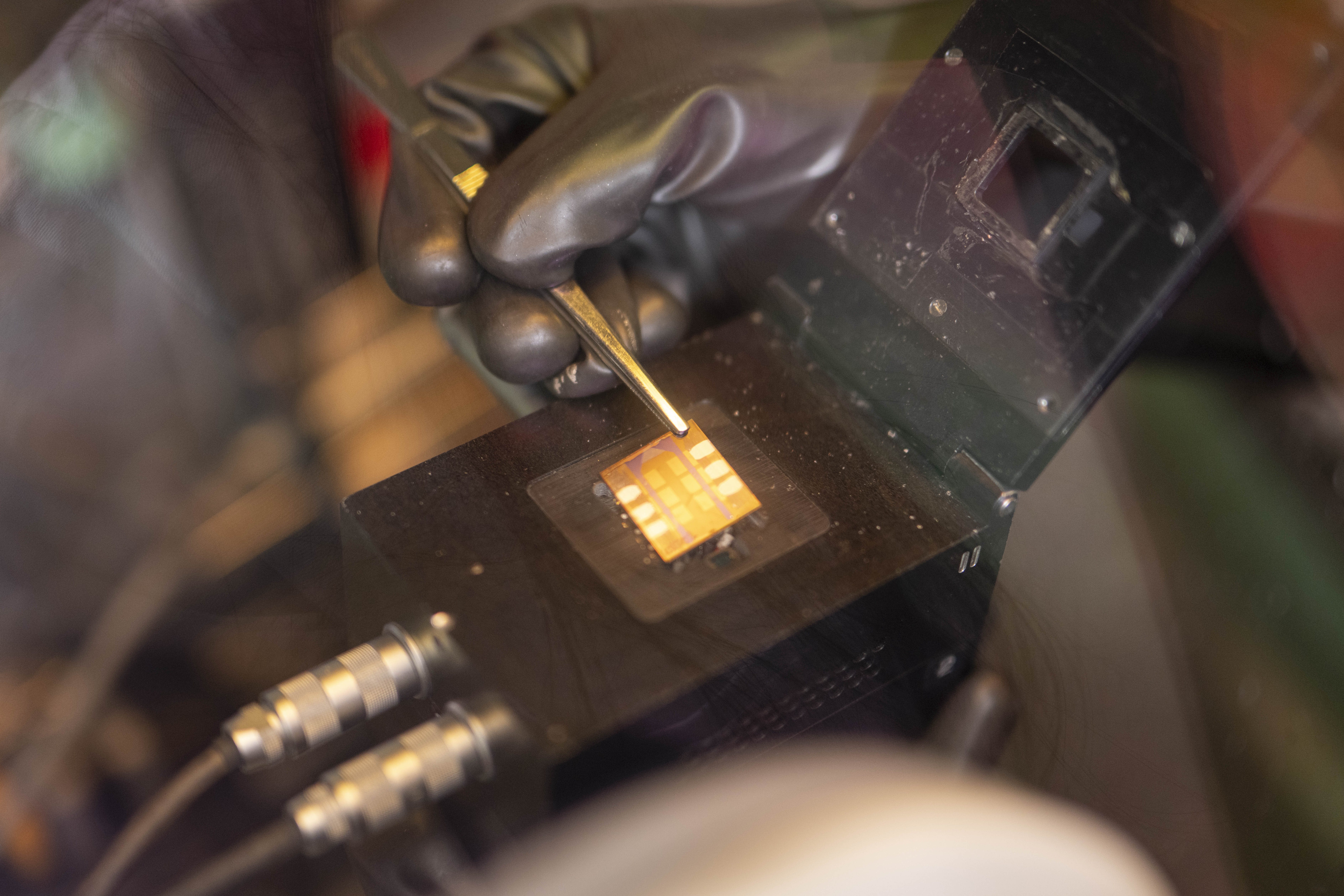
2026_052_PM_org.Solarzellen1_Thomas Roese: Testing an organic solar cell. Photo: Thomas Roese.
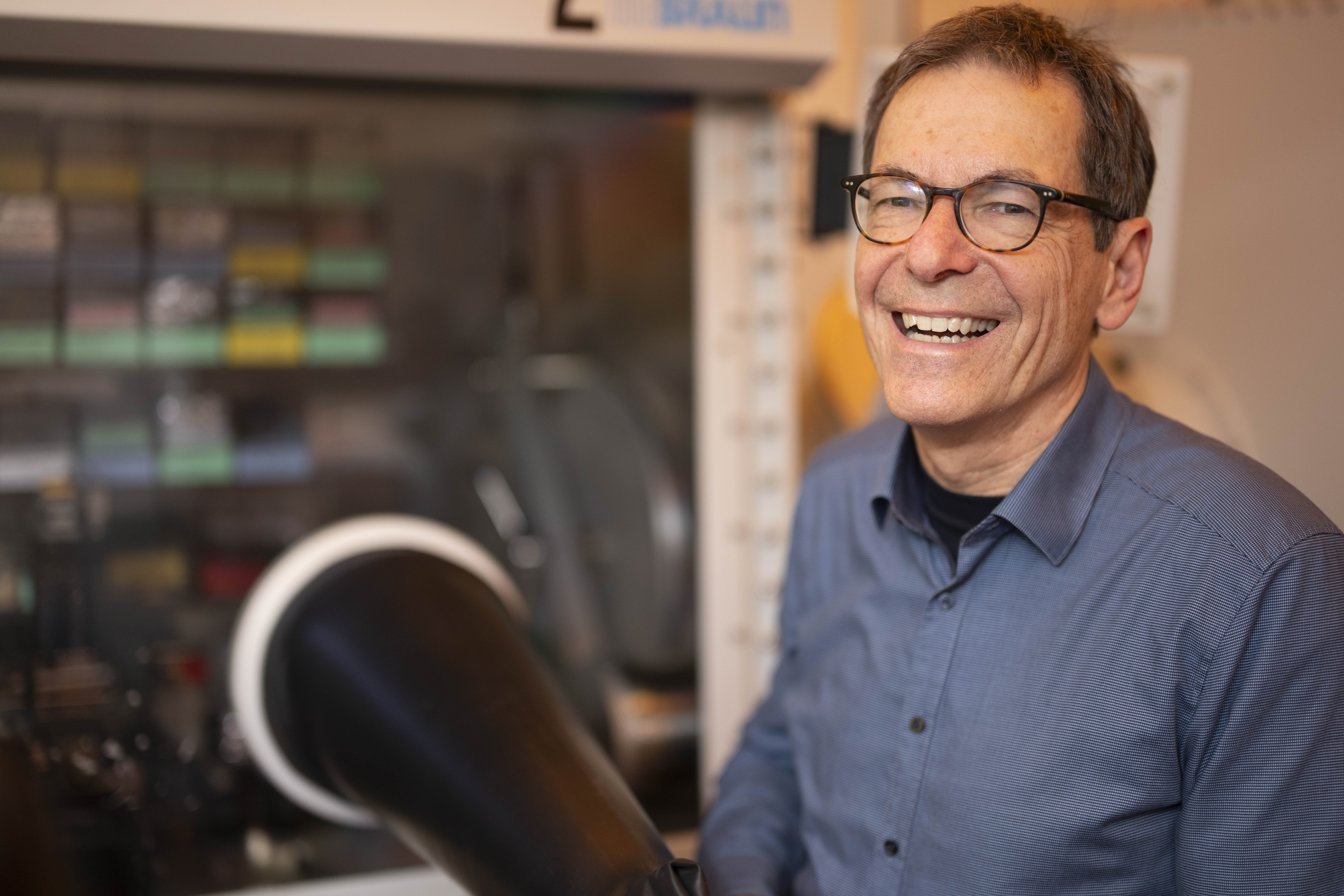
2026_052_PM_org.Solarzellen2_Thomas Roese: Prof. Dr. Dieter Neher in the solar cell laboratory at the University of Potsdam. Foto: Thomas Roese
Contact:
Prof. Dr. Dieter Neher, Institut für Physik und Astronomie
Tel.: +49 331/977-1265
E-Mail: neheruuni-potsdampde
Media Information 23-06-2026 / Nr. 052