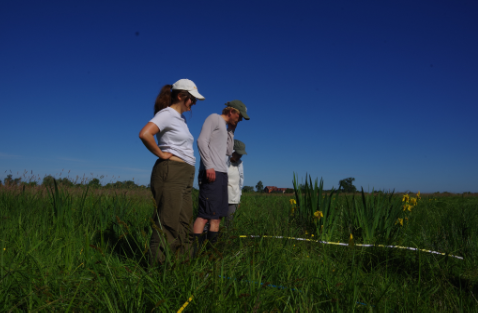
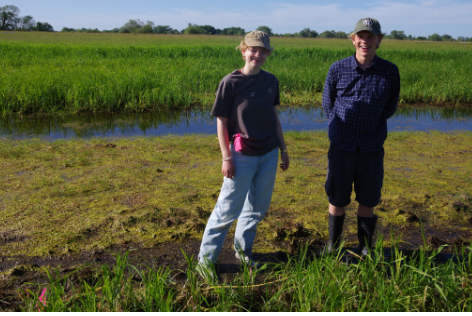
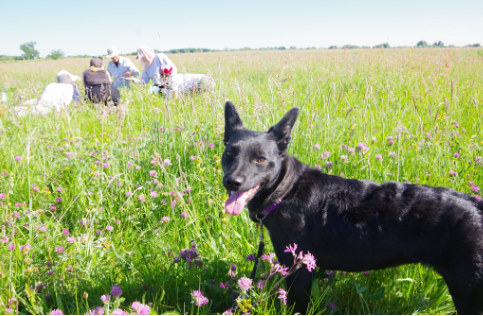
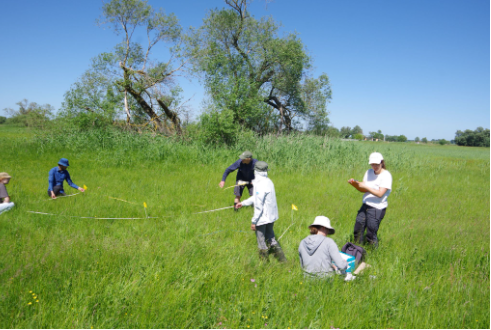
It was the last days of May when a group of students under the supervision of Prof. A. Linstädter and Dr. L. Kindermann headed to the Gülpe ecological research station to conduct vegetation research. This excursion constituted part of the course Ecology and Diversity of Terrestrial Plants and was integrated with project “Fluvial Anthroposphere”. The vegetation ecology team participates in that project through resurveying of historical vegetation data. The underpinning research question of interest for the team was to assess how plant community composition and plant strategies vary along the landscape elevation and flooding regime gradient.
To answer that research question, vegetation plots were delineated, surveyed, and plant samples were taken. The collected data will then be integrated into the main project following a space-for-time substitution approach in which current plant communities along different flooding and elevation levels would serve as a proxy for historical vegetation conditions. By integrating these data with soil, geographic, and paleoecological findings recorded at the same delineated vegetation spots, researchers can then deduce how floodplain vegetation, topography, and soil composition have changed in response to both natural processes and human activities in the Holocene. The excursion team met paleoecologists, geographers, anthropologists, and soil scientists along the way all working across the Gülpe island who offered to give the students a glimpse into the interdisciplinary nature of the project. While undertaking their own respective research, they taught the students how their research is integrated into the overall big picture and about the environmental history of the region, its paleo-development, its vegetation and possible anthropogenic influences.
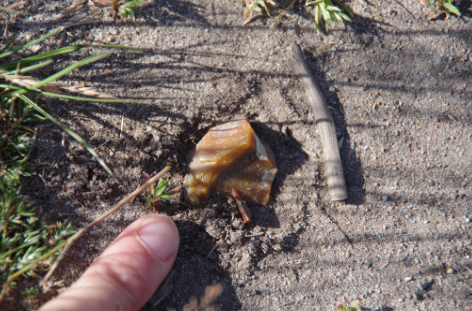
The story doesn’t end here, however, because the group accidentally found flint stone splinters from the Neolithic era, proving that the Gülpe island has been inhabited for thousands of years already. An intriguing find and a story best reserved for another time.