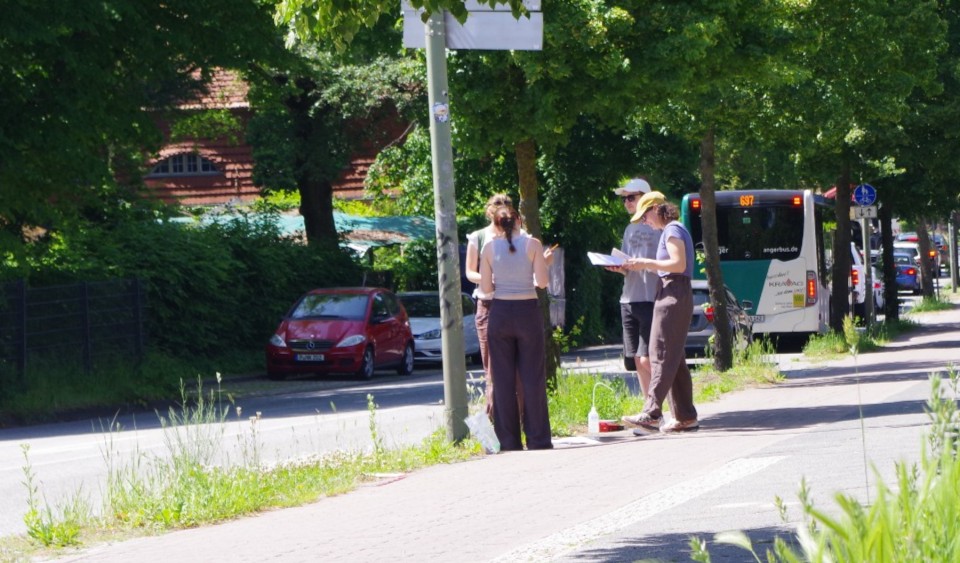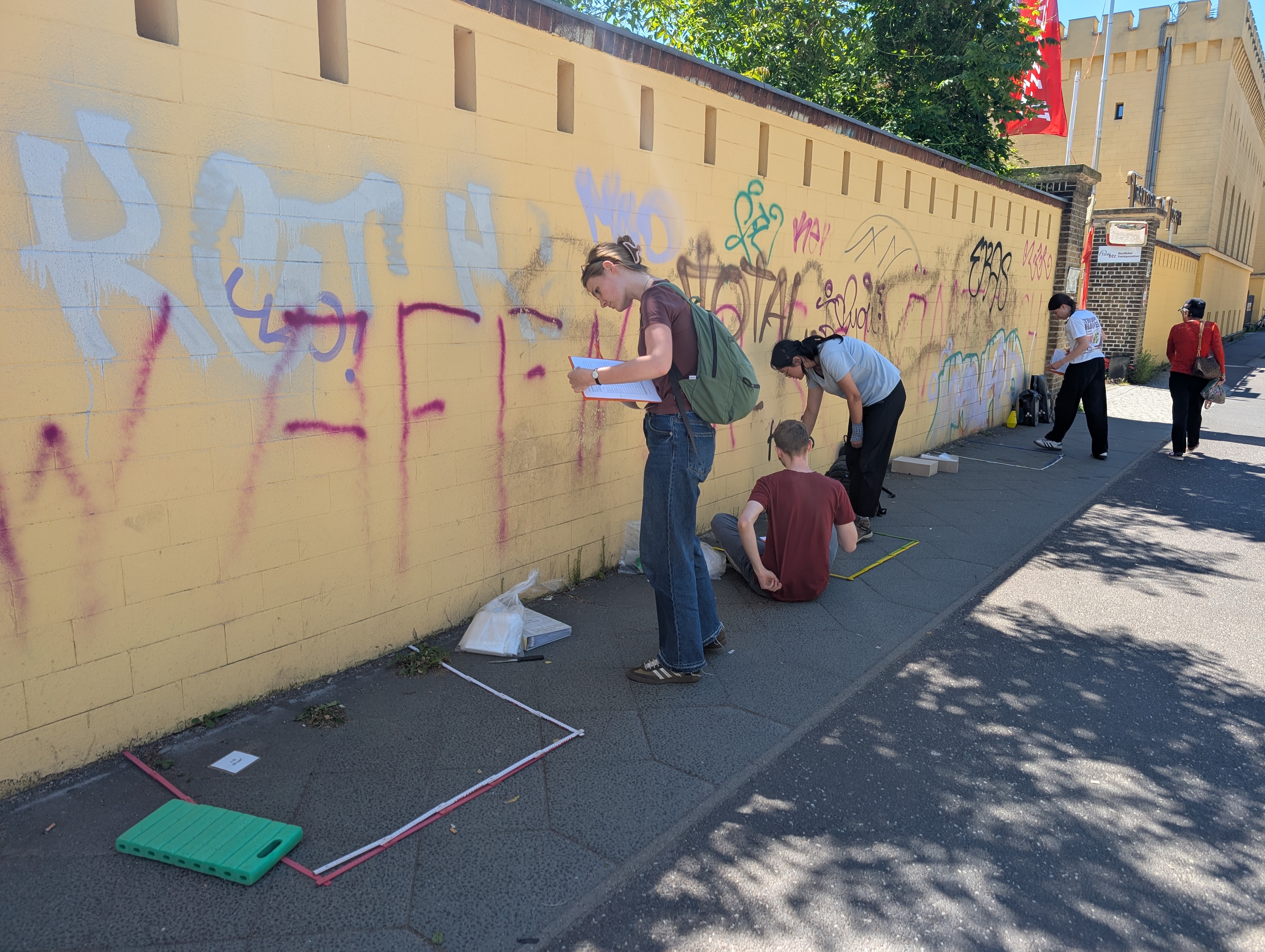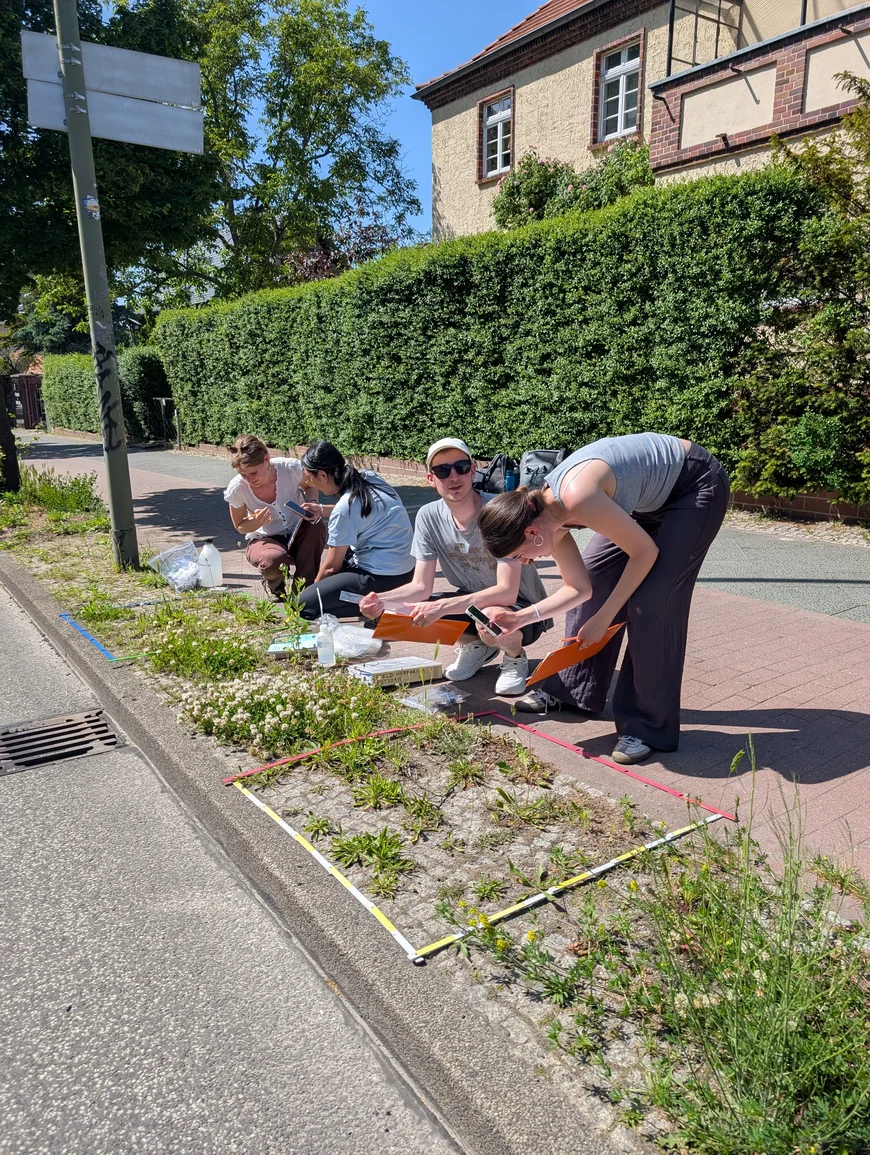
In late May 2026, students cycled to different sites across the city to collect data on plants growing in different urban habitats.
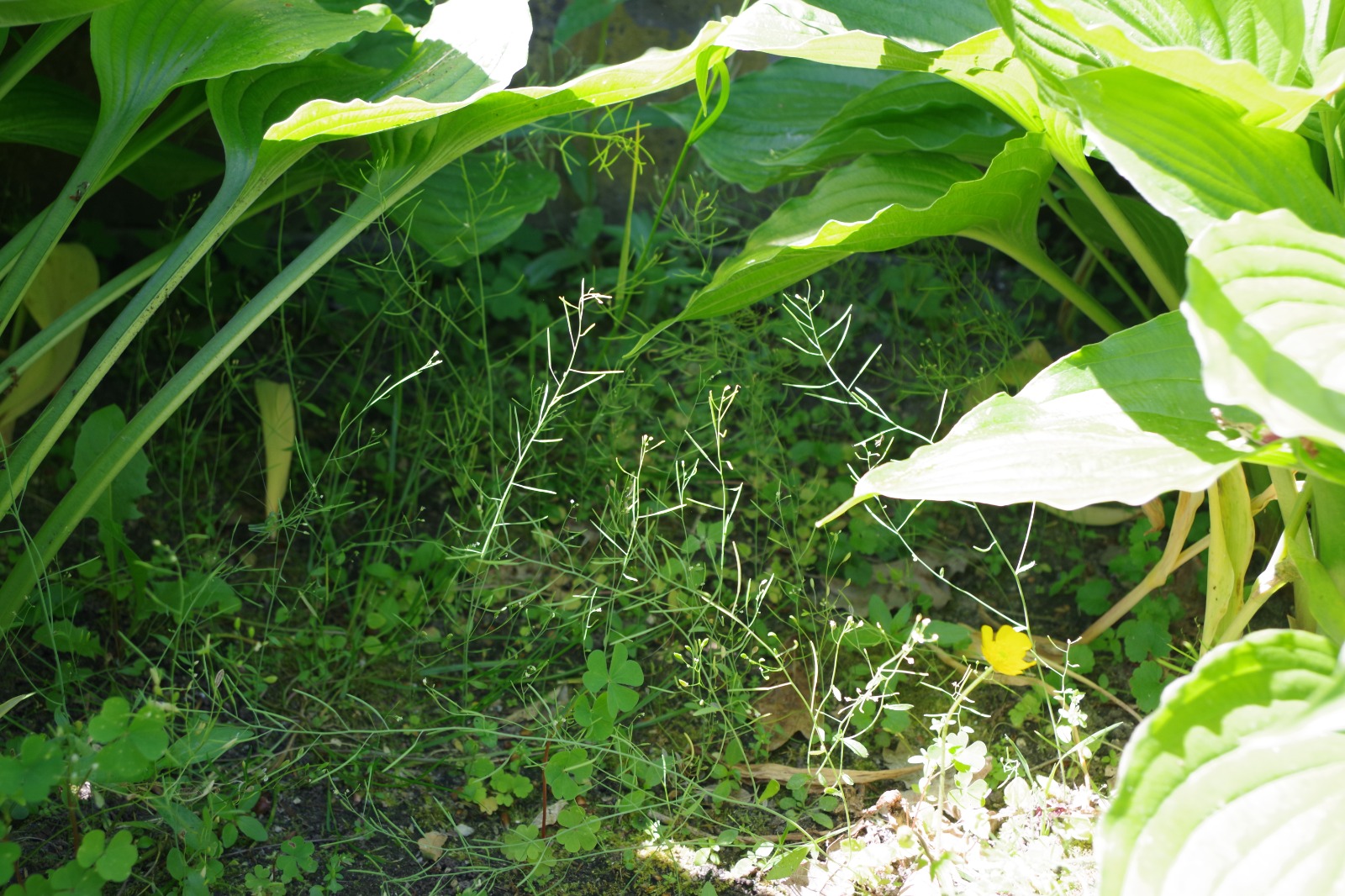
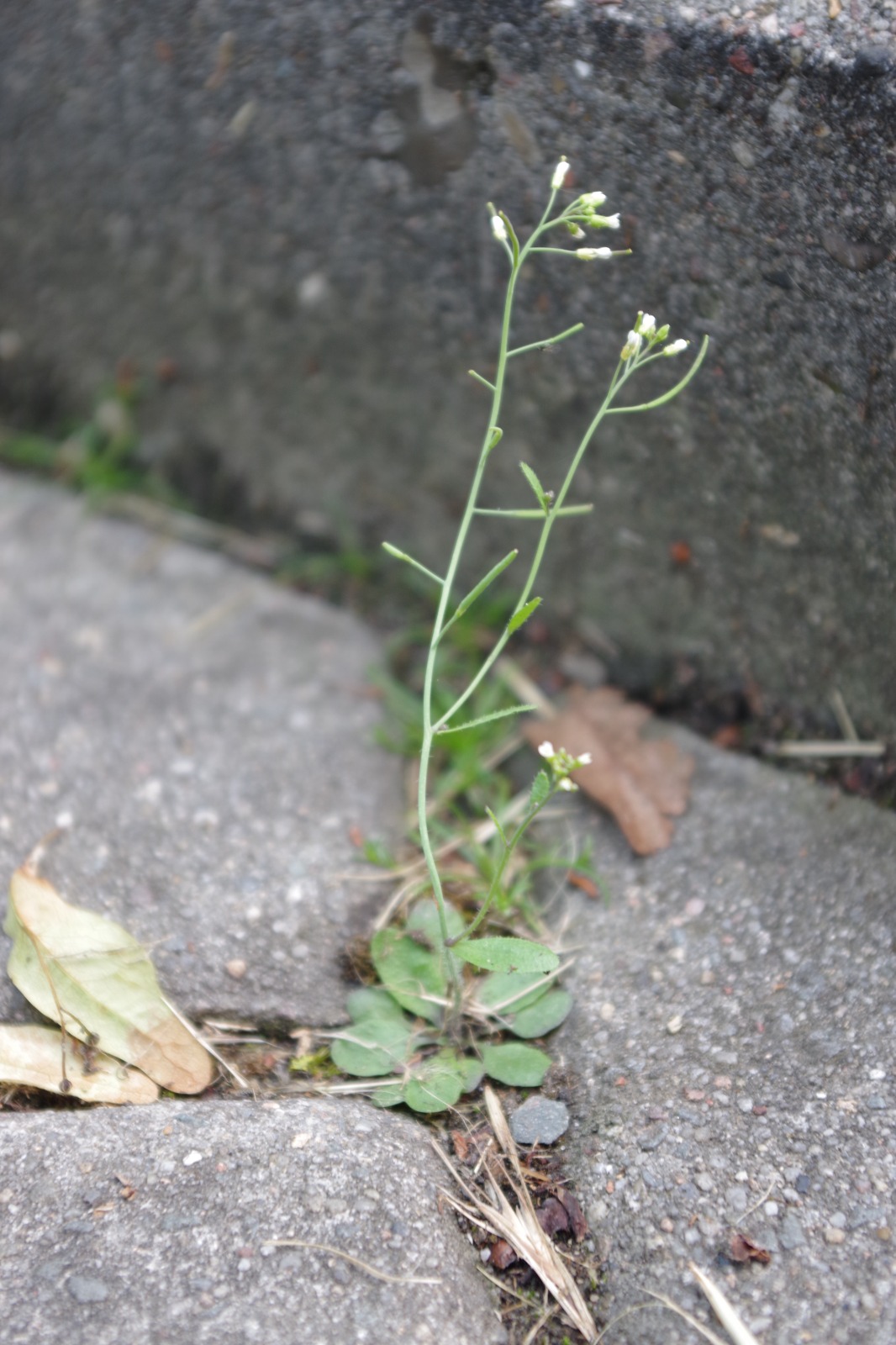
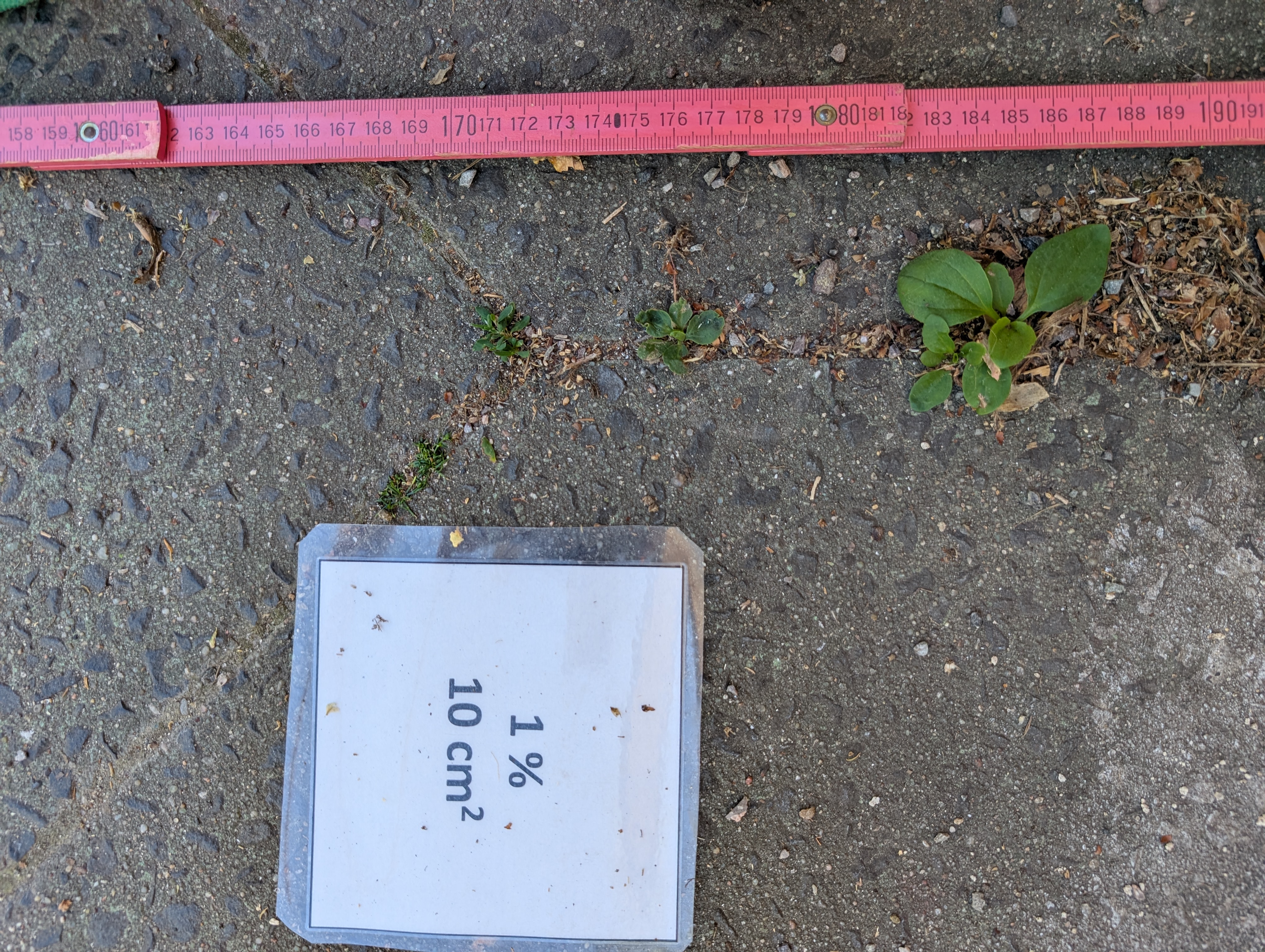
As part of the module „Ecology and Diversity of Terrestrial Plants”, we worked on the project “Urban Habitats”, led by Dr. Vera Hesen, Magnus Dobler and Huiyao Zhang. Travelling by bicycle across Potsdam, we surveyed green habitats such as meadows and tree beds as well as grey habitats such as pavements and walls, carrying out vegetation surveys in 100 × 100 cm quadrats and collecting plant material for later laboratory analyses. Leaf traits such as fresh weight, leaf area and dry weight were measured to calculate Leaf Economics Spectrum parameters, a framework describing whether plants invest their resources in a slow, conservative strategy or a faster, more acquisitive one. A particular focus was placed on the model plant Arabidopsis thaliana.
Understanding how plants cope with changing environments is becoming increasingly important in the context of global climate change. Since plants cannot move away from unfavorable conditions, they have developed strategies to deal with local challenges. Urban habitats are particularly useful for studying this, as very different habitat types occur within a small area.
For us, the practical provided an introduction to scientific research, from fieldwork and species identification to laboratory analyses. It also offered an opportunity to develop a sharper eye for the plant species that inhabit everyday urban environments. “The diversity of plants managing to survive in such heavily disturbed habitats was particularly remarkable”, one student noted. “The excursion opened our eyes to the small plants in pavement cracks that are usually overlooked. The diversity of grasses in the green habitats was also surprising, and identifying them required an eye for small details. For many of us it was also our first insight into research work and the complexity of the tasks that come with it.”
Alongside the Urban Habitats project, the course included two additional field practicals. One focused on wildflower elements at the Linde research station in the Havelland, while the other involved vegetation resurveys on permanent plots in the floodplain meadows of the Lower Havel near Gülpe. Together these projects reflect a common goal of connecting university teaching with ongoing ecological research and giving students first-hand experience of scientific research.