CRC 1644 at the Potsdamer Tag der Wissenschaften 2026
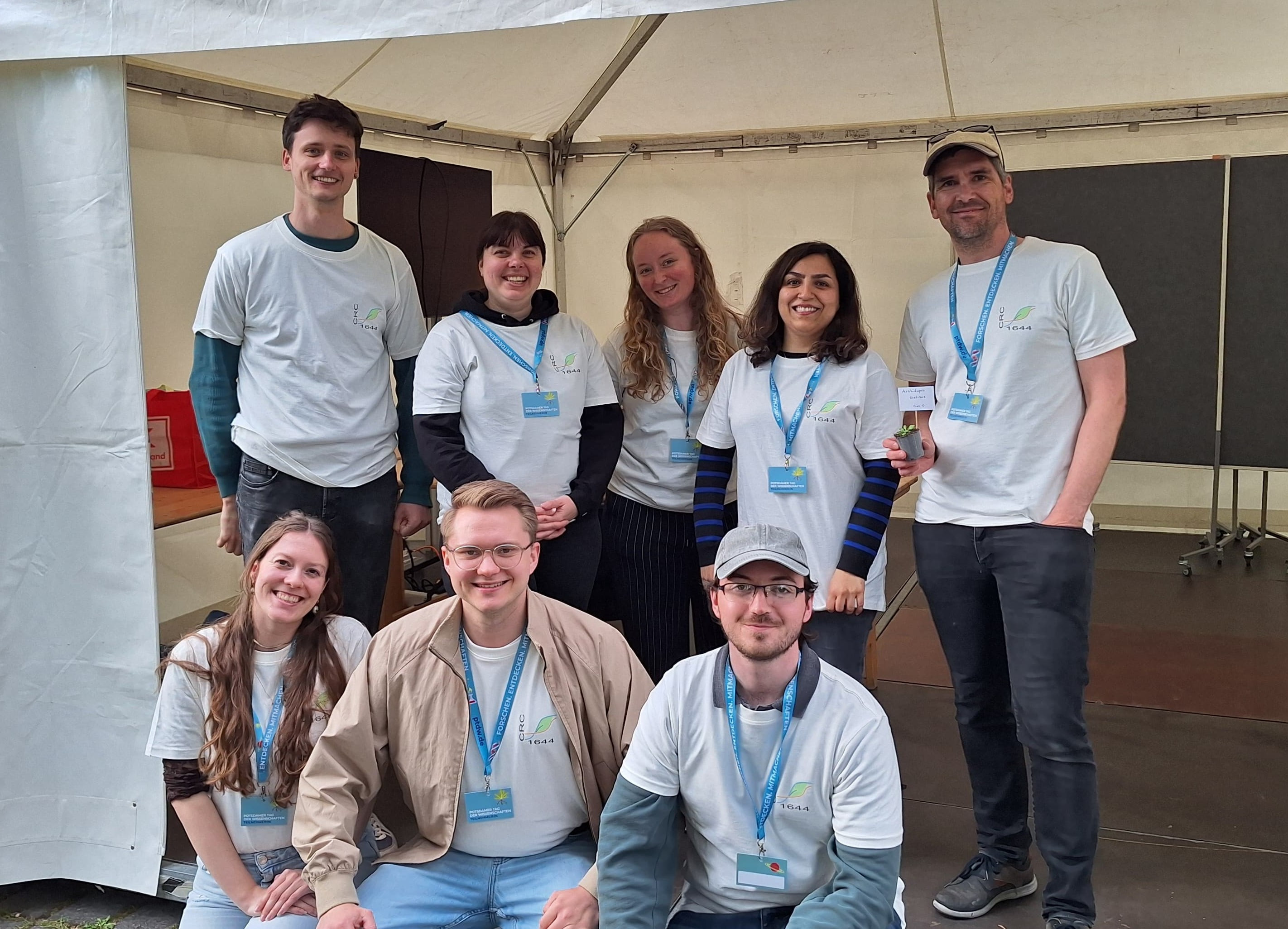
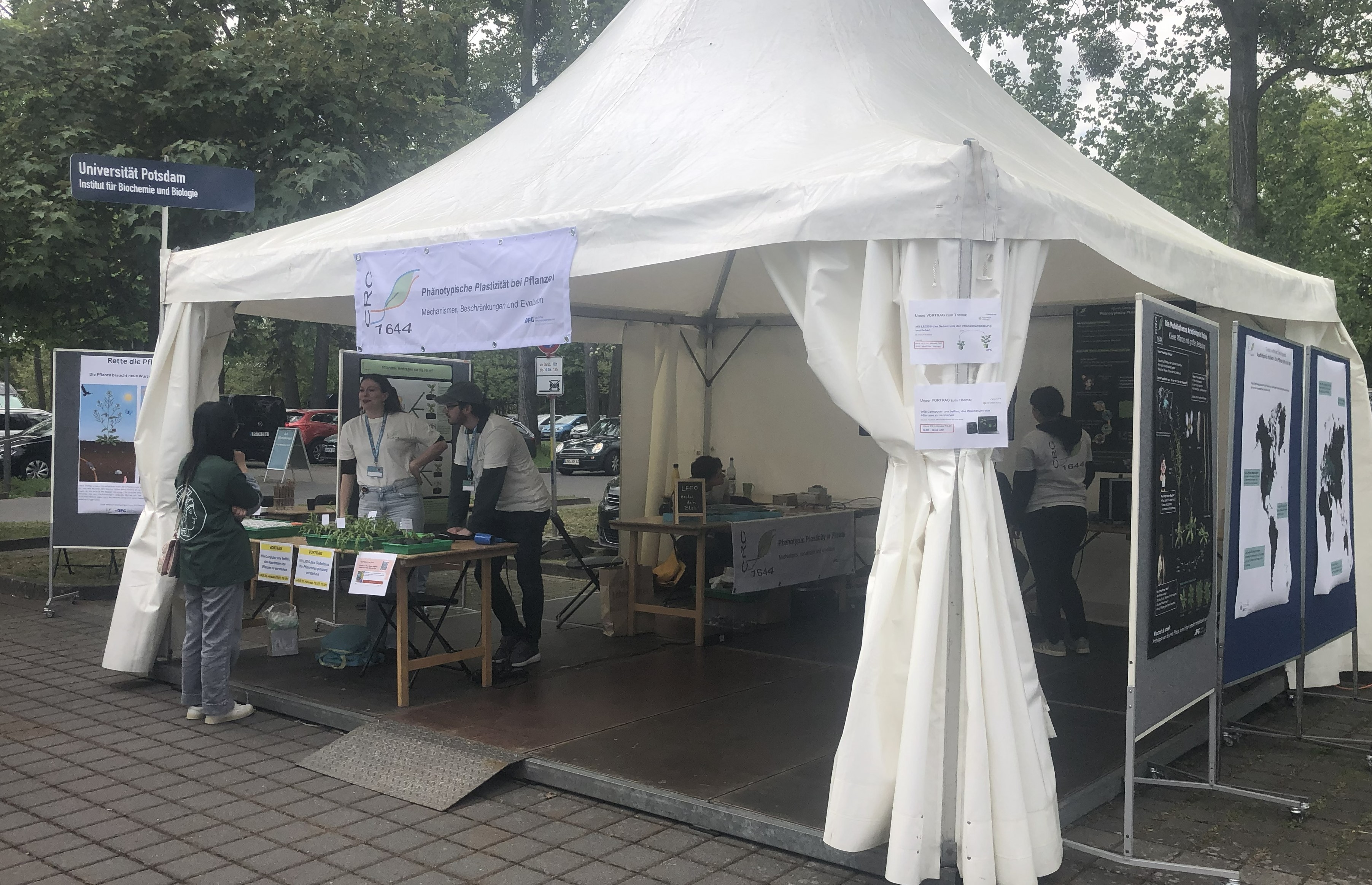
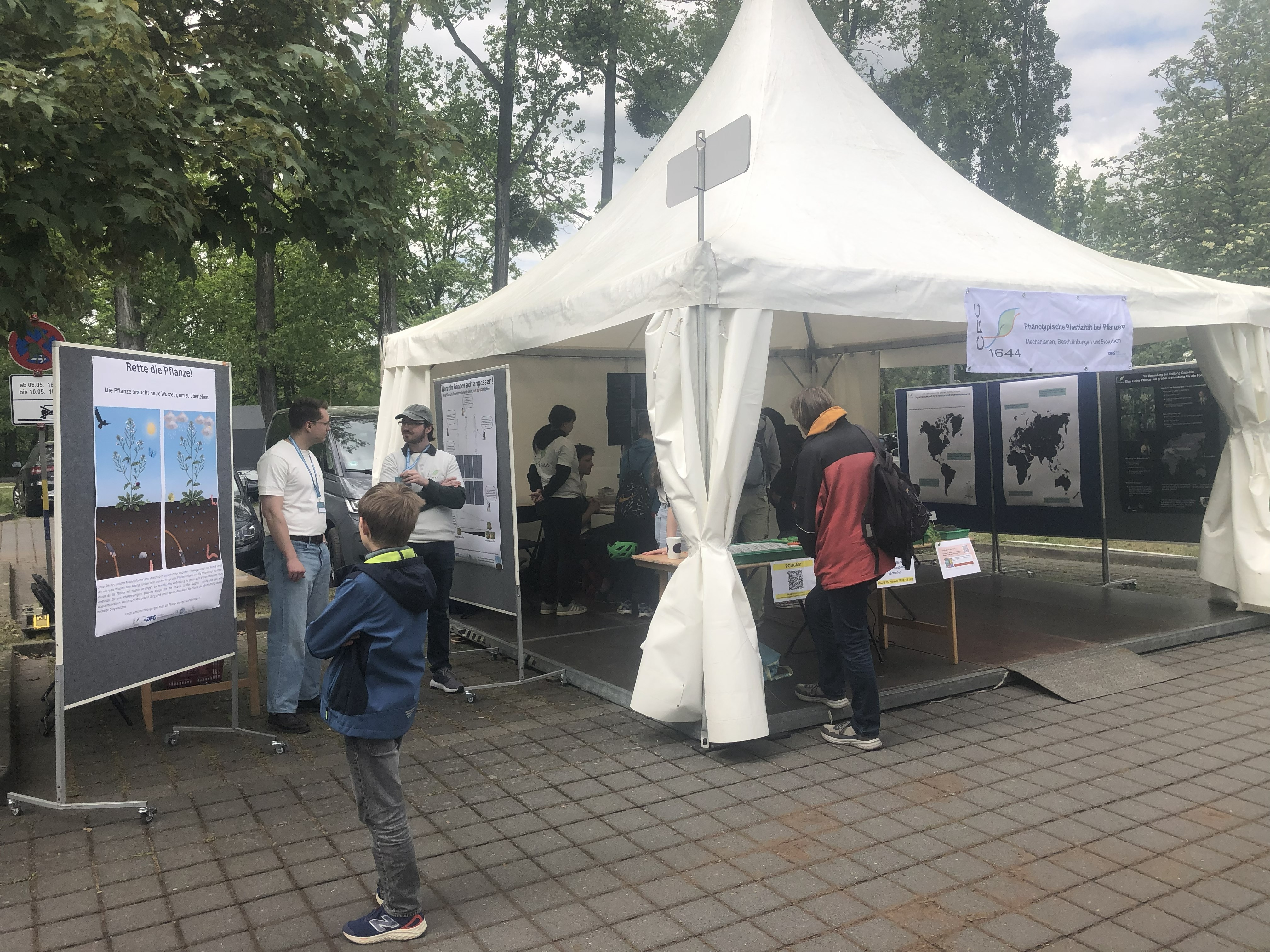
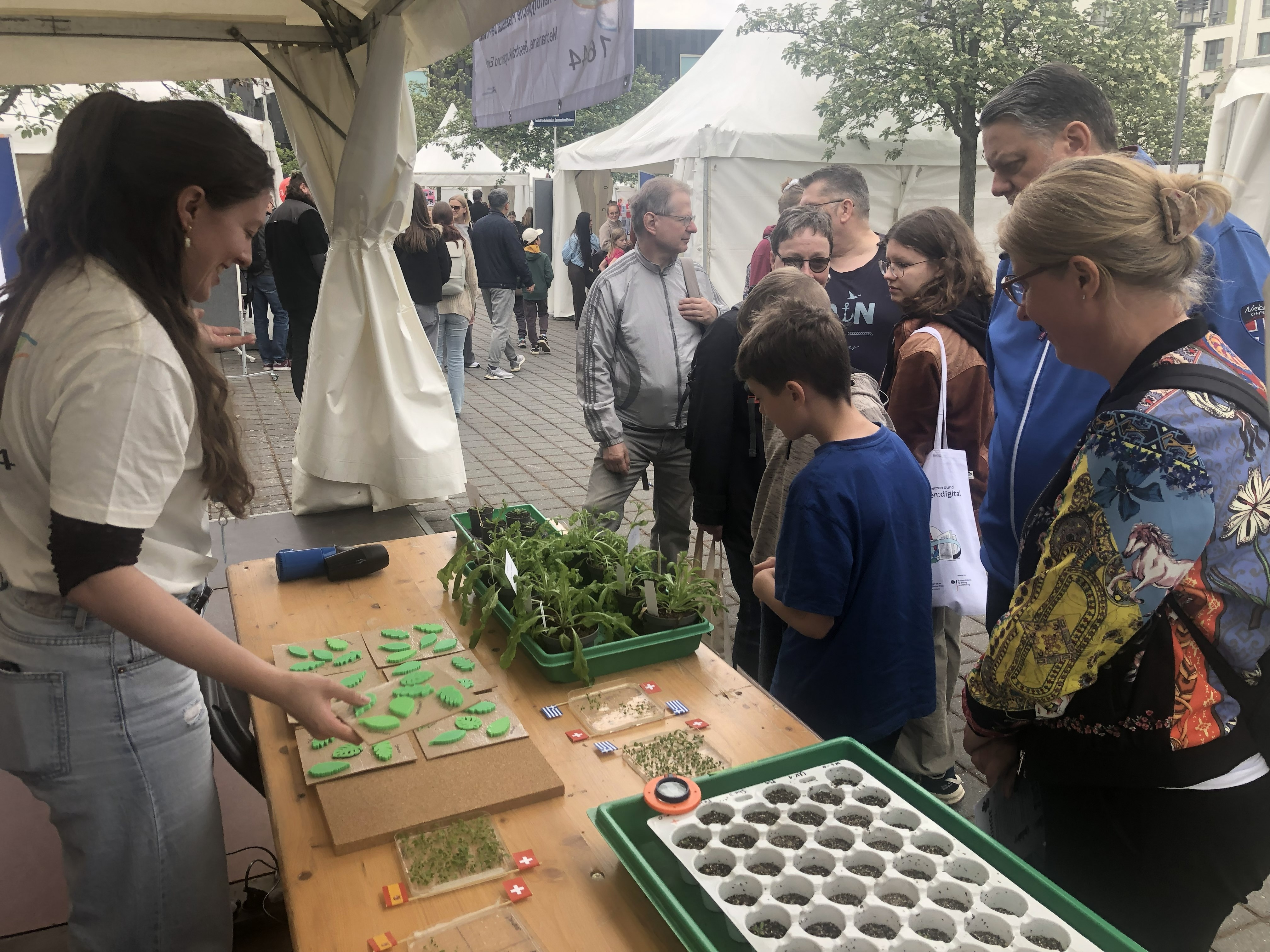
On 9 May 2026, the Collaborative Research Centre (CRC) 1644 "Phenotypic Plasticity in Plants" once again participated in the Potsdamer Tag der Wissenschaften at Campus Golm. Under the motto "Pflanzen – Meister der Anpassung", the CRC welcomed visitors of all ages at Forschungscamp Stand 10 from 12:00 to 18:00.
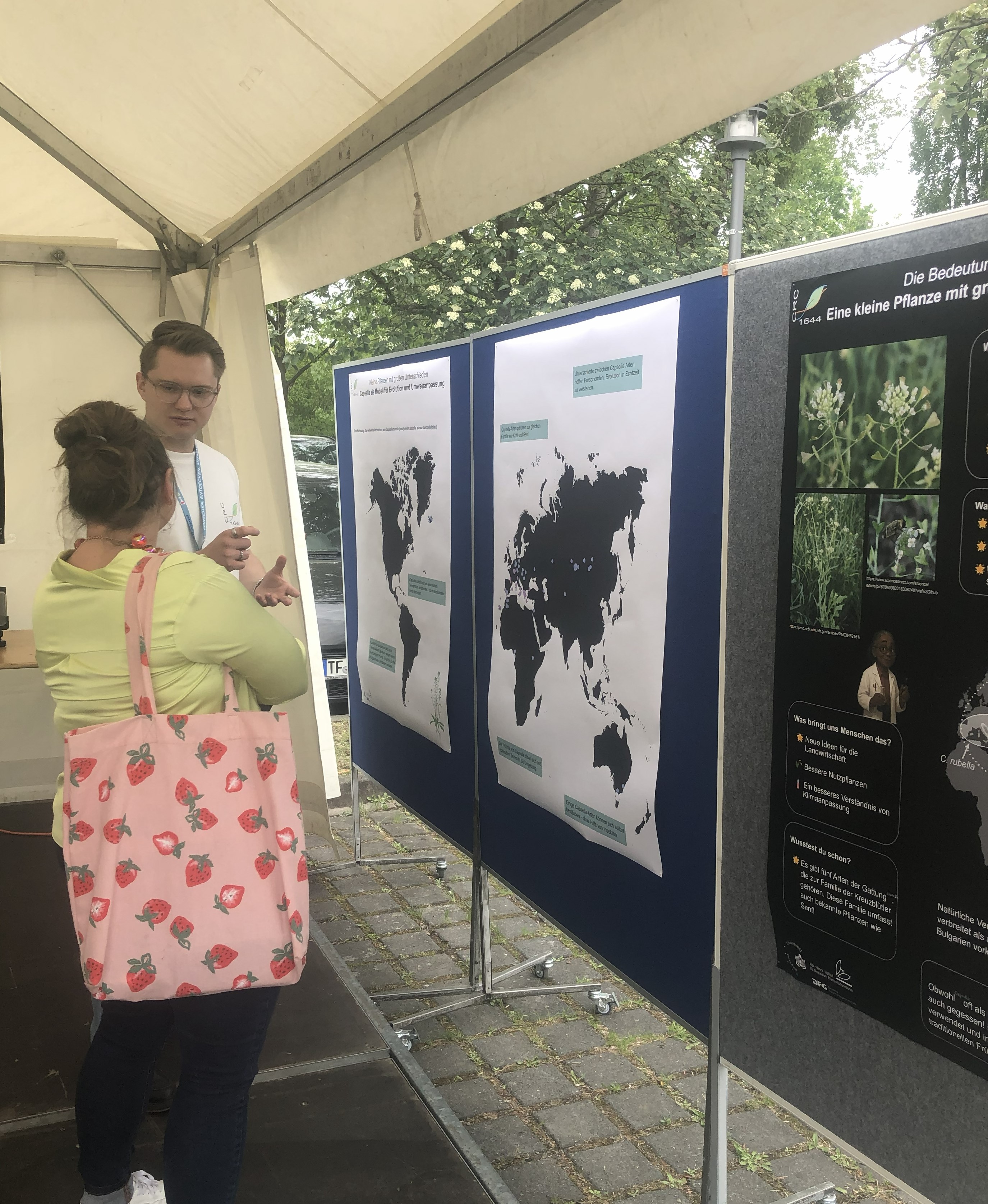
The booth centred on two model plants: Arabidopsis thaliana – a small, fast-growing weed and one of the most important organisms in plant biology – and its close relative Capsella, which offers unique opportunities for studying evolutionary adaptation and environmental responses. Informative posters introduced both plants, explained why they are used in research, and showed where their different populations occur around the world. A key question running through the booth: what is phenotypic plasticity, and why does it matter for agriculture and climate adaptation?
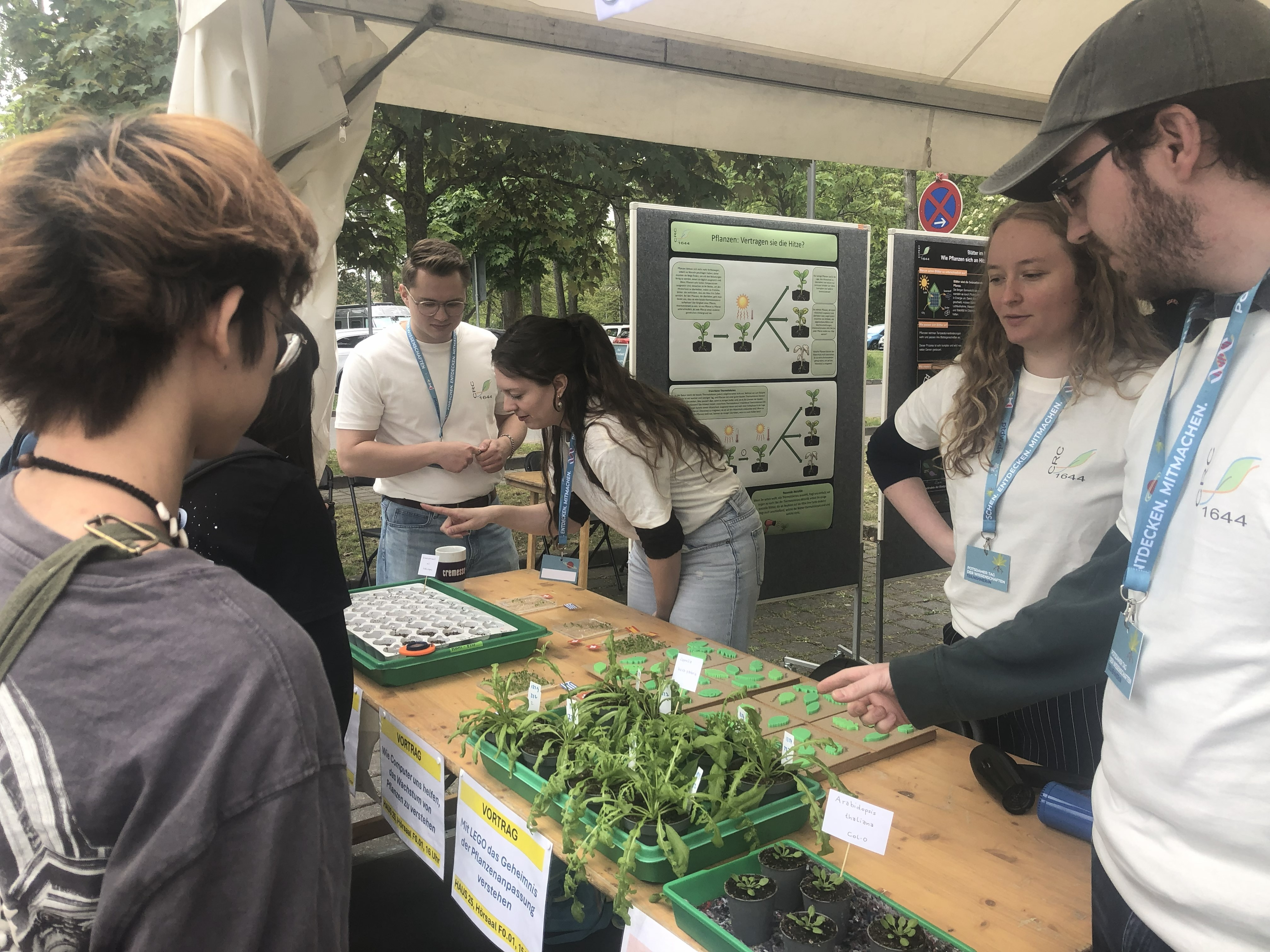
Visitors explored how temperature shapes leaf form and size, with real data from Arabidopsis plants grown at temperatures ranging from 12°C to 32°C showing striking differences in leaf morphology. A companion poster on root plasticity explained how plants adjust their root architecture and root hair length depending on nutrient availability – demonstrated using microscope images of two ecotypes with very different strategies.
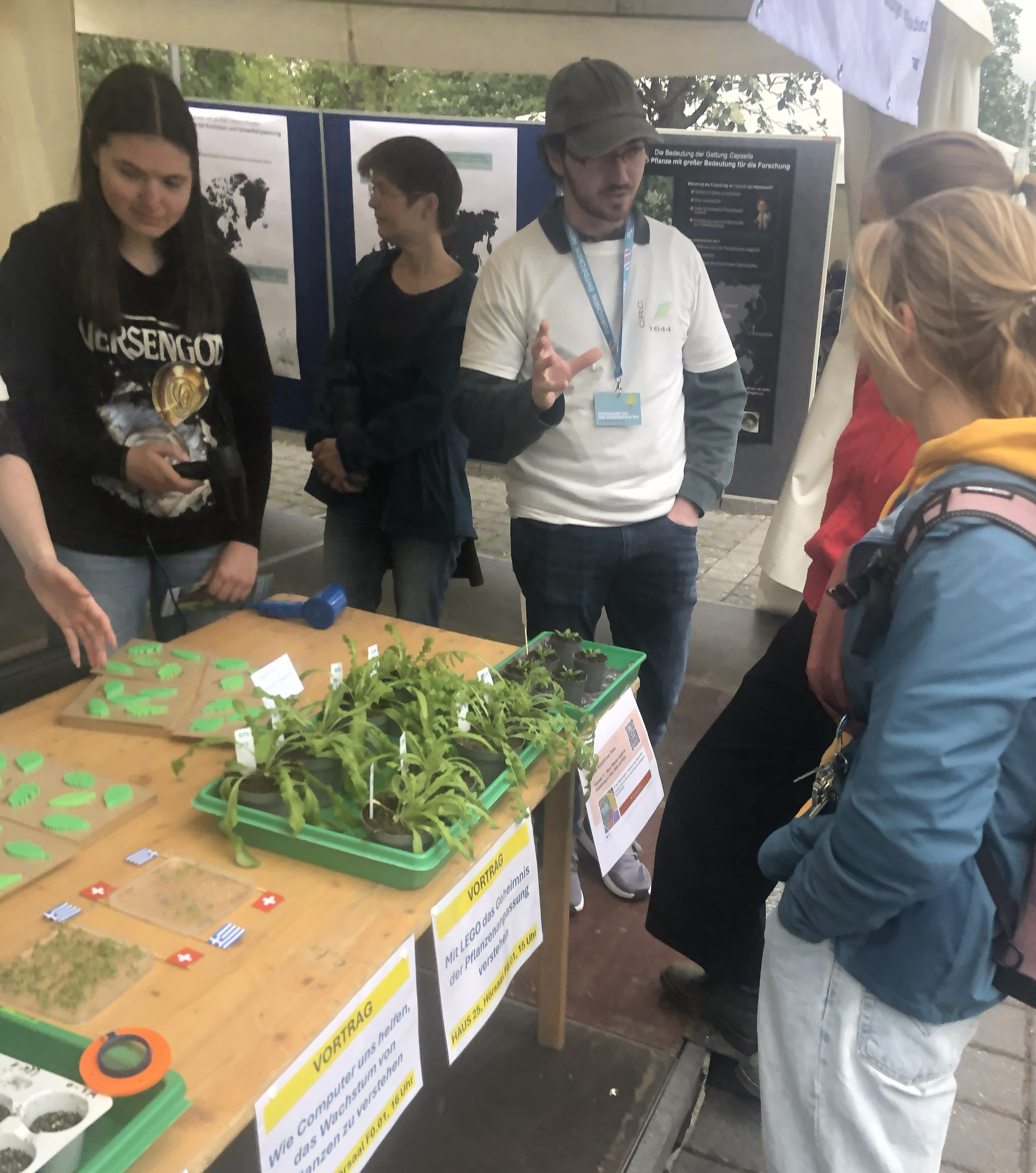
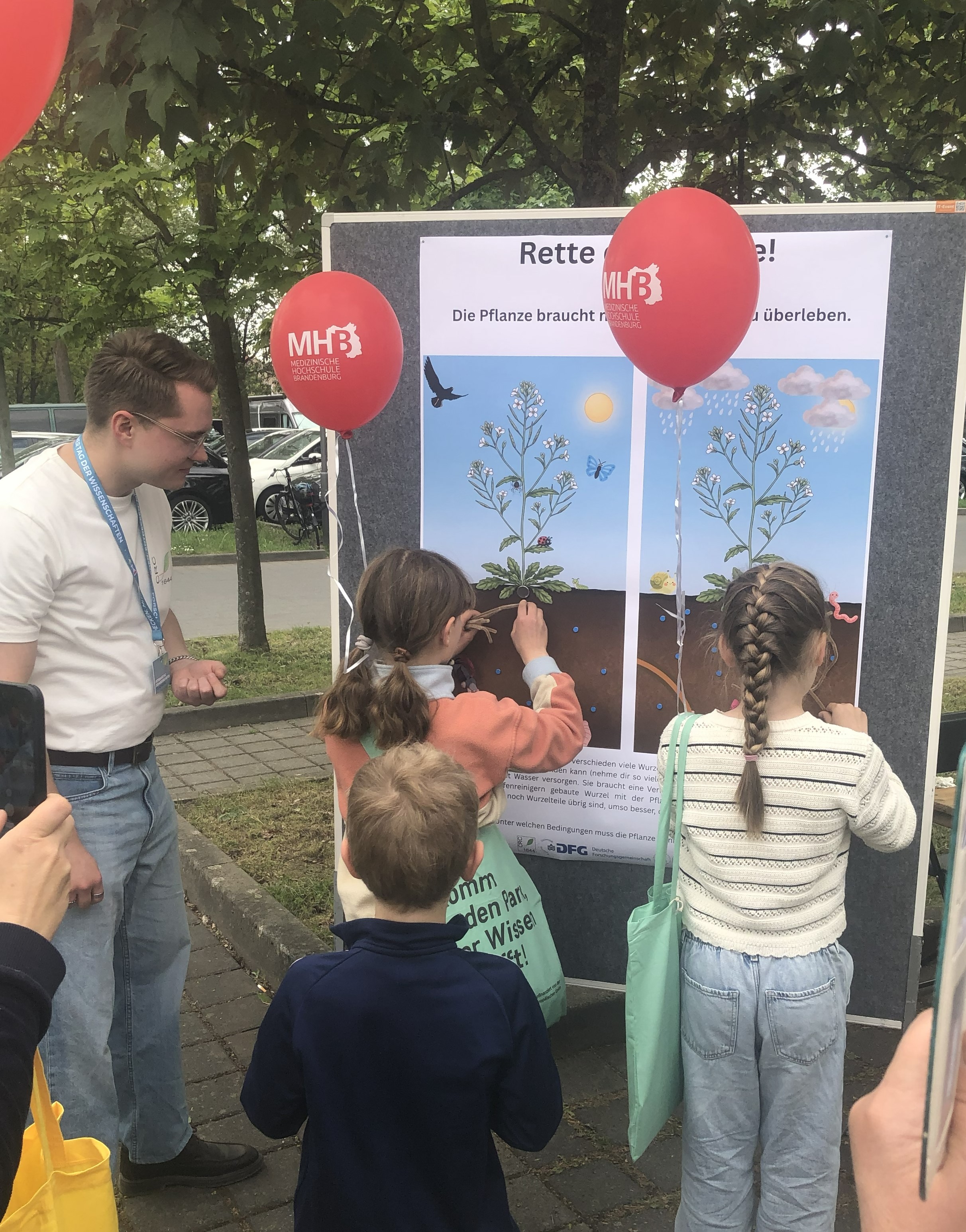
One of the most popular activities for younger visitors was the thermotolerance station, where children used a hairdryer to heat special heat-sensitive leaves and observed which plants could withstand the stress – and which could not. This hands-on activity sparked lively discussions about what makes some plants more resilient than others. At the root game station ("Rette die Pflanze!"), participants used pipe cleaners to build root systems and connect their plant to exactly eight water molecules – a playful way to explore how root investment strategies change with environmental conditions.
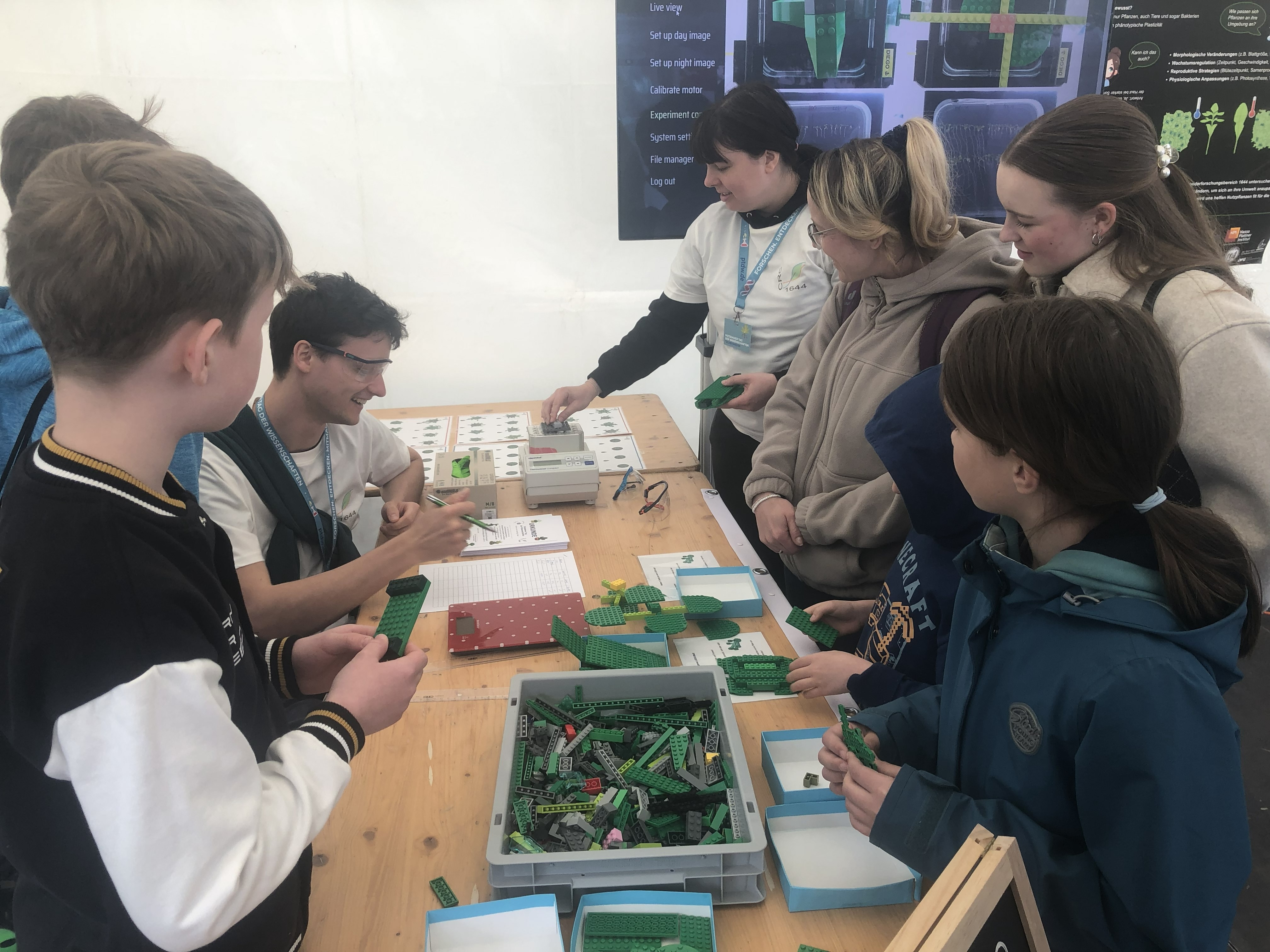
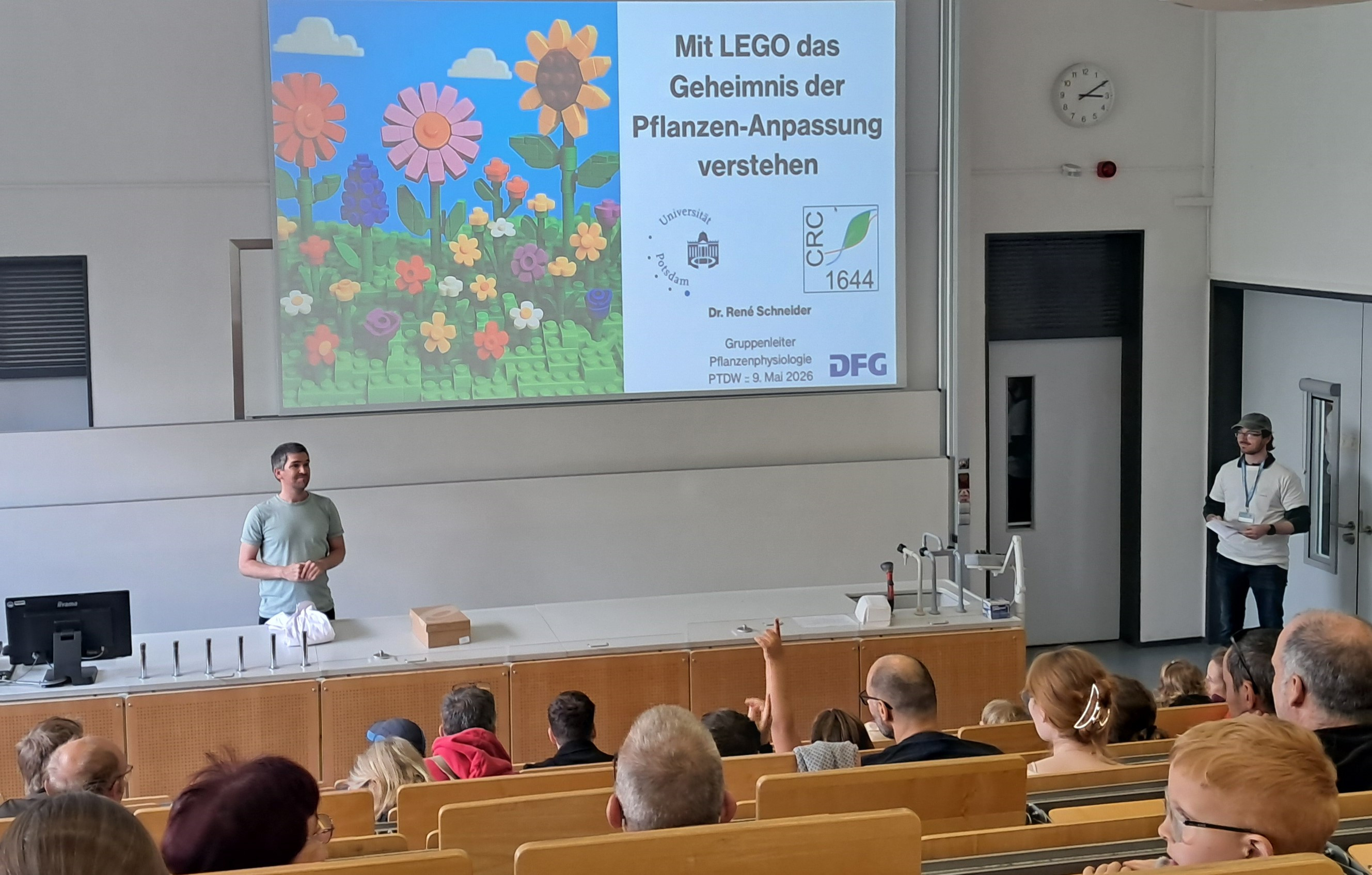
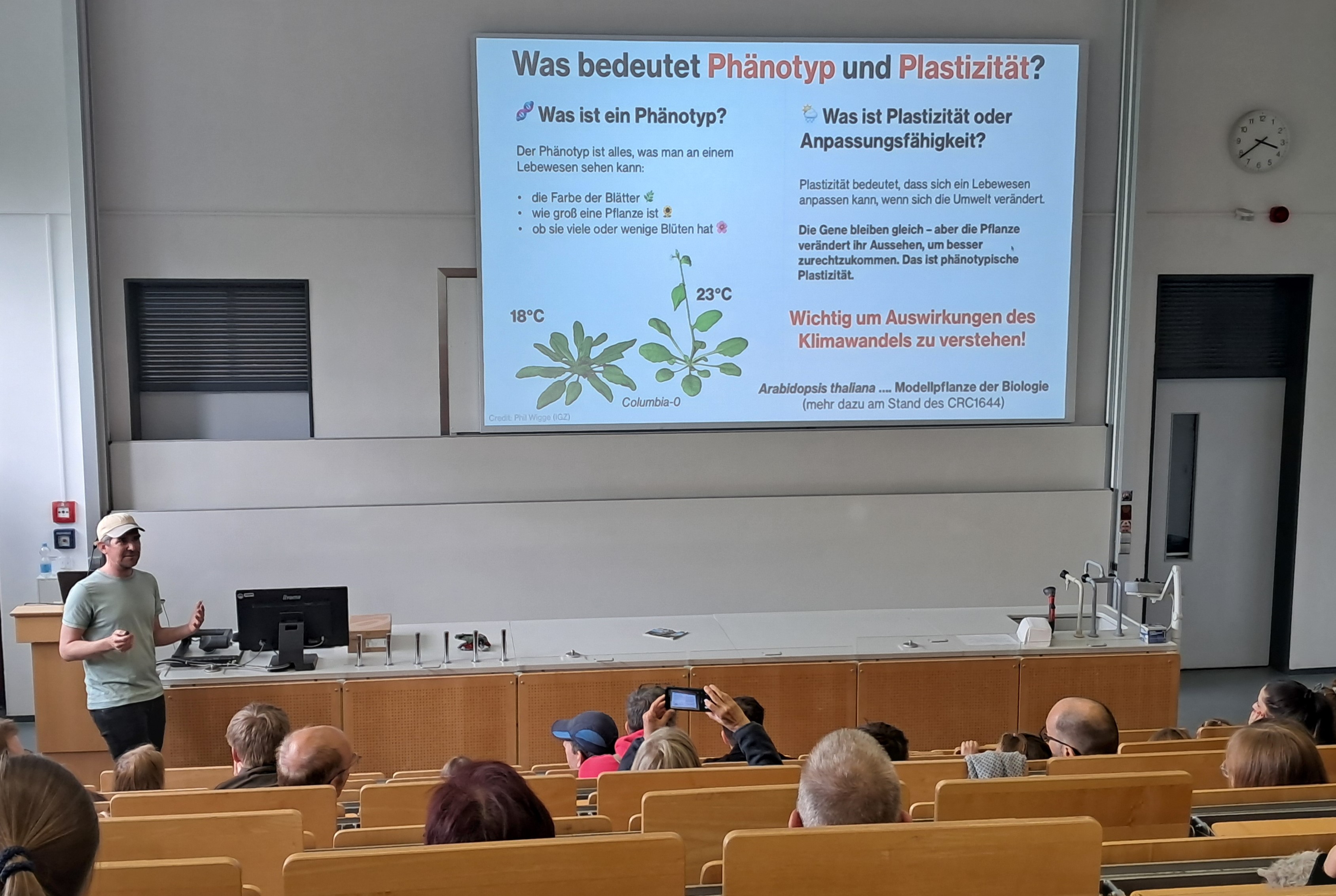
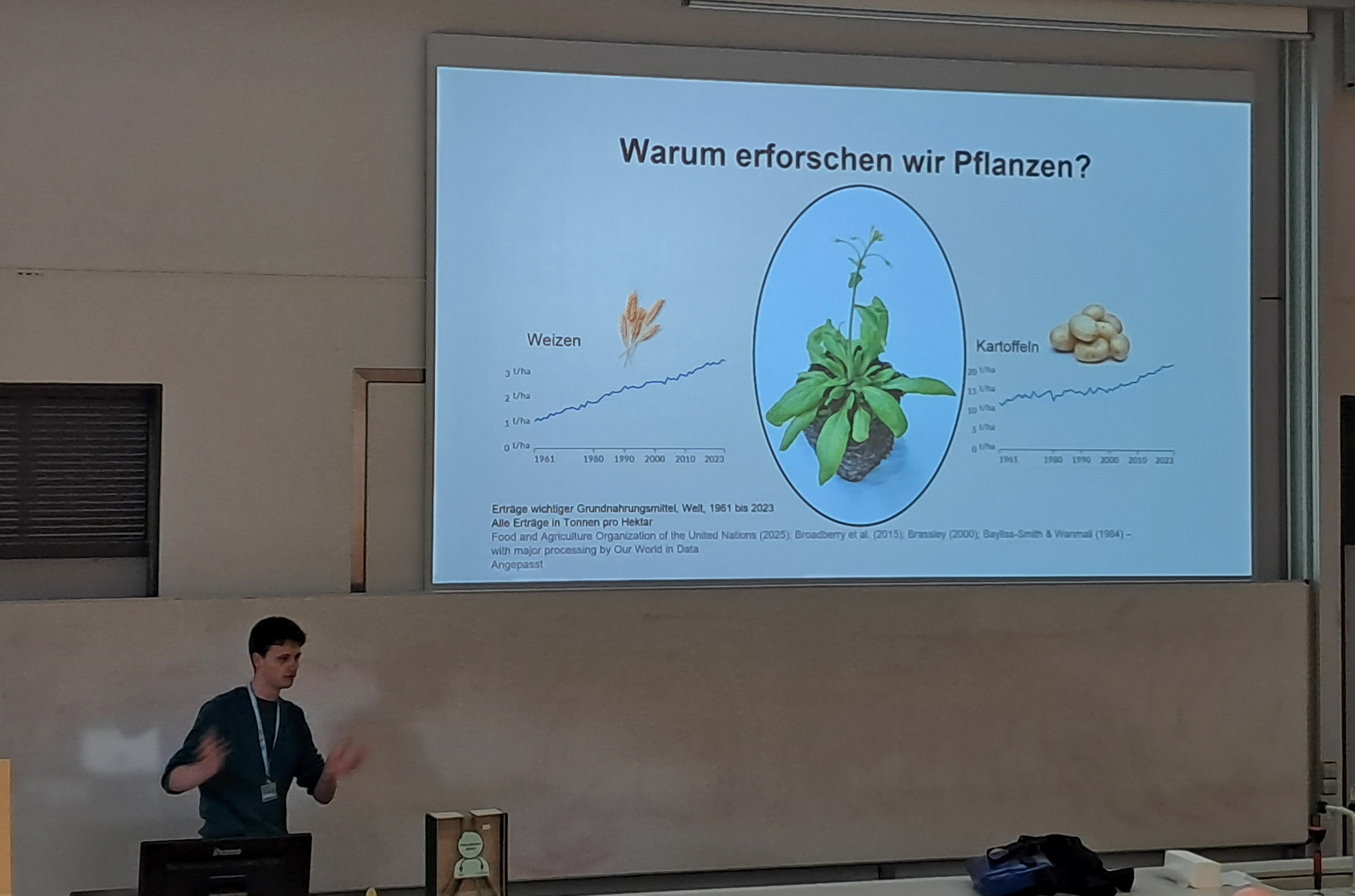
CRC 1644 also contributed two public talks as part of the event programme. At 15:00, Dr. René Schneider (Haus 25, Hörsaal F1.01) used LEGO® to explain how plants adapt to their environment – a talk that proved as popular as in previous years. At 16:00, PhD student Emilian Paulitz (Haus 25, Hörsaal F0.01) demonstrated how computer models help researchers understand plant growth and predict metabolic responses.
We thank Emilian Paulitz, Jacqueline Nowak, Micaela Milani, Adeleh Dehghani Nazhvani, Viviane Heise, Florian Müller, Liam Lumley, Ulrike Lehmann, Thi Chi Tran, Michael Sauer, Prabal Das, and René Schneider for making the booth a success, and all visitors for their curiosity and enthusiasm.