Ladenburger Diskurs: OSCE Quo Vadis?


Berichte auf der Seite der Daimler und Benz Stiftung
Full Conference Report
OSCE Quo Vadis?
The Organization for Security and Co-operation in Europe 50 Years after the Helsinki Final Act
Summary
This report summarises the discussions of the Ladenburg Roundtable “OSCE quo vadis? 50 Years after the Helsinki Final Act,” held on 5–6 March 2026 at the Daimler and Benz Foundation. Initiated by the Human Rights Centre of the University of Potsdam, the conference brought together scholars and practitioners to assess the current role and future prospects of the Organization for Security and Co-operation in Europe (OSCE). The discussions addressed the organisation’s role in armed conflicts, the protection of human and minority rights, emerging policy challenges, and its position within the contemporary rules-based international order. While participants highlighted the significant political constraints facing the OSCE—particularly in light of geopolitical tensions and the war in Ukraine—they also emphasised the organisation’s continuing relevance as a forum for dialogue, a norm-shaping institution, and a repository of operational expertise in conflict management and confidence-building measures.
Keywords
OSCE, Helsinki Final Act, European security order, multilateralism, conflict management, human rights protection
1. Introduction
Fifty years after the adoption of the Helsinki Final Act of 1975, the Organization for Security and Co-operation in Europe (OSCE) faces one of the most serious crises in its history. Against this background, the Ladenburg Roundtable entitled “OSCE quo vadis? 50 Years after the Helsinki Final Act” was held on 5–6 March 2026.
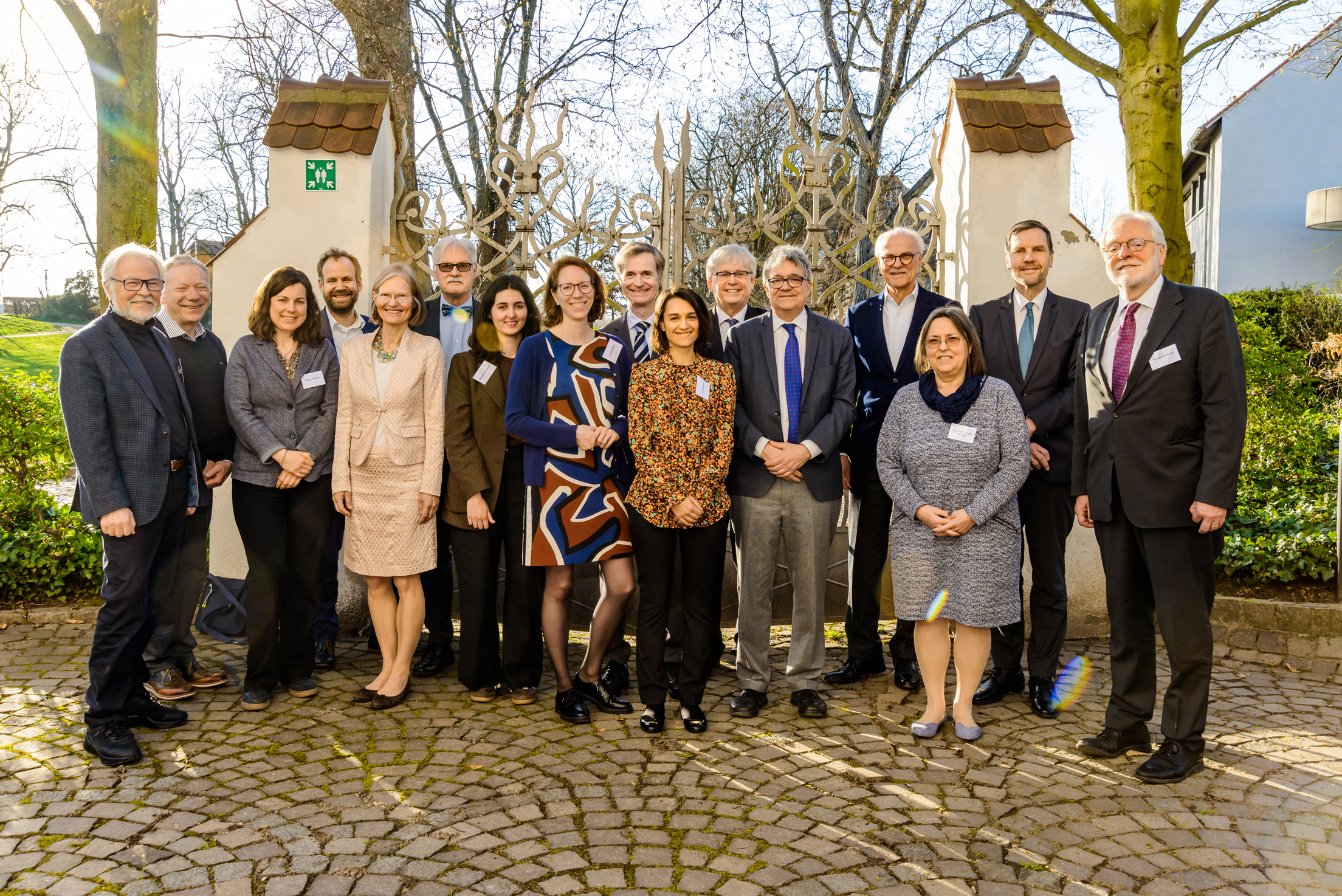
The conference was initiated by the Human Rights Centre (MenschenRechtsZentrum) of the University of Potsdam, in particular by Andreas Zimmermann and Norman Weiß, and brought together scholars and practitioners from international law, political science, and diplomatic practice. The event was funded and hosted by the Daimler and Benz Foundation in Ladenburg, which provided the venue for the discussions.
The workshop aimed to assess the current role and future prospects of the OSCE within the European security architecture. Discussions focused on the organisation’s role in armed conflicts, the protection of human and minority rights, emerging policy challenges, and the broader position of the OSCE within the contemporary rules-based international order.
The conference coincided with the fiftieth anniversary of the Helsinki Final Act, whose three “baskets”—security cooperation, economic and environmental cooperation, and respect for human rights and fundamental freedoms—formed the normative foundation of the Conference on Security and Cooperation in Europe (CSCE). These commitments contributed significantly to détente during the Cold War and ultimately facilitated the transformation of the CSCE into the OSCE in 1994.
Today, however, the political foundations of the organisation are under considerable strain. Russia’s annexation of Crimea in 2014 and its full-scale invasion of Ukraine in 2022 have fundamentally challenged the principles underlying the Helsinki process. At the same time, geopolitical rivalry and growing divisions among participating States have made collective decision-making within the OSCE increasingly difficult.
Against this background, the roundtable explored whether the OSCE continues to play a meaningful role in the European security order and how its institutional framework might adapt to a rapidly changing geopolitical environment.
2. Opening Remarks and Keynote
In his opening remarks, Andreas Zimmermann (University of Potsdam) recalled the historical evolution of the Helsinki process and the institutional development of the OSCE during the early 1990s. The organisation emerged from the détente policies of the Cold War as a framework for dialogue and cooperation between East and West, while its institutionalisation reflected the ambition to build a cooperative European security order based on shared norms.
The keynote address was delivered by Florian Raunig (OSCE / Austrian Federal Ministry for European and International Affairs). Raunig placed the current challenges facing the OSCE within the broader transformation of the international system.
According to Raunig, the liberal understanding of international law and the rules-based international order that characterised the post-Cold War period is increasingly contested. In this environment, diplomatic processes are frequently overshadowed by geopolitical competition, and major decisions affecting European security are often taken outside multilateral frameworks.
The OSCE reached the height of its institutional development in the early 1990s, particularly following the Paris Charter for a New Europe (1990) and the establishment of institutions such as the Office for Democratic Institutions and Human Rights (ODIHR) and the High Commissioner on National Minorities. Since the early 2000s, however, political tensions among participating States have increasingly constrained the organisation’s activities.
Raunig pointed in particular to the erosion of trust following the conflict in Georgia in 2008 and the further deterioration of relations after Russia’s invasion of Ukraine. The consensus rule governing OSCE decision-making has further complicated the organisation’s ability to respond effectively to crises.
Nevertheless, Raunig argued that the OSCE retains important strengths. Its concept of comprehensive security, linking military security with economic cooperation and human rights protection, remains a distinctive feature of the organisation. Moreover, the OSCE continues to provide one of the few institutional frameworks in which Western states, Russia, and Central Asian countries engage in regular dialogue.
Looking ahead, Raunig suggested that the organisation’s future role should be considered along three temporal horizons: safeguarding its operational functioning in the short term, potentially contributing to stabilisation efforts in Ukraine in the medium term, and adapting its instruments to new security challenges in the longer term.
3. Panel I: The Political-Military Dimension — The OSCE in Armed Conflicts
The first panel, chaired by Andreas Zimmermann (University of Potsdam), examined the role of the OSCE in armed conflicts.
Thilo Marauhn (University of Giessen) analysed the international legal parameters governing the organisation’s engagement in conflict situations. He emphasised that the OSCE is highly dependent on the political will of its participating States and that the current geopolitical context significantly constrains its capacity to act.
Marauhn argued that the OSCE was originally designed primarily for conflict prevention and post-conflict stabilisation, rather than for direct involvement in ongoing armed conflicts. This institutional design partly explains the organisation’s limited role in certain recent crises. Nevertheless, the OSCE possesses considerable expertise in post-conflict environments, where its pragmatic and operational approach has often proved valuable.
He identified several structural challenges affecting the organisation’s effectiveness, including difficulties in mandating missions, institutional constraints in deploying staff, limited resources, and the broader political context in which OSCE operations take place. The protection of OSCE personnel deployed in conflict zones was also highlighted as an increasingly important issue.
In his commentary, Frank Evers (University of Hamburg) emphasised the continued relevance of the OSCE’s institutional structures, including the Permanent Council, the Secretariat, and the organisation’s field missions.
The discussion reflected differing assessments of the OSCE’s operational record. Some participants pointed to the limited impact of certain missions, while others emphasised the achievements of the Special Monitoring Mission to Ukraine, which operated for several years under extremely difficult political and security conditions.
Analytical reflection
The debate illustrated a structural tension within the OSCE’s political-military dimension. While the organisation possesses a wide range of instruments for conflict management, its effectiveness ultimately depends on the willingness of participating States to make use of them. In a highly polarised geopolitical environment, this willingness is often limited.
4. Panel II: Human Rights and Minority Protection
The second panel, chaired by Norman Weiß (University of Potsdam), focused on the human dimension of the OSCE.
Wolfgang Benedek (University of Graz) analysed the Moscow Mechanism, which allows participating States to establish expert missions to investigate serious human rights violations without requiring consensus among all participating States.
Benedek illustrated the functioning of the mechanism through recent examples, including investigations concerning Russia’s war against Ukraine and the invocation of the mechanism in relation to Georgia in 2026.
At the same time, Benedek emphasised the challenges facing contemporary fact-finding missions, particularly in environments characterised by disinformation campaigns, limited access to territory, and lack of cooperation by investigated states. Cooperation with NGOs and open-source investigations therefore plays an increasingly important role.
Rainer Hofmann (Goethe University Frankfurt) addressed the protection of national minorities within the frameworks of the OSCE and the Council of Europe. He emphasised the importance of the High Commissioner on National Minorities, which was created as a preventive diplomacy instrument designed to address ethnic tensions before they escalate into conflict.
Hofmann highlighted the complementary relationship between the OSCE’s soft-law instruments and the treaty-based mechanisms of the Council of Europe, particularly the Framework Convention for the Protection of National Minorities and the jurisprudence of the European Court of Human Rights.
In her commentary, Elisabeth Sándor-Szalay (University of Pécs) emphasised the growing political resistance to minority rights protection in some participating States.
Analytical reflection
The discussion underscored the continuing relevance of the OSCE’s human dimension. At the same time, it highlighted the increasing politicisation of human rights debates within the organisation, which complicates efforts to maintain consensus on normative commitments.
5. Panel III: New Challenges and Institutional Limits
The third panel, chaired by Lia Neukirch (Goethe University Frankfurt), addressed the question of whether the OSCE should expand its activities to address new security challenges.
Nadia Douglas (German Institute for International and Security Affairs, Berlin) analysed the tension between expanding the organisation’s mandate and maintaining focus on its traditional fields of activity. She noted that some participating States have criticised what they perceive as a “liberal overstretch” of the OSCE’s activities.
Douglas argued, however, that the organisation’s comprehensive concept of security has always encompassed political, economic, environmental, and human rights dimensions. In her view, the OSCE’s key added value lies in its ability to facilitate dialogue between states that otherwise have limited opportunities for structured interaction.
Carolyn Moser (Max Planck Institute for Comparative Public Law and International Law, Heidelberg) examined the role of international law in shaping the organisation’s activities. She argued that the OSCE should be understood less as a law-making body than as a norm-shaping institution that translates international legal standards into operational practices.
Anne Peters (Max Planck Institute for Comparative Public Law and International Law, Heidelberg) commented on the presentations and questioned whether the formal institutionalisation of the OSCE as a traditional international organisation would significantly improve its effectiveness.
Analytical reflection
The debate highlighted the ambivalent institutional character of the OSCE. While its flexible and informal structure may allow pragmatic action in politically sensitive environments, it also raises questions regarding institutional authority and accountability.
6. Panel IV: The OSCE and the Rules-Based International Order
The final panel, chaired by Andreas Zimmermann (University of Potsdam), addressed the broader role of the OSCE within the rules-based international order.
Dominik Steiger (Technical University Dresden) examined the relationship between OSCE commitments and international law. Although these commitments are formally non-binding, they may nonetheless influence state behaviour and contribute to the development of international norms.
Lorenz Barth (German Federal Foreign Office) suggested that the OSCE should not be regarded as a declining institution but rather as a “sleeping beauty” whose relevance may re-emerge when geopolitical conditions change.
Referring to her recent analysis of the OSCE as a “barometer of multilateral security”, Nadia Douglas argued that the organisation reflects the broader crisis of multilateralism in Europe.
Douglas noted that while political decision-making within the OSCE has become increasingly difficult, technical cooperation—particularly in the area of military transparency and confidence-building measures—continues to function to a significant extent.
Analytical reflection
The final panel highlighted a central paradox of the OSCE: while the organisation is politically constrained, many of its technical and operational mechanisms continue to function. This suggests that the OSCE still plays an important role in preserving institutional expertise and procedural frameworks that may become crucial once political conditions allow renewed cooperation.
7. Conclusion
The discussions at the Ladenburg Roundtable made clear that the OSCE currently operates under conditions very different from those that shaped its emergence during the final decades of the Cold War. The erosion of trust among participating States, the return of large-scale interstate war in Europe, and the increasing fragmentation of the international order have placed the organisation under severe strain. In this environment, the OSCE’s consensus-based decision-making structures have become a significant constraint on collective action.
At the same time, the conference highlighted the organisation’s continuing relevance. The OSCE remains the only regional framework in which Western states, Russia, Central Asian countries, and several neutral states continue to participate on an equal footing. Even in times of political confrontation, the organisation preserves institutional channels for dialogue and information exchange that have largely disappeared elsewhere in the European security architecture.
A recurring theme of the discussions was the dual nature of the OSCE’s current situation. While the political level of the organisation is frequently characterised by stalemate, many of its operational and technical mechanisms continue to function. Instruments such as monitoring missions, reporting procedures, and confidence-building measures are still implemented in practice, often with little public visibility. These activities preserve institutional expertise and operational capacity that may prove essential in future conflict management and post-conflict stabilisation efforts.
In this sense, the OSCE today may be less a driver of political initiatives than a repository of institutional knowledge and operational instruments for cooperative security. Maintaining these capabilities—even in a period of geopolitical confrontation—may ultimately be one of the organisation’s most important contributions to the future reconstruction of a cooperative European security order.
This conference report is based on the Ladenburg Roundtable “OSCE quo vadis? 50 Years after the Helsinki Final Act,” held on 5–6 March 2026 at the Daimler and Benz Foundation. The event was initiated by the Human Rights Centre of the University of Potsdam and organised with the support of the Daimler and Benz Foundation.