
Lab Equipment
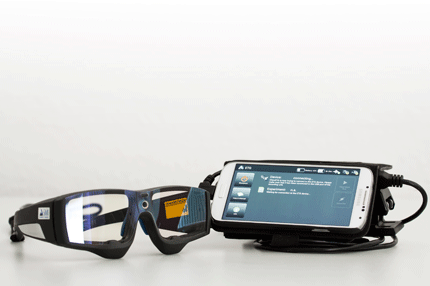
SMI® ETG
SensoMotoric Instruments Eye Tracking Glasses support binocular recording. This video-based eye tracker has a 60 Hz sampling rate. A HD Scene Camera records participants field of view with 30 frames per second. This eye tracker looks like normal glasses and is fixed by a pull strap. This mobile recording unit allows recordings in the natural environment.
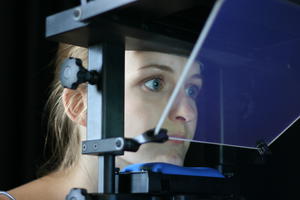
EyeLink® 1000 (Tower Mount)
EyeLink® 1000 Tower Mount System supports monocular and binocular recording. The sampling rate is also 1000 Hz. The Camera typically sits below the display that the participant is looking at. Participants are positioned in front of the monitor as with the EyeLink® 1000 Tower Mount System.
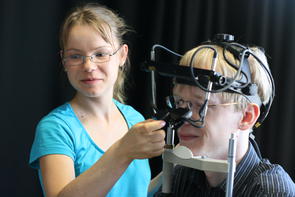
EyeLink II ®-System
EyeLink II ®-Systems is a head mounted video-based eye tracker. Two eye cameras, mounted on a comfortable padded headband, allow binocular eye tracking with 500 Hz sampling rate.
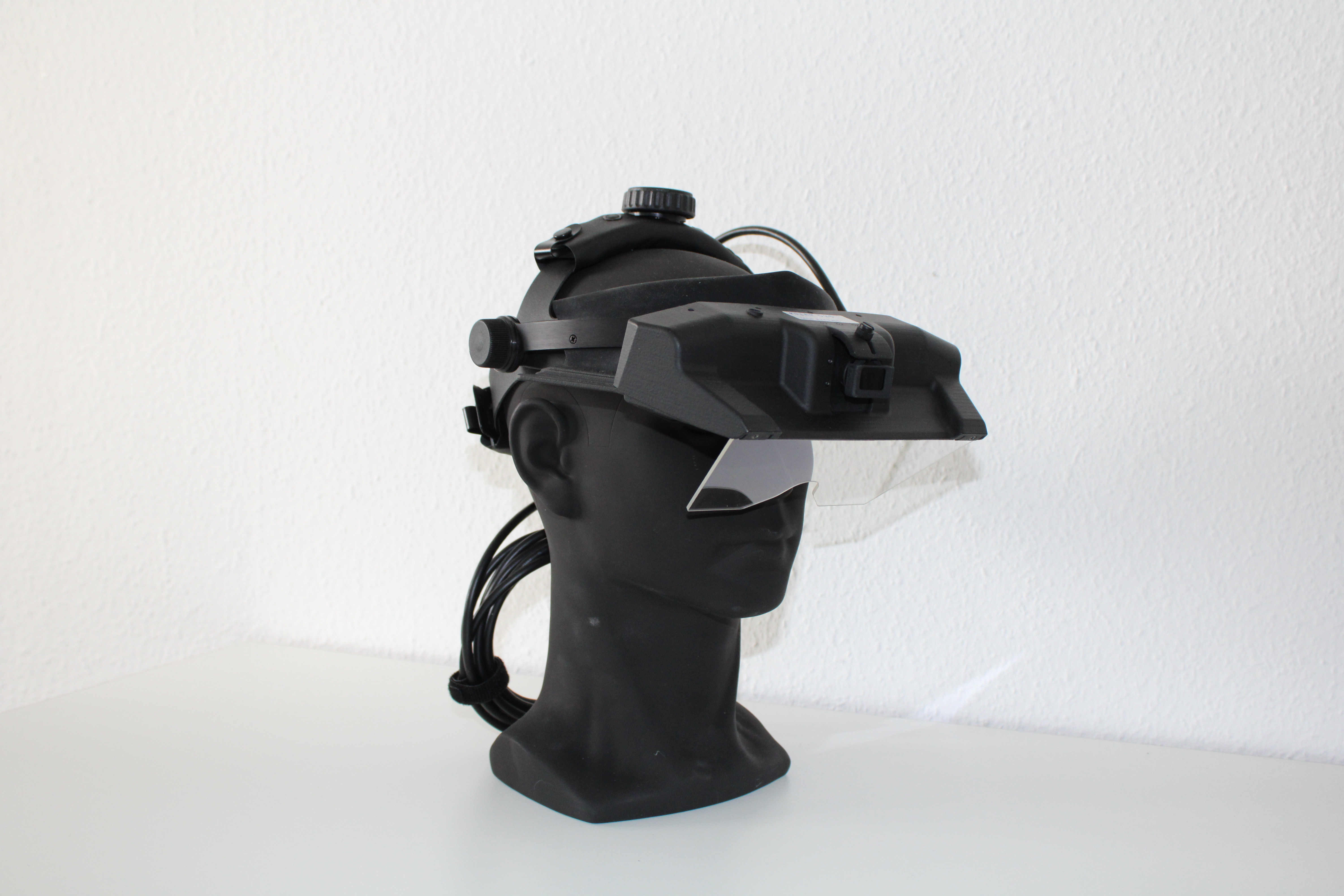
EyeLink 3
The EyeLink 3 is a new system that enables stationary measurements in research and diagnostic laboratories conducted in front of a screen. The cameras and sensors are placed on a lightweight head-mounted frame, allowing measurements during natural movements. This system can record both eyes simultaneously (binocular) using infrared light, providing reliable and differentiated data. For maximum accuracy, the test subject’s head is usually stabilized with a chin and forehead rest. The EyeLink 3 achieves a measurement frequency of up to 1000 Hz, i.e., 1000 frames per second.
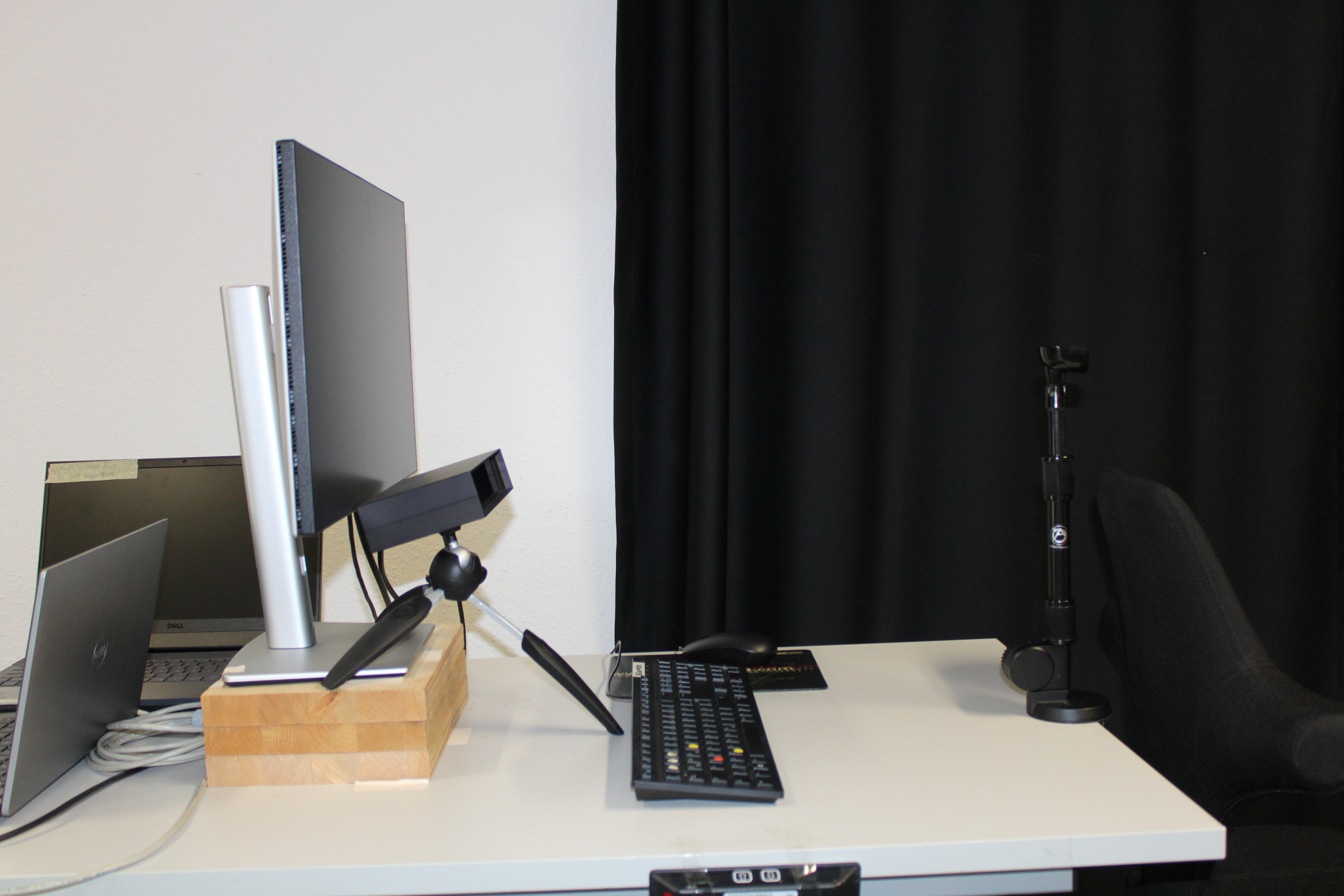
EyeLink Portable Duo
The EyeLink Portable Duo is a mobile eye-tracking system for precise recording of eye movements. It enables flexible measurements regardless of location – both in the lab and in other environments. The system can record both eyes simultaneously (binocular), yielding particularly accurate data. Depending on the study, the test subject’s head can be stabilized with a chin rest. When measurement is stabilized, the system reaches a particularly high sampling rate of up to 2000 Hz (2000 frames per second), which allows analysis of the smallest and fastest eye movements.
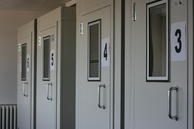
Cabins
For experiments without eye tracking we have computer cabins. Room 4.22 has 6 soundproof cabins with single PC working places. Further PC working places are available in other rooms.
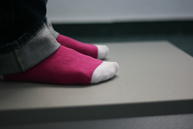
Balancing platform
Our lab also has a Balancing platform. By using hight and weight of a participant compensating movements during upright standing can be recorded .
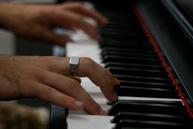
Sound and tone
For further experiments, like rhythm studies, our lab offers various instruments, e.g. percussion and an electronic piano. All our rooms can be provides with a sound system, microphones and mixing consoles.
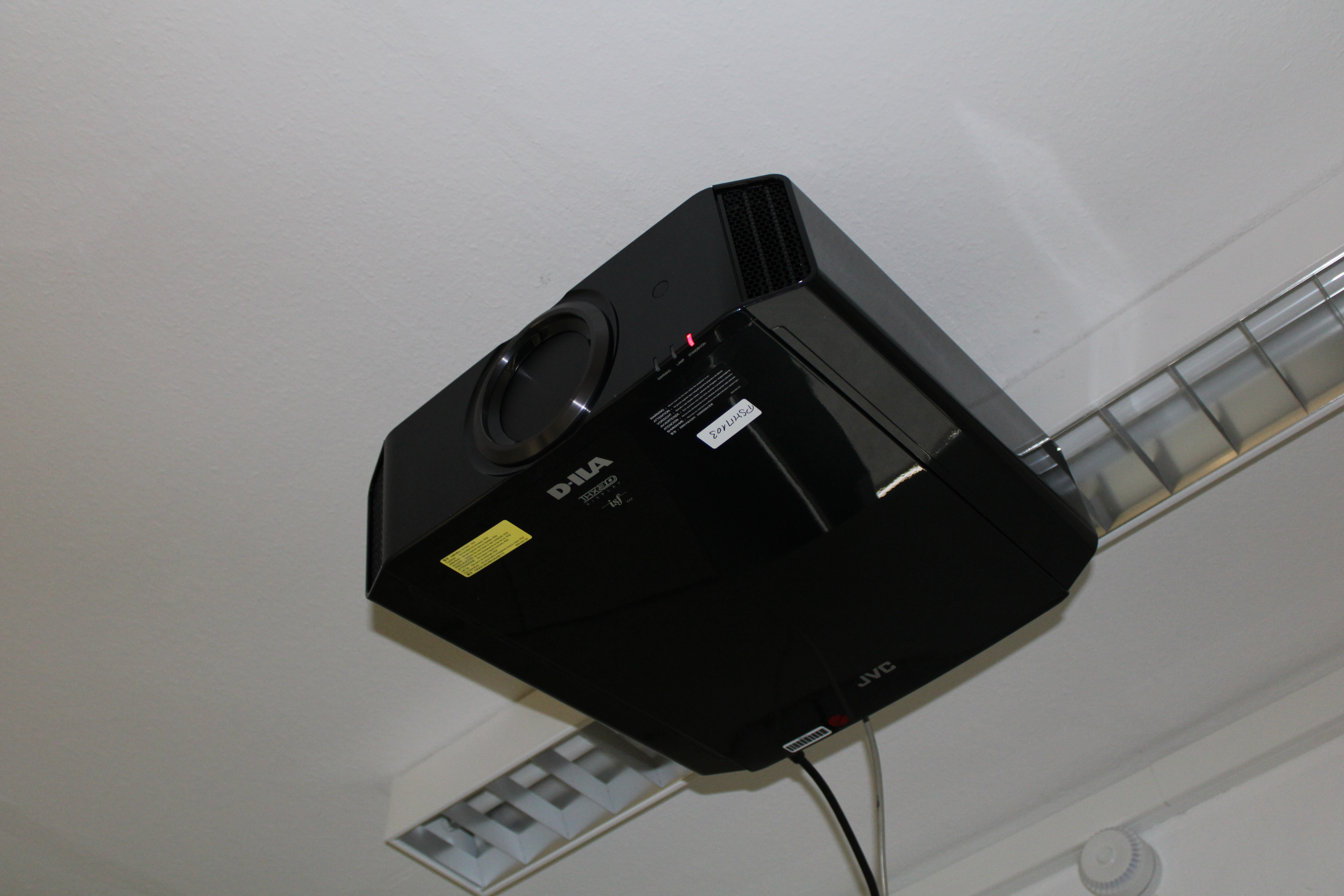
Projector and Screen
The technical equipment of the EyeLab also includes a projector with a screen. These enable the presentation of stimulus material for groups or larger experimental setups. This allows images, videos or instructions to be displayed clearly and flexibly integrated into various settings.