'Contingent Collaborations': Indigenous and Allied Work between Communities in Australia, Turtle Island and Germany
Project Description
Collaborations for social and political change, and the limits of such collaborations, are at the centre of this project, which situates itself on Turtle Island, in Australia, and in Germany. Collaborations, whether trans-Indigenous or between Indigenous and settler individuals and communities, are contingent and often marked by incommensurabilities that preclude easy ‘translation.’ We build on the concept of contingent collaborations developed by Eve Tuck and colleagues in the context of both settler colonialism and Afrodiasporic relations to land. As Tuck et al. write: "Contingent collaborations provide a counterpoint to how others have theorized solidarity and allies and require an ethic of incommensurability that recognizes what is distinct between various projects of social justice and decolonization" (2014, 57).
Our project is committed to reciprocity and responsibility in its approach to Indigenous-centered work. While pursuing their respective research, project members work together in various constellations in the following subsections:
Subsection I: From Stories to Policy and Back Again
Various members of the project, especially our PhD researchers, are critically examining settler policies and the discourses and stories that have served to control and harm Indigenous peoples on Turtle Island and in Australia. At the same time, everyone involved in the project is interested in stories, storywork, and the knowledges and worldviews they carry. Stories and creative works by Indigenous writers, filmmakers, and artists therefore become sites of knowledge, law, creativity, history, and governance that both precede and exceed the colonial policies under examination. Project members are equally mindful that what constitutes "story" and what constitutes "policy" differs between Indigenous nations, as well as between Indigenous and settler epistemologies, and that both stories and policy have fulfilled, and continue to fulfil, a wide range of functions.
Subsection II: KINetic Collaboration
The "kin" in this subsection title reflects the evolving collaboration among project members. At present, we are embarking on a multi-voiced and multi-perspectival (re)telling of the entangled histories connecting our project locations—Turtle Island, Australia, and Germany—through the lens of animals and the possibilities of kinship with the more-than-human. Each member contributes a segment of these entangled histories from their own perspective. Across these contributions, animals emerge in multiple and sometimes contradictory ways: as kin, as instruments of settler colonialism, as invasive species, as victims of human violence, as participants in social worlds, or as beings that move dynamically between and beyond such categories.
Subsection III: Relating to Indigenous Studies in and from Germany
As two German researchers working in university and museum contexts, Nicole and Anja approach Indigenous Studies in the light of European histories of colonial entanglement with Indigenous lives, lands, and cultures on Turtle Island and in Australia, focusing particularly on German involvement in settler colonialism and knowledge extraction. Drawing on our experiences in German university and museum contexts, we begin to unpack what kind of work seems possible to us in relationto Indigenous studies from here. We ask what forms of ‘Indigenous-centred’ and ‘Indigenous-led’ work may be possible in and from Germany, and where the limits lie. In the university context, we examine approaches to Indigenous literary texts through questions of self-positioning and colonial entanglement. One approach we—and others—have taken is to consider the role of German settler characters in Indigenous literature as an initial point of entry into these questions. In the museum context, we build on insights from Anja Schwarz’s involvement in Berlin’s Australian Archive project, a collaboration among Indigenous and non-Indigenous scholars, museum professionals and knowledge holders in Australia and Germany around the return of, or care for, Indigenous belongings held in German museums. Learning from these two contexts, we are interested in how insights from one field might inform the questions we ask in the other.
Events and Publications
Past Events
PHD WORKSHOP| by and with Renae Watchman
held at the University of Potsdam, May 27, 2026
A workshop held by Renae Watchman, Professor in the Indigenous Studies Department at McMaster University and Mercator fellow at the University of Potsdam, for and with RU Collaborations PhD researchers and invited guests.
TALK | by Renae Watchman
held at Freie Universität Berlin, May 6, 2026
A talk titled Re-storying Indigenous Identity Claims in Literary and Creative Arts by Renae Watchman, Professor in the Indigenous Studies Department at McMaster University and Mercator fellow at the University of Potsdam.
Co-organized with the Research Unit “Collaborations: Assemblages, Articulations, Alliances" at the University of Potsdam
ONLINE WRITER'S CONVERSATION | with Tara June Winch and Drew Hayden Taylor
held on zoom, January 19, 2026
Online Writers’ Conversation on Indigenous Literature from Turtle Island and Australia with Tara June Winch (Wiradjuri) and Drew Hayden Taylor (Curve Lake First Nations).
Organized and moderated by Laura Boehm, Anja Schwarz and Nicole Waller
READING AND CONVERSATION | with Drew Hayden Taylor
held at the University of Potsdam, November 7, 2025
A reading and conversation with writer Drew Hayden Taylor (Ojibway, Curve Lake First Nation) from Turtle Island, Canada, author of Cold, a mystery, thriller and horror novel.
Organized and moderated by Alisa Preusser and Nicole Waller
WORKSHOP CONVERSATION | The role of Indigenous scholarship in German universities
held at the University of Hamburg, September 22, 2025
A conversation between the research projects “Nuclear Justice and Gender in the Sea of Islands”, University of Hamburg and “Contingent Collaborations”
PARTICIPANTS: Brigalow Joaquin McIntosh, Hereata Pereyre, Tamatoa Tepuhiarii, Janina Dannenberg, Benno Fladvad, Mathilde Kraft, Anja Schwarz and Nicole Waller
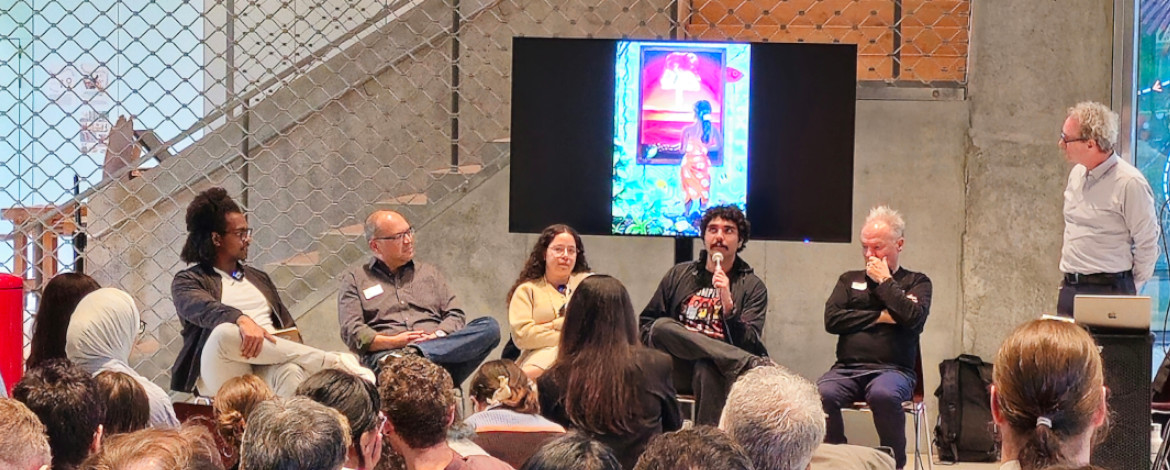
PANEL | Dialogue Across Generations: Indigenous Scholarship and Activism
Event at the minor cosmopolitan intervention, May 10, 2025 (at Spore Initiative, Berlin)
For a panel description, click here.
PANELLISTS: Tony Birch, Keith Camacho, Hereata Pereyre, Brigalow Joaquin McIntosh and Tamatoa Tepuhiarii
ORGANIZED AND MODERATED BY: Chris Healy and Anja Schwarz
Publications
Anja Schwarz and Nicole Waller. “Invaders, Tourists, or Visitors? Reading Indigenous Stories in a German University Context.” German Studies Canada, vol. 61, no. 2, 2025, pp. 79-84.
Abstract: In this article, we ask how to engage with Indigenous stories non-extractively from our own positioning as German scholars within the German university system. Taking guidance from the methodological work of Stó:lō and St’at’imc scholar and storyteller Jo-ann Archibald Q’um Q’um Xiiem and Wiradjuri author, critic, and academic Jeanine Leane, we engage with representations of German settler figures in Cherie Dimaline’s Empire of Wild and Ellen van Neerven’s Sate in order to think through the implications of reading as an invader, tourist, or visitor (Leane).
Find the publication here.
Project Team
Anja Schwarz
I am a German professor of cultural studies at the University of Potsdam in Germany with a background in memory studies and postcolonial studies. I spent significant periods of my undergraduate and postgraduate training in Australia (especially at the The University of Melbourne), and much of my research and teaching focuses on the South Pacific (Australia, Polynesia and Aotearoa New Zealand). To see where I've published, click here.
This work has focused on two main fields over the past decade: Together with my colleague Lars Eckstein I have undertaken research into the Polynesian navigational knowledge conveyed by Ra‘iātean airoi and tau‘a, Tupaia through his 1769 map of Oceania. In 2022, this work culminated in the Te Ara Vaka Moana Conference, when we invited Pacific ancestral navigators and boatbuilders to Berlin to bring knowledge, reverence and life to the oceanic vessels on display in Berlin’s ethnographic museum, the Humboldt Forum. Click here for more information.
Another strand of my research and teaching concerns Germany's implication in the history and ongoing unfolding of Australian settler colonialism through its institutions, emigration histories and cultural imaginaries. In this context, I have been involved in research projects on Australian and German memory cultures around the settler-funded Prussian explorer Ludwig Leichhardt, and on German-Australian colonial entanglements. Together with Dr Eva Bischoff from the University of Trier, I am currently co-directing the collaborative and inter-institutional research project ‘Berlin’s Australian Archive’, funded by the German Lost Art Foundation, which focuses on Berlin’s extensive natural history collections from Australia. Working with colleagues in Australia, we are trying to learn more about the important role played by First Peoples in the formation of these collections, whose labour and knowledge was extracted by German-speaking naturalists. To find out more about the project, click here.
For further information visit my website:
Nicole Waller
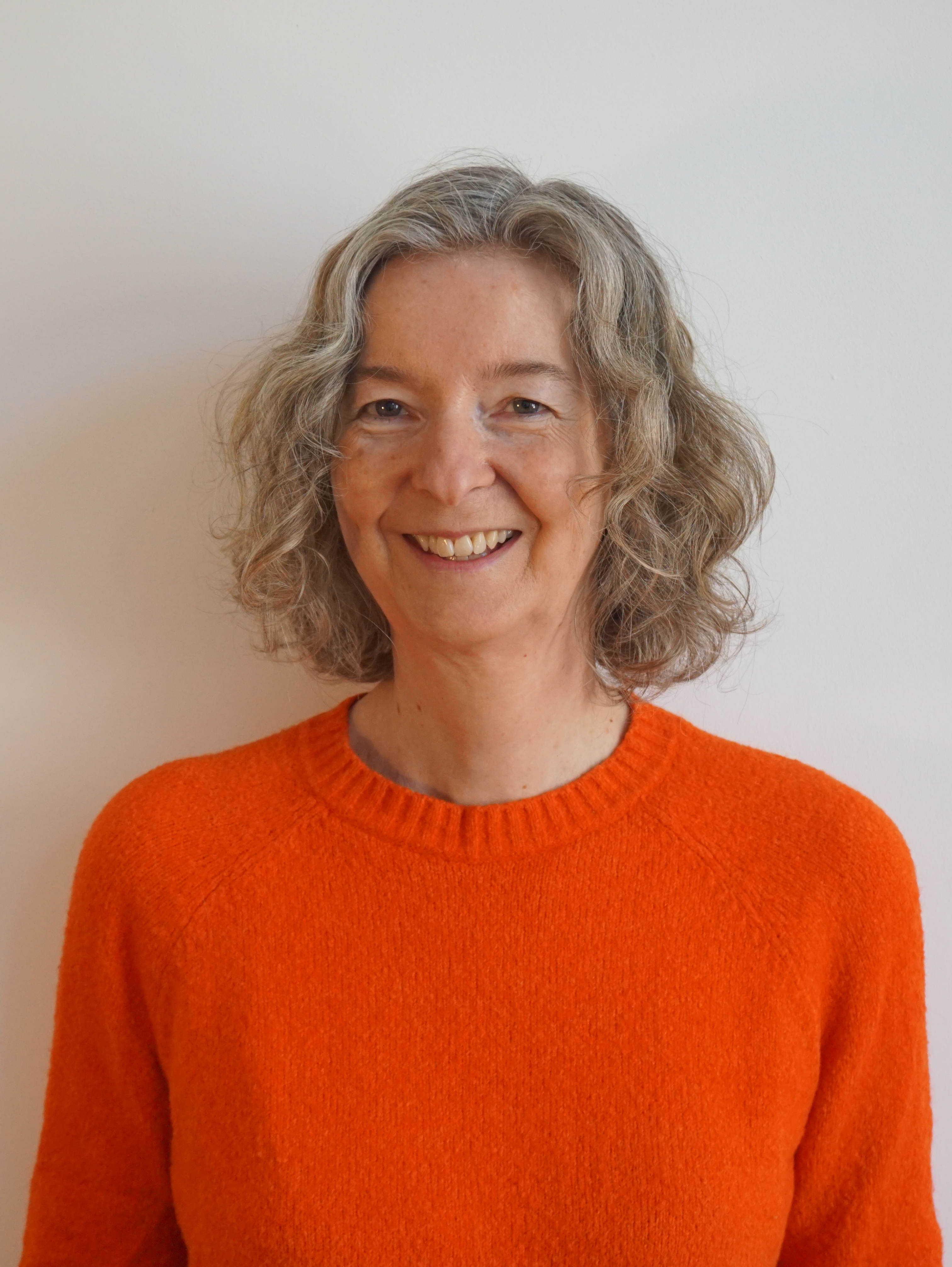
I am a German professor of American studies at the University of Potsdam in Germany. I was initially trained in Caribbean studies, Atlantic studies, and postcolonial studies. I have also studied American stereotypes about Islam. In the last 10 years, L/land relations have become a central concern of my work.
In my research, I have looked at intersections between ecocriticism and postcolonialism and engaged with Black and Indigenous studies’ critiques of posthumanism for its lack of post-and decolonial perspectives. Together with my Potsdam colleagues Anke Bartels, Lars Eckstein, and Dirk Wiemann, I have written a monograph on Anglophone postcolonial literatures which addresses the intersections of postcolonialism with settler colonial studies, Indigenous studies, and ecocriticism. I have also worked on Indigenous sovereignty and stewardship, publishing on Canadian Inuit interventions into discussions about sovereignty in the ‘Canadian Arctic Archipelago’. I have studied, taught about, and published on Black geographies, including its relation to Indigenous decolonization efforts. In collaboration with Jens Temmen, I organized a conference and a special journal forum on ‘American Territorialities’, a project that brought together researchers critically investigating territorial discourses of the US nation-state, as well as the counter-discourses of peoples and populations placed under US sovereignty but relating to L/land and water otherwise. A list of my selected publications can be found here.
In my teaching, I have looked with my students at settler decolonization and the possibilities of collaboration between Black diasporic populations, settlers, and Indigenous peoples in (zoom) conversation with invited speakers from the fields of Indigenous and Black studies on Turtle Island.
For further information visit my website:

Distinguished Mercator Professor: Lynette Russell
I am Professor of Indigenous Studies (History) at the Monash Indigenous Studies Centre, Monash University, Melbourne. My Aboriginal ancestors were born on the lands of the Wotjabaluk people, who then, through the colonial project, married into the Pallawah people of Tasmania, and I descend from convicts on the other side. I am, as a historian, rather uniquely placed. I specialize in Australian Aboriginal Histories.
My work is deeply interdisciplinary and collaborative. All of my research outputs have sought to show the dynamism of Aboriginal responses to colonialism, their agency, and their subjectivity. I completed a PhD in history at the University of Melbourne in 1996. Since then, I have taught and researched in history, postcolonial studies, and Indigenous studies. I am the author or editor of 21 volumes, with several more in train. I am the only Australian scholar to be elected to the Royal Historical Society (London), the Royal Anthropological Institute (London), the Royal Geographical Society (London), and in 2023 the American Academy of Arts and Sciences.
I am passionate about community outreach and the dissemination of knowledge to the wider community.
For further information visit my website:

Distinguished Mercator Professor: Renae Watchman
Tódich’íi’nii éínishłị dóó Kinyaa'áanii báshíshchíín. Dóó Tsídii/ Tsalagi (Gvgiyvwi Anitsisqua) éí da shichei. Táchii'nii éí da shinálí. Naat’áanii Nééz déé’ íiyisí naashá, áádóó Haudenosaunee dóó Mississauga bikéyah, dii shighaan. Ákót'éego Diné dóó Tsalagi Asdzą́ą́n nishłį́. Shí éí Renae Watchman yinishyé.
I am Bitter Water Clan and born for Towering House. My maternal grandfather was Bird Clan from the Cherokee Nation of Oklahoma and my paternal grandfather was Red Running Through the Water Clan. I am a citizen of the Navajo Nation, enrolled at Shiprock, New Mexico, and I live and work in Haudenosaunee and Mississauga homelands. These are what make me a Diné/Tsalagi woman.
Diné stories illustrate the kinship responsibilities of the Tódich’íi’nii are as philosophers and educators, and the Kinya’áanii are as leaders and guides. I am an associate professor of Indigenous literary and creative arts at McMaster University, in Hamilton, Ontario, Canada. I am also the inaugural Graduate Chair of the MA Program in Indigenous Studies. A list of my publications can be found here.
I was recently named the Scholar-In-Community for the Faculty of Social Sciences, International as well as the McMaster Indigenous Research Institute (MIRI) Dawn Martin-Hill Community Fellow (2025-2027). For each, respectively, I am working to curate and elevate Southwest Indigenous writers in collaboration with the Association for the Study of American Indian Literatures (ASAIL), of which I am the elected VP. I am also working with a Diné language nest, Saad K’idilyé to support their “planting the language seed” initiatives. One of my long-term collaborations is SSHRC-funded project called Racialized Ecologies, where I am specifically looking at how Indigenous literature and film explore belongingness, kinship, languages, presence, and thrivance to build worlds apart from this one that is dystopic and dying.
For further information visit my website:
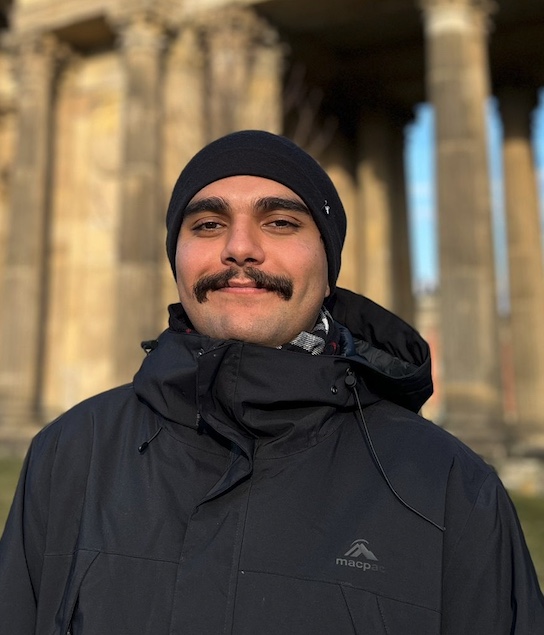
Brigalow Joaquin Mcintosh
I am a proud Muruwari and Kooma man and a researcher in the Collaborations unit under the supervision of Prof. Dr. Anja Schwarz. I hold a Bachelor of Arts Honours from the University of Melbourne. My Honours thesis, ‘Analysis of Youth Justice Policies in Aboriginal Communities: Government accountability and Aboriginal-led solutions,’ offered an in-depth, well-positioned exploration of the Royal Commission into Aboriginal Deaths in Custody, the Closing the Gap initiative, and the Victorian Youth Justice Strategy, arguing for Aboriginal-led justice reinvestment as the alternative to failed policies.
While pursuing my Bachelors, I had the experience of working as a policy officer at an Aboriginal Community Controlled Organisations (ACCO) where I deepened my understanding of organisational governance and policy implications for Aboriginal communities.
This experience coupled with my academic background fuelled my commitment to embark on a PhD to further interrogate how governance structures and policies embed Aboriginal self-determination.
For further information visit my website:

Laura Boehm
I am a Master's student in Anglophone Modernities in Literature and Culture at the University of Potsdam and am simultaneously working as a student researcher in the project 'Contingent Collaborations': Indigenous and Allied Work between Communities in Australia, Turtle Island and Germany.
Throughout my studies, my academic interests have increasingly centred on postcolonial studies, Pacific studies, Australian studies, museum studies and memory studies. This is reflected both in my bachelor thesis focused on museum narratives employed in the Pacific Encounters exhibition at the National Maritime Museum in London and in my current and past work as a student assistant.
Together with Anja Schwarz and Lars Eckstein I organised the Te Ara Vaka Moana conference, during which Pacific ancestral navigators and boatbuilders travelled to Berlin, engaging in exchanges on ancestral voyaging vessels and navigation in Oceania and bringing life and knowledge to the oceanic vessels on display at the Humboldt Forum in Berlin. In the collaborative, inter-institutional research project Berlin’s Australian Archive: Addressing the Colonial Legacies of Natural History, which centres on Berlin’s extensive natural history collections from Australia, I supported the work Anja Schwarz and Eva Bischoff engaged in, focusing on the essential role First Peoples played in the formation of Berlin's collections.
My position as a student researcher in the ‘Contingent Collaborations’ -project supports and teaches me in this ongoing learning journey.
For further information visit:
Advisory Board
Beth Piatote, https://english.berkeley.edu/people/beth-piatote
David Stirrup, https://www.york.ac.uk/english/people/davidstirrup/
Shannon Faulkhead, https://www.monash.edu/alumni/community/distinguished-alumni-awards/2024/shannon-faulkhead