Project Description
Postcolonial Neighborhoods explores decolonial civil society struggles for participation and belonging in Berlin and beyond. The project researches and actively engages in these practices of decolonization. It is based on a collective ethnography that brings together urban actors—including artists, activists, and scholars—with a committed, public form of European ethnology.
A key point of departure was the Amo Collective Berlin which emerged in 2020 from a neighborhood initiative around the renaming of M*straße into Anton-Wilhelm-Amo-Straße.
Postcolonial Neighborhoods is based on the assumption that especially in contested public spaces that refer to colonial continuities many actors dock their decolonial claims, thereby possibly becoming neighbors and allies. Together with researching activists and artists, the project focuses on how these claims are articulated in disputes over colonial racist continuities in the urban topography as well as in disputes over how to deal with (post)migrant and subaltern histories in national politics of memory and public formats of representation.
We aim at developing the concept of "neighborhood" beyond its conventional meaning of “dwelling together”, into a postmigrant, postcolonial, and more-than-human assemblage of “being thrown together” (Doreen Massey) that turns urban spaces into potential sites of allying struggles and minor alliances across communities. We thus think of “neighborhood” not as a status but as a process. (How) do such processes of neighboring become acts of a joint, decolonial citizenship?
Postcolonial Neighborhoods works to decolonize academic and anthropological knowledge production by welcoming and making space for other forms of knowledge—gained in marginalized and contested places across our shared world—rather than extracting them. This helps us fill the gaps in academic knowledge created by epistemic violence against the Other. We hope to contribute to a new understanding of decolonial urban struggles as productive zones of conflict where convivial ideas of a shared future are being invented and provisionally put into practice.
Postcolonial Neighborhoods is situated at the Institute for European Ethnology Humboldt University Berlin.
Research CoLabs
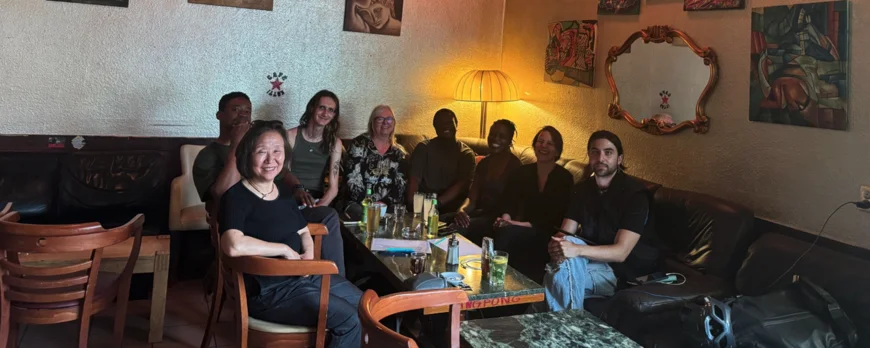
The project is designed as an evolving four-year research process composed of seven thematic and collaborative Research CoLabs. Each CoLab consists of up to eight participants working together over the course of a year. The CoLab participants bring artistic, activist, and community-based practices into the project. Many are themselves situated within ongoing struggles, shaped by experiences of marginalization, racialization, and refusal.
The CoLabs are designed as spaces where boundaries between scholarship, art, and activism are productively blurred—and generate something new. Rather than conducting research ‘on’ someone ‘elsewhere,’ we practice a form of research as situated co-becoming—a neighborliness between positionalities and activist efforts within Berlin’s urban fabric.
A central element is that all CoLab participants are financially compensated for their labor, through DFG-funded honoraria. Participation also includes co-authorship as an ethical research practice, which moves beyond writing—to include multimodal forms like the Decolonial Flânerie public city walks, exhibitions and cartography.
CoLab 1 Modes of Intersectional Conversation explores how we speak across difference and build solidarities in research tied to postcolonial, antiracist, and postmigrant struggles.
CoLab 2 Mapping Postcolonial Neighborhoods grew out of a collective mapping practice which links the presence of the Peace Statue Ari in Berlin to broader geographies of gendered violence, survival, and collective remembrance.
CoLab 3 Exploring Structural Coloniality interrogates the institutional architectures that reproduce colonial asymmetries and experiments with counter-structures grounded in PoC- and migrant-led practices.
More to follow.
Events and Publications
Planned Events
The Ari Map: Neighbouring postcolonial, postmigrant struggles in Berlin | Members of CoLab 2 & Projektteam
Workshop & Launch
17.6.2026, Zentrum für Kunst und Urbanistik (ZK/U), Berlin
Past Events
Postcolonial Neighborhoods | Regina Römhild
Presentation
10.9.2025, Summer School IRTG Transformative Religion. Religion as Situated Knowledge in Processes of Social Transformation
University of Stellenbosch, South Africa
Gesellschaft (Mit-)Gestalten. Kritische Reflektionen zur Public Anthropology | Regina Römhild
Panel Discussion, moderated by Katharina Schramm und Mihir Sharma
30.6.2025, Final Workshop of DFG network “Public Anthropology”, Institute for European Ethnology, Humboldt University Berlin
Postcolonial Neighborhoods: A new experiment in collective ethnography and transacademic collaboration | Gabs Dumfahrt Pérez, Nataly Han, Nicole Pearson, Regina Römhild, Eryn Staiblin
Presentation
24.6.2025, Public Colloquium, Amo Salon, Institute for European Ethnology, Humboldt University Berlin
Postkoloniale Nachbarschaften. Ein transakademisches Forschungsprojekt im Kontext der DFG-Forschungsgruppe “Collaborations: Assemblages, Articulations, Alliances” | Gabs Dumfahrt Pérez, Regina Römhild, Eryn Staiblin
Presentation
3.6.2025, Research Lounge, Tieranatomisches Theater, Humboldt University Berlin
Project Team
Organizing team:
Prof. Dr. Regina Römhild (Projektleitung)
Bonaventure Soh Bejeng Ndikung (Mercator Fellow)
CoLab 1 Modes of Intersectional Conversation Members:
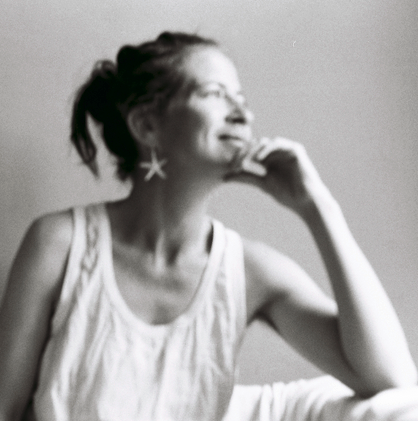
Nina Berfelde
I am an East German, artist, mother, documentary filmmaker, cultural anthropologist, author, flâneuse, and interdisciplinary researcher. My research examines the erasure of East German history in the context of decolonial, post-migrant, queer, and intersectional feminist discourses. As an ossified person, I sense the connections to other marginalized groups and debates atmospherically, methodologically, and discursively—and seek ways to link and strengthen them through these connections. B.A. Cultural Anthropology (Europe University Viadrina Frankfurt/Oder), M.A. Art in Context (University of the Arts Berlin). https://ninaberfelde.de/
Ren Loren Britton
Ren Loren Britton is a trans-disciplinary artist-designer dancing with trans*feminism, technosciences, radical pedagogy and disability justice. They make multi sensorial media installations. Trans*ness in their practice considers what would be needed so that —pleasure for all— would be possible. They attend to plural hir- his- her- stories and presents of social and technical infrastructures making lives accessible and possible. www.lorenbritton.com
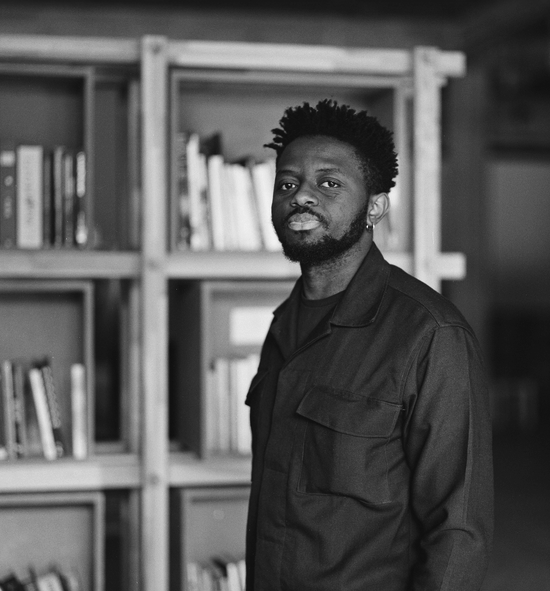
Billy Fowo
I am a curator and writer with interests in the sonic, linguistics, and literature. I graduated from de Appel’s Curatorial Programme in 2023 and live in Berlin, where I work for SAVVY Contemporary – The Laboratory of Form-Ideas.
I have served on the Selection Committee for the Future Generation Art Prize 2023/24 and as a Juror for the Encontros Da Imagem 2025, and some of my texts have been published in catalogues, readers, and online platforms, including the 36th Sao Paulo Biennial, the Sharjah Biennial 15, Kunstforum International, and Mousse Magazine.
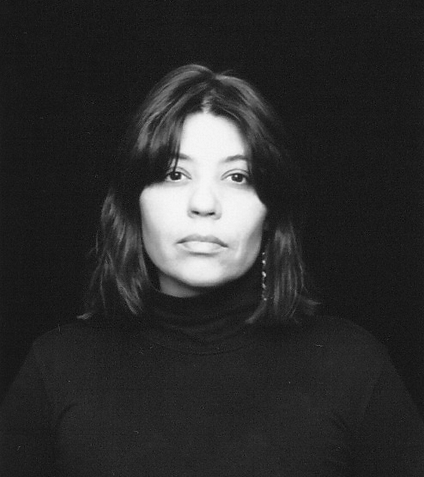
Melanie Garland
I am a Berlin-based artist, heritage restorer-conservator, researcher, and lecturer. I hold a PhD in European Ethnology from Humboldt-Universität zu Berlin. My research explores (post)migrant and postcolonial cities, critical archival practices, multispecies studies, and postcolonial oceans through sonic practices, archipelagic thinking, and seascape epistemologies. Working at the intersection of art, anthropology, and critical museum studies, I engage with object-based installations, critical sonic walks, sonic-field recordings, and performative and curatorial processes grounded in feminist ethics of care. My postdoctoral projects and guest fellowships include Water Narratives, developed in collaboration with the curators of the Malta Biennale 2024 and the marine biology organization EcoMarine Malta (2025-2026); Anarchiving Ocean Margins at the Deutsches Schifffahrtsmuseum, Leibniz Institute for Maritime History (2025); and A Toolbox for Para-Archival Mediation: Practices for Navigating Difficult Heritage at the Berlin-Brandenburgische Landesstelle für Alltagskultur, in cooperation with the Institute for European Ethnology and the Centre for Cultural Technique at Humboldt-Universität zu Berlin (2026). My recent publications include Sounding a Speculative Past, HUB Journal Resonance (2026); Making Places Inbetween (book), Transcript Verlag (2026); Traces of Counter-Mapping (with Carla Maier, Nicole Person, and hn.lyonga), in The (Counter) Atlas, De Gruyter (2026); Sounding the Maltese Archipelago Frequencies, High Pitch Magazine (2025); and Sensing the City (with Carla Maier and Adela Taleb), in Owned by Others, K. Verlag (2024). www.melaniegarland.com
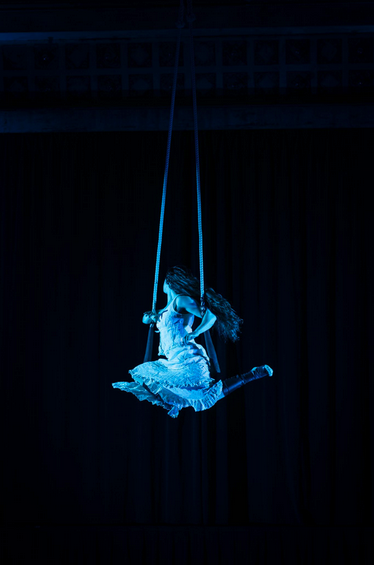
Eliana Pliskin Jacobs
is a Yiddish singer, circus performer, visual and performance artist, and the granddaughter of German-Jewish Holocaust survivors.
Eliana began training and performing circus at the age of 12 in the United States, and since 2012 has been performing and teaching as an independent aerialist in Western Canada and throughout Europe. As a vocalist, Eliana has appeared with various klezmer bands and as a soloist with the Dresden Philharmonic, the Leipzig Gewandhaus and the Berlin Konzerthaus Orchestras. In 2023 she founded the klezmer-circus ensemble Tsirk Dobranotch with the internationally renowned klezmer band Dobranotch. The ensemble has created three productions, which they continue to tour. Eliana holds a BA in Art History from the University of British Columbia, and a Master of Fine Arts from HEAD-Geneva and the Weissensee Kunsthochschule Berlin under the supervision of Bonaventure Soh Bejeng Ndikung and Nasan Tur.
Eliana’s solo inter-disciplinary performances combine circus, music, visual and performance art and examine themes of ghostliness, history of place, migration and ethereality. Her current research and practices revolve around sites of Berlin where her paternal grandfather was born, grew up, and fled.
Ingri Pavezi
CoLab 2 Mapping Postcolonial Neighborhoods Members:
Matthew Hansen
Josepha Jendricke
Nataly Han
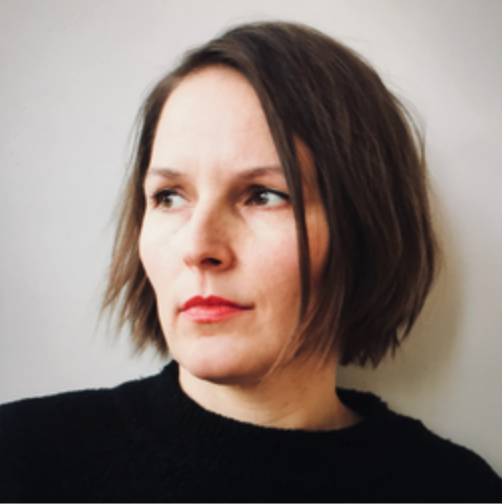
Carla J. Maier
My work is situated at the intersection of sound studies, cultural anthropology and postcolonial studies with a focus on sound and listening, multimodal anthropology and methods of walking, listening and storytelling in the context of memory and decolonial spatial practices.
Currently, I am a guest researcher in the project Postcolonial Neighbourhoods at the Institute of European Ethnology at HU Berlin.
Nnenna Onuoha
Nicole Pearson
CoLab 3 Members:
Selina Masakeni
Lena Luvia Mehta
Mariyama Mutala