WORKSHOP & READING
PROTEST LITERATURE!
Reading with Tracy Fuad, Craig Santos Perez, Atefe Asadi and Cristina Bendek
Moderated by Priyam Goswami Choudhury
June 5, 2026, 7 pp - 9pm
Subkontinent (Donaustraße 84, Berlin-Neukölln)
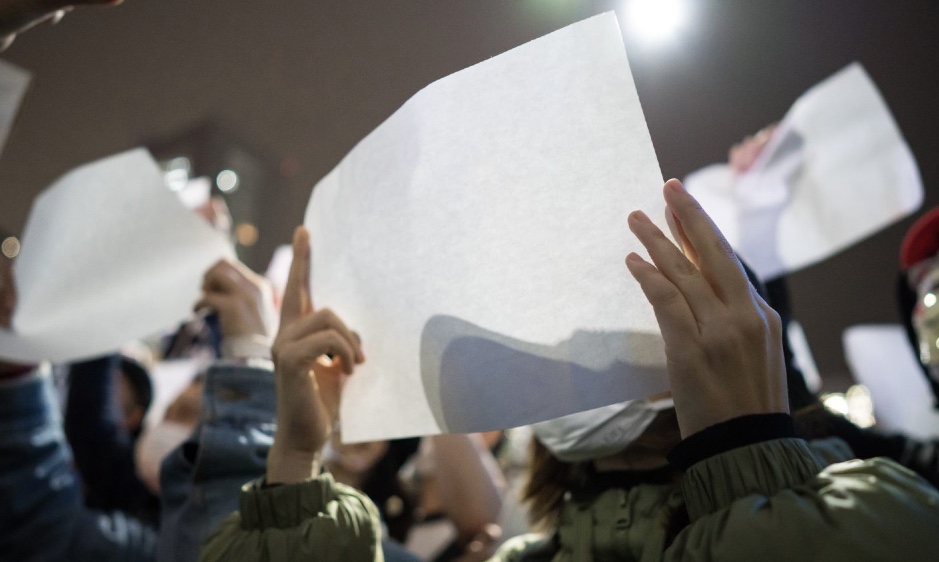
From Occupy and Black Lives Matter to #MeToo; from the Arab Spring and the North Indian farmers’ protests to Fridays for Future; from the Iranian Woman – Life – Freedom movement to Spain’s Indignados and the No Kings demonstrations all across the USA; from Gezi Park to the global protest against the genocide in Gaza…: all over the world, massive, vociferous and articulate protest movements have been a hallmark of the 21st century. Alongside these spectacular, internationally visible uprisings, there are countless smaller activist movements that persistently voice and enact dissent and resistance: to the excesses of neo-imperialism, to ascendant authoritarianism, to rampant land-grabbing, to systematic racism, sexism and casteism, to the ongoing assault on the planetary ecosystem in the name of ‘growth’, and a plethora of other forms of injustice, oppression, and dispossession.
Some of these movements are local and site-specific, others are explicitly internationalist; some experiment with new interventionist forms, others continue or revisit traditional practices; some are short-lived and spontaneous, others operate in long-term perspectives; some are militant, others moderate. They may pursue different aims and oppose different antagonists, threats and impositions. But what they have in common is that they all say no to the way the world is ordered and instead work towards a future that is more just, more sustainable, more convivial – in short: better.
Equally vibrant, fresh and diverse are the multiple modes and forms of protest literature that coexist with these manifold movements, sustaining them and being sustained by them in return. Protest and literature, politics and poetics, are closely related. In fact, there is no (effective) protest without a poetic dimension: the power of slogans and memes, the catchiness of stickers and demonstration placards, the force of speeches at rallies – they all hinge to a high degree on their rhetoric, their originality, their aesthetic impact. But the same may apply in reverse as well: perhaps we have entered a phase (again) in which no piece of literature makes any sense that is not to some extent an expression of protest, that does not reject (aspects of) the untenable status quo while simultaneously making alternative ways of sharing the world imaginable. This, to be sure, does not oblige literary writers to resort to sloganeering. On the contrary, it may even be argued that it reorients literature towards one of its traditional prerogatives, namely, to figure the impossible – the impossible that, as Che Guevara once said, any realist worthy of the name should reclaim.
****
Tracy Fuad is a poet and creative writing teacher. Her second collection of poetry, PORTAL, won the Phoenix Emerging Poets’ Prize and was published by the University of Chicago Press in 2024. A 2023 National Endowment for the Arts Fellow, Fuad’s poems have appeared in The Paris Review, The Yale Review, Poetry Daily, and Poem-a-Day and have been translated into Kurdish, Turkish, German, and Spanish. She lives in Berlin, where she teaches poetry and directs the Berlin Writers’ Workshop. She is currently at work on a novel.
Craig Santos Perez is a poet, essayist, former university professor, and publisher from the Chamorro people, born Guam Island. His poetry has received multiple awards, including the 2023 National Book Award, a 2015 American Book Award, and the 2011 PEN Center USA Literary Award for Poetry. He currently is a Mercator Fellow of the Collaborations Research Unit at the University of Potsdam.
Atefe Asadi is an Iranian writer, poet, editor, and translator, known for her role in Iran’s underground literature. Her three short-story collections were banned by Iran’s Ministry of Culture, and her literary activities and protest participation led to persecution and arrest. After receiving the Hannah Arendt Fellowship, she relocated to Germany. Her works, exploring women’s rights, migration, discrimination, and freedom, are translated into English, German, and Italian. Her first short-story collection is currently being translated into German.
Cristina Bendek is a Colombian writer born on the island of San Andrés off the Caribbean coast of Colombia. Her acclaimed debut novel Los cristales de la sal (2018) won the Elisa Mújica National Novel Prize and has been translated into English (Salt Crystals) and several European languages, including Portuguese and Dutch. Bendek lives and works between San Andrés and Berlin.
Priyam Goswami Choudhury is a postdoctoral researcher at the Institut für Anglistik und Amerikanistik at Universität Potsdam. Her academic work concerns tea, literature, popular culture, and colonial ecologies. Her poetry has been published in places like Rattle, electica, The Bombay Lit Magazine, nether quarterly, and in The Penguin Book pf Poems on the Indian City (ed. Bilal Moin, 2025).