
News
Our webinar series is entering its fourth round!
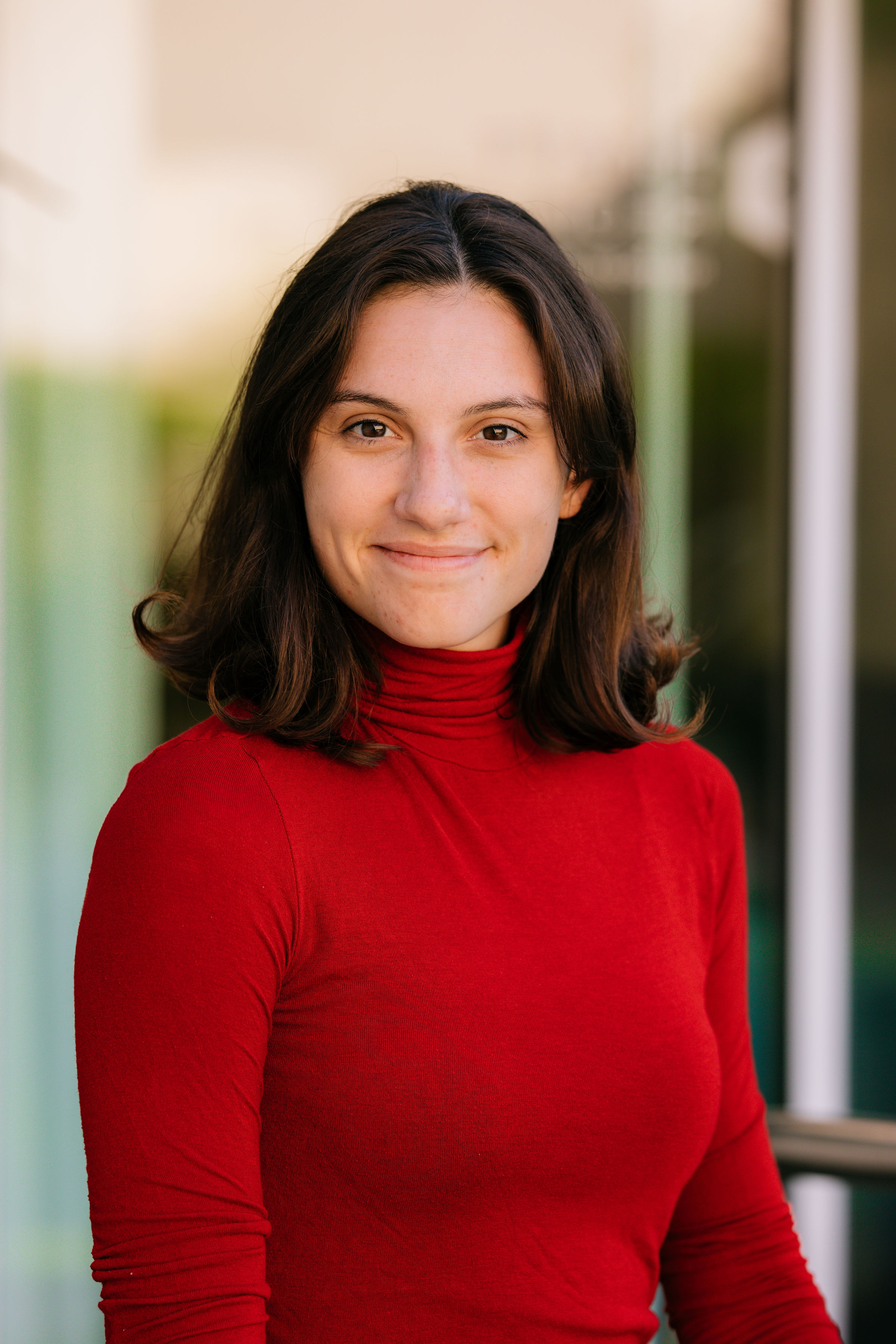
As part of the fourth webinar in our lunchtime webinar series, we were pleased to welcome Luisa Fassi from the University of Cambridge and the Vrije Universiteit Amsterdam. In her presentation, she explored the complex relationship between social media use and the mental health of adolescents—particularly among young people with diagnosed mental health conditions.
The starting point of her presentation was the question of how—and whether—social media influences the lives of adolescents with mental health conditions. Although social media is often portrayed in political and public debates as a cause of mental distress, scientific findings have not yet painted a clear picture. Luisa Fassi emphasized that existing research often yields contradictory results and that many studies have methodological limitations.
Drawing on three research projects from her doctoral dissertation, she demonstrated how the body of evidence can be further developed. She began by presenting a systematic review and meta-analysis that synthesizes more than 15 years of research. It became clear that while there are small associations between social media use and internalizing symptoms, many studies rely on self-reports, and clinical samples have been underrepresented to date. She then presented the results of a study involving clinically diagnosed adolescents that examined differences in usage behavior between adolescents with and without mental health conditions. Finally, she provided insights into a current research project that, for the first time, combines real-world TikTok and Instagram data with psychological and cognitive assessments.
In addition to the scientific findings, Luisa Fassi also spoke about the importance of evidence-based research for policy and society. She emphasized that high-quality research requires better access to platform data and that, in particular, digital media literacy and protection against harmful online content should be promoted more strongly.
A key takeaway from the webinar:
There is no one-size-fits-all answer to the question of whether social media is harmful to young people. To better understand its effects, we need high-quality, methodologically sound research, real-world usage data, and a greater focus on individual differences.
We would like to extend our sincere thanks to Luisa Fassi for her inspiring presentation and to all participants for their interesting questions and lively discussion.
This fourth webinar marks the end of our lunchtime webinar series for this semester. We would like to extend our heartfelt thanks to all the speakers for their engaging and inspiring presentations, as well as to all participants for their keen interest, the stimulating discussions, and the valuable exchange of ideas. We are already looking forward to continuing the webinar series next semester with new, exciting topics and expert speakers—stay tuned!
A New Impulse for Research! Six Projects Receive Internal Research Funding
As part of its “intramural funding” program, the UFS is funding six interdisciplinary and collaborative research projects.
The project “Controlling the scrolling? A systematic review on self-regulation, digital media use, and mental health” by Katharina Bach, Prof. Dr. Katharina Scheiter, Prof. Dr. Petra Warschburger, and Prof. Dr. Rebecca Lazarides examines the role of self-regulation in the use of digital media. The focus is on questions regarding how self-regulation is defined in the context of digital media and how it influences adolescents’ usage behavior.
In the project “Digital Media Between Everyday Life and School: Attitudes, Attributions of Responsibility, and Perceived Educational Values Among Pre-Service and Experienced Teachers,” Prof. Dr. Katrin Böhme, Prof. Dr. Richard Göllner, Prof. Dr. Steve Nebel, and Prof. Dr. Nadine Spörer are examining the attitudes of pre-service and experienced teachers toward digital media. The project focuses on the educational significance of digital media, as well as its perceived potential and risks.
As part of the “Emotional Experiences and Emotional Regulation During Social Media Usage in Late Adolescence” project, the members Prof. Dr. Rebecca Lazarides, Prof. Dr. Jakob Fink-Lamotte, Prof. Dr. Camilla Rjosk, and Dr. Claudia Neuendorf are investigating emotional experiences during social media use in late adolescence. The research focuses on how social media influences emotional reactions compared to offline contexts, which patterns of emotional experiences and emotion regulation occur together, and how these are related to depressive symptoms, anxiety, and loneliness.
The project “Digital Distraction in Class—Extent and Type of Non-Class-Related Smartphone Use by Students in University Courses” by Prof. Dr. Miriam Vock and Prof. Dr. Steve Nebel examines the use of smartphones for non-academic activities during classes. They explore the extent to which smartphones can be used as educational tools or serve as potential sources of distraction. As a result, the findings are of great importance for designing successful teaching and learning environments.
In their “Consider-the-opposite – a countermeasure for societal polarization?” project, Prof. Dr. Aileen Oeberst and Prof. Dr. Julia Haaf are investigating a psychological strategy for reducing distorted information processing. The goal of the planned meta-analysis is to systematically evaluate the effectiveness of the “Consider the Opposite” technique across various fields of research.
Finally, the project “Through the Looking Glass: Examining the Impact of Social Media on Body Image Perception Among Young Adults” by Prof. Dr. Petra Warschburger and Prof. Dr. Katharina Scheiter explores the impact of social media on body image perception among young adults. In particular, the study examines how frequent exposure to idealized body images on social media influences visual attention and self-perception.
We're keeping our webinar series going!

On May 26, 2026, as part of our lunchtime webinar series, we were pleased to welcome Prof. Dr. Philippe Verduyn, Professor of Psychology at Maastricht University in the Netherlands. Verduyn focuses in particular on emotional well-being in today’s digital society and presented comprehensive research findings on the impact of social media on mental health. Social media has become an integral part of our digitized daily lives and is increasingly shaping social interactions. Verduyn emphasized that over five billion users worldwide spend an average of about 2.5 hours on social media every day, comparing this to a part-time job. His presentation focused on the question of why the effects of social media on mental well-being cannot be assessed in general terms. Verduyn pointed out that earlier research approaches often sought a direct link between usage duration and mental health, and the results were frequently contradictory. In his view, this is because the impact of social media is influenced by several factors simultaneously: the nature of usage, the characteristics of the users, and the features of the respective platforms.
Drawing on recent research findings, Verduyn explained how different forms of social media use—such as active communication or passive consumption—can have varying effects on well-being. At the same time, during the concluding discussion, he made it clear that individual characteristics, such as a strong tendency to compare oneself with others, and platform-specific features play a decisive role in how people experience social media.
We would like to thank Prof. Dr. Philippe Verduyn for his valuable and engaging presentation, as well as all participants!
Kickoff of our webinar series!

On April 28, 2026, Prof. Dr. Imhoff kicked off the first lecture in our new webinar series by discussing well-known conspiracy theories about the moon landing and speculations surrounding the death of Princess Diana. In his presentation, the psychologist and professor of social and legal psychology at Johannes Gutenberg University Mainz vividly demonstrated just how prevalent conspiracy narratives are in our society. They are closely linked to social media, which accelerates the dissemination process and makes theories more accessible without the content being verified or critically examined. The focus was therefore on the question of why people believe in conspiracies and why these beliefs are far more than simply misinformation or a lack of knowledge.
Imhoff made it clear that such narratives often fulfill specific needs, such as the desire for guidance, security, control, or simple explanations in uncertain situations. Particularly fascinating was the examination of the so-called “conspiracy mentality”: a general tendency to view official explanations and institutions with suspicion. This attitude is found not only in small fringe groups but, in various forms, across broad segments of society.
A key takeaway from the webinar:
Addressing conspiracy narratives cannot be achieved through the presentation of facts alone. It is equally important to take uncertainties, mistrust, and psychological needs seriously, as well as to strengthen trust in scientific and social institutions.
We would like to extend our sincere thanks to Prof. Dr. Roland Imhoff for this inspiring and thought-provoking kickoff to our webinar series, and to all participants for the engaging discussion!
First University Research Focus Retreat in Wandlitz
From March 5th to 6th, members of the University Research Focus Education for the Future came together in Wandlitz for a two-day retreat dedicated to collaboration, exchange, and focused work. Combining research inputs with several interactive working sessions, the retreat provided valuable momentum for advancing the project and kicking-off new collaborations.
An initial pitch session highlighted the wide range of ideas and collaborations already emerging within the group. In particular, the interdisciplinary nature of the University Research Focus became evident, with researchers from different fields contributing diverse perspectives on digital media use and its effects on adolescents and young adults.
The program was complemented by inspiring inputs on topics such as fake news, hate speech, algorithms, and chatbots by Prof. Dr. Roland Verwiebe and Prof. Dr. Stefan Stieglitz, as well as a presentation of the PhoneStudy app by Dr. Yannick Terhorst from the Ludwig-Maximilians-University Munich, which enables the collection of smartphone usage data in a data protection–compliant way. Beyond the sessions, time spent outdoors in the surrounding forest offered space to reflect and recharge. We look forward to taking the next steps together.


Kicking-off 2026 with a team meeting
A new year brings fresh energy to the University Research Focus “Education for the Future”. At the beginning of the year, project members gathered on the Golm campus for a day-long workshop to map out the next steps for interdisciplinary collaboration.
The session began with an opportunity for participants to get to know each other and identify overlapping and complementary research interests. Building on this, they worked in small groups to develop initial research questions and project ideas based on their respective expertise.
To establish a shared foundation for future work, the group also discussed a preliminary model outlining the relationships between individual and contextual factors, digital media use, and its effects.
Overall, the meeting laid important groundwork for the months ahead, and we look forward to the developments that 2026 will bring.


