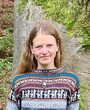
Dr. Leonna Szangolies
Education
2021 - 2025 PhD in BioMove (https://www.bio-move.org/), University of Potsdam
2018 – 2021 MSc. Ecology, Evolution and Nature Conservation, University of Potsdam
2014 – 2017 BSc. Biomathematics, University of Greifswald
Current Employment
Since 2025 PostDoc within the working group Plant Ecology and Nature Conservation funded by the Brandenburg Postdoc Network (PNB): The energetic costs of coexistence: how individual metabolism shapes species interactions and their reaction to climate change
Research Interests
- Agent-based models
- Community coexistence
- Energy budget modelling
- Theoretical ecology
Publications
Szangolies, L., Gallagher, C. A., and Jeltsch, F. (2025). “Intermediate habitat fragmentation buffers droughts: How individual energy dynamics mediate mammal community response to stressors”. In: Global Change Biology.
Szangolies, L., Jeltsch, F., Halsey, L. G., and Gallagher, C. A. (2025).“From metabolism to coexistence: Understanding animal movement and community dynamics through energy”. In: Individual Based Ecology
Szangolies, L., Gallagher, C. A., and Jeltsch, F. (2024). “Individual energetics scale up to community coexistence: Movement, metabolism and biodiversity dynamics in fragmented landscapes”. In: Journal of Animal Ecology. 93(8), 1065-1077.
Szangolies, L., Rohwäder, M.-S., Ahmed, H., Jahanmiri, F., Wagner, A., Souto-Veiga, R., et al. (2024). “Visual ODD: A Standardised Visualisation Illustrating the Narrative of Agent-Based Models”. In: Journal of Artificial Societies and Social Simulation 27.4, pp. 1–1.
Szangolies, L., Lohmann, D., Hauptfleisch, M., & Jeltsch, F. (2023).“Balanced Functional Herbivore Composition Stabilizes Tree-Grass Coexistence and Productivity in a Simulated Savanna Rangeland Ecosystem”. In: Rangeland Ecology & Management, 90, 208-220.
Szangolies L, Rohwäder MS, Jeltsch F, (2022). Single large AND several small habitat patches: A community perspective on their importance for biodiversity. Basic and Applied Ecology 65 (2022) 16-27.