«Humboldt im Netz» wird seit 08. Juni 2009 weitergeführt als «avhumboldt.de - Alexander von Humboldt Informationen online.»
Wir freuen uns auf Ihren Besuch!

Alexander von Humboldt im Netz

Forschung


A Working Conference for Humboldt Studies:

externer link Alexander von Humboldt and the Hemisphere

January 15-17, 2009, Center for the Americas, Vanderbilt University, Nashville, TN. USA

Organizers:
Vera M. Kutzinski, Vanderbilt University, USA
Laura Dassow Walls, University of South Carolina, USA
Ottmar Ette, University of Potsdam, Germany

ABSTRACTS:

The aim of this working conference in honor of the 150th anniversary of Alexander von Humboldt’s death was to bring in conversation scholars from various academic disciplines—notably, literary studies, history, art history, geography, and anthropology—who care passionately about the work of Alexander von Humboldt, this most unusual, unclassifiable, and extraordinary thinker. The conference, which focused on Humboldt’s writings on the Americas, presented an opportunity for Humboldt scholars from the Americas and from Europe to exchange ideas about how his writings speak to our time.

            Interest in Alexander von Humboldt has been gathering steadily in recent years.
Especially in Germany, there have been many new developments in Humboldt studies during the past decade, combined with broad-based attention to Humboldt’s writing in a host of new editions. While natural scientists have long appreciated Humboldt’s contributions to their fields, social scientists and humanists are only just beginning to discover—or better, re-discover—this most unusual, unclassifiable, and extraordinary thinker. Because of his writings about Cuba, Mexico, the Amazon region, and the Andes countries, Humboldt has been primarily identified with Latin American studies, and his reputation in Latin America and Spain remains strong. In the U.S. and Canada, on the other hand, few humanities and social science scholars have ever heard of Humboldt, or they confuse him with his brother Wilhelm, the father of the modern university. This continues to hold true even as evidence points to Humboldt as a major figure in the social and cultural history of the Americas, from South America through Mexico and Cuba to the U.S. and Canada.

            During earlier decades, by contrast, Humboldt was a cultural icon in the Americas. He played an important role as an active public intellectual. His peers saw in him a model of heroic science and the embodiment of the scientist as humanist. He had a profound impact on the literature of the United States, particularly on the formation of the national narrative through the writings of Prescott, Irving, Emerson, Poe, Thoreau, Whitman, and Susan Cooper, and on culture and history in the Americas through his influence on key arbiters of national politics, science, and culture. New work shows Humboldt’s centrality to the foundation of environmentalism, both hemispheric and global. His descriptions and illustrations of the New World also had a profound influence on landscape art in the Americas, where he reframed anthropology and ethnology and redirected linguistic studies of indigenous American languages. Humboldt’s revaluation of Native American art helped spark a movement to reconsider the aesthetic value of non-European art that eventually led to a new, “modern” aesthetic.

            Humboldt’s writings opened exciting cultural spaces in his own time, and studies of the nineteenth century are incomplete unless he is included as a major figure on the level of Goethe, Darwin, and Benjamin Franklin. Recent scholars have argued that the very idea of European modernity is unthinkable without Humboldt’s writings, which have inspired scores of scientists, historians, and novelists. But even though many of his ideas were rooted deeply in Enlightenment thought, Humboldt forged a vision of modernity whose openness toward other parts of the world and whose lack of cultural self-assuredness was decidedly at variance with the major ideas that swept across Europe at the time, among them concepts of scientific objectivity, scholarly authority, and universal scientific and moral standards. Unlike most of his contemporaries, Humboldt did not believe in the project of universalizing knowledge from a strictly European vantage point and for the material or intellectual benefit of European nations alone. For Humboldt, knowledge was a way of intellectually participating in and contributing to a larger world.

            The current trend toward viewing culture in transdisciplinary and transatlantic—and hemispheric as well as planetary—contexts opens a space where Humboldt studies are not only useful but might even be of central importance. Humboldt anticipates many questions about the production and organization of knowledge that have moved to the forefront of humanistic and social scientific scholarship for the past two decades or so. Considering Humboldt anew, quite unavoidably, brings us face to face with large questions about the organization of humanistic and (natural as well as social) scientific knowledge production since the late eighteenth century. All of Humboldt’s texts raise these questions, albeit in different ways, by bringing together perspectives from what we have come to consider separate academic disciplines. Not only did his openness to the world alert him to inter-cultural problems; it also led him to question the fragmentation of academic knowledge production into ever more specialized disciplines. This fact alone has made his work of considerable interest to scholars who try to counter the limitations of over-specialization in certain fields by articulating methods for cross-disciplinary scholarly practices, especially for crossovers between the humanities, the social sciences, and the natural sciences.

            Because many of the divisions of knowledge production with which we are now familiar did not yet exist in Humboldt’s day, his own scholarly-scientific practice—we might call it “transdisciplinary” in that it moves between radically different disciplines—is a virtual blueprint for intellectual collaborations. This makes his work an immense resource for scholars who seek to reconnect the humanities, the social sciences, and the natural sciences, even outside Latin American studies. As the twenty-first century addresses the problems of inter-cultural violence, environmental devastation, social justice, and global climate change, the tools and perspectives Humboldt developed and popularized may offer useful resources to meet challenges that he himself already anticipated.

            Humboldt’s writings point toward a paradigm change, toward a vision of humans and nature as partners rather than opponents in the evolution of the “Cosmos.” According to Charles S. Peirce, Humboldt’s vision was the necessary but unrealized step to the future, an insight that also inspired Franz Boas and Fernando Ortiz, among many others. The broader questions we encourage conference participants to address are these: If we, as scholars, think that Humboldt’s writings opened exciting cultural spaces in his own time, and that historical and contextual studies of the 19th century are incomplete unless he is included as a major figure on the level of a Goethe or a Darwin, then what is our responsibility as scholars and intellectuals? If we believe, further, that Humboldt has something to say not only to the past but to our time and even to the future, what is our responsibility as public intellectuals, writers, and teachers?

            We would like to thank the conference’s sponsors for making this event possible: the Gerda Henkel Stiftung, the Alexander von Humboldt Foundation, the General Consulate of the Federal Republic of Germany in Atlanta, Vanderbilt’s departments of English, History, and German, and, last but not least, the Center for the Americas at Vanderbilt.

            What follows are abstracts of all twelve conference papers in the order in which they were presented. We expect to collect the longer versions of these papers and the responses to them in an edited volume.


Logo der BBAW

Publikationen und aktuelle Forschung*
der Alexander von Humboldt-Forschungsstelle

der Berlin-Brandenburgischen Akademie der Wissenschaften (BBAW)

externer Link mehr Informationen zur Arbeit der Forschungsstelle


Kontakt

Redaktion Humboldt im Netz
Lehrstuhl Prof. Dr. Ette
Karl-Liebknecht-Strasse 24-25
14476 Potsdam

Webmaster Tobias Kraft

Web Startseite

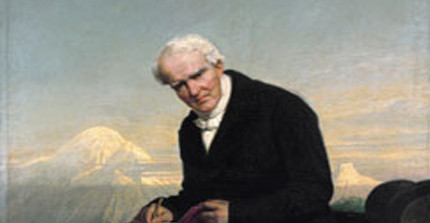
Portrait von Alexander von Humboldt